
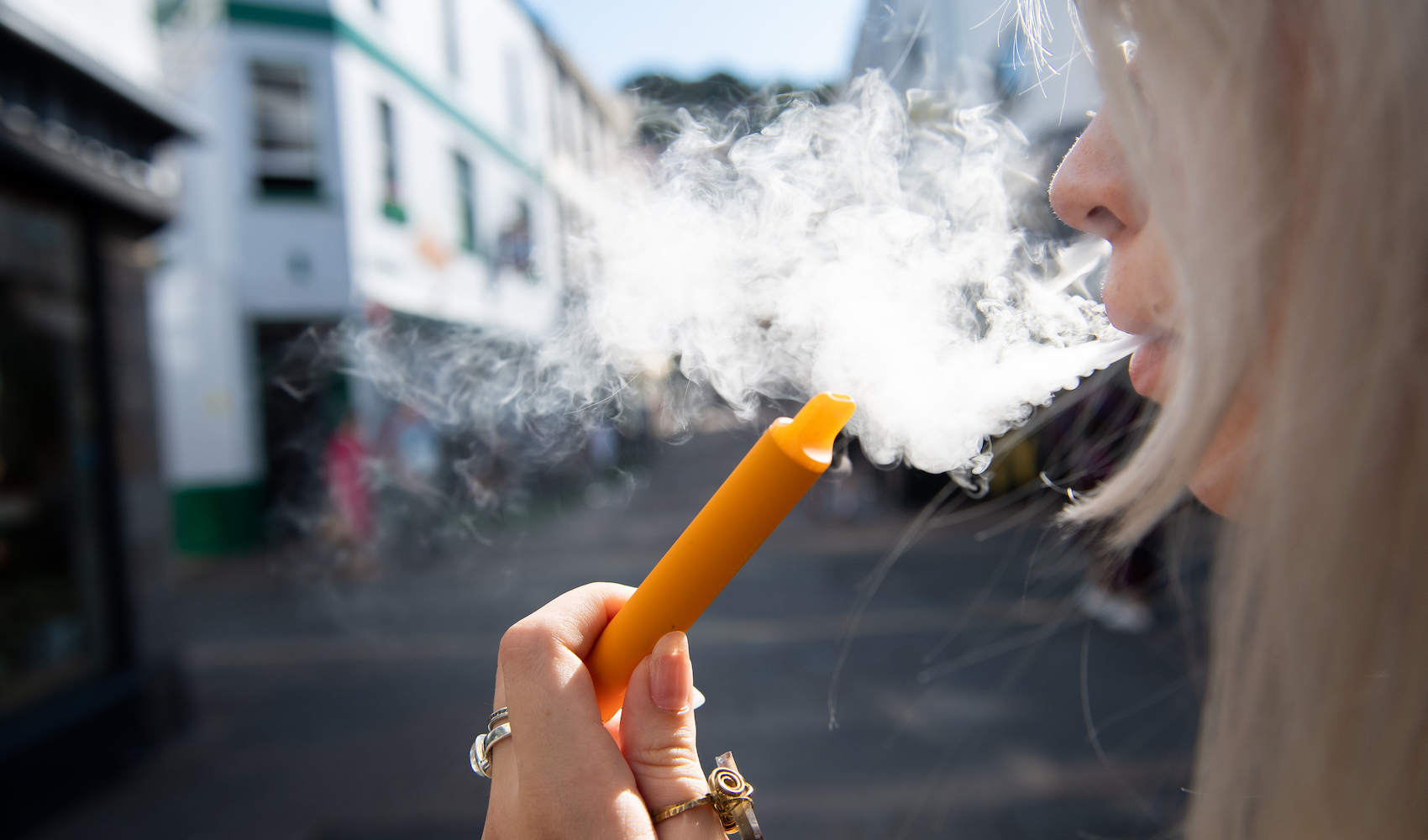

Almost a quarter of Year 12 girls in Jersey are regular vape users, according to new statistics.
Published today, Public Health Jersey’s Smoking and Vaping Bulletin 2024 revealed that 30% of Year 12 students in Jersey are “current regular” or “former regular” vape users.
The report showed that girls are more likely to be regular e-cigarette users than boys, with 24% of Year 12 girls using vapes regularly compared to 15% of boys.
Overall, 19% of Year 12 students report being “current regular” vape users, whilst a further 11% are “former regular” users.

Youth vaping in Jersey exceeds British estimates for similar ages, according to the report.
Meanwhile, smoking among 15-year-olds in the island has fallen sharply – from 17% in 2010 to less than 5% in 2024, which was the lowest level on record.
The proportion of young people in Year 10 and Year 12 who currently smoke has fallen by at least half since 2021, according to the report.
It comes after research published earlier this week found that eight-in-10 islanders would support tighter advertising and display controls on vapes to help deter youngsters.

Over 1,300 islanders took part in a study by Island Global Research earlier this year, with 65% saying they would support a future ban on vaping for those born in 2009 or later, unless prescribed to help quit smoking.
Around 85% of respondents said they would support more public health campaigns about smoking and vaping targeted at young people, and 90% said schools should have more support to prevent vaping on school grounds.
Several respondents mentioned sweet or fruity flavours and colourful packaging as factors that make vaping more appealing to teenagers, with 65% of respondents supporting a ban on flavours.

Among the most popular policy ideas were plain packaging (68% in favour), display restrictions, tighter age verification, and even a ban on flavoured vapes – which two-thirds of respondents supported.
Martin Knight, the island’s head of health improvement, said Public Health is working on proposals to tax vapes and new regulations for reusable devices and nicotine products.
There has also been a youth-focused campaign to help young people quit vaping and prevent uptake, he said, and resources have been given to PSHE teachers in schools.
