


A new vaping tax, ‘tap relief’ for bars and restaurants, and a £77 charge for ‘misuse’ of the Emergency Department – plus higher personal income tax thresholds and child allowances – are among the key features of the government’s newly published spending plans for next year.
In Jersey, public spending is now enshrined in something called the ‘Budget’, which is always published around this time of year and then debated and voted on by States Members in December.
It sets out Ministers’ spending plans for the year ahead, so 2026 in this case, and then spending ambitions for the following three years, so up to 2029 with this edition.
It also sets out how Ministers expect to fund those plans – usually through a series of taxes and charges, and sometimes savings.
So, what has been decided for 2026? Express took a look at the headline numbers…
How are allowances changing?
£550 increase in personal income tax thresholds from £20,700 to £21,250
£100 increase in child allowance
£150 increase in additional allowance
£200 increase in childcare tax relief
£550 increase in higher childcare tax relief
How is the price of alcohol, smoking and fuel going to change?
+1.0p alcohol duty increase on 500ml can of beer…
…but -5.4p alcohol duty reduction in an pint of draught beer (tap relief)
+1.7p fuel duty increase per litre of fuel
+80p tobacco duty increase per 20 pack of cigarettes
+£2 vehicle emissions duty on the least polluting vehicles
+£2,480 vehicle emissions duty on the most polluting vehicles
+£2 vaping tax per 10ml
A -1% reduction in higher rate of stamp duty on non-main residence properties – that’s second homes or properties bought with a view to letting them, for example.
Are there any new charges for islanders?
£77 charge for anyone who attends the Emergency Department instead of seeing their GP
£55 charge for islanders who repeatedly miss outpatient appointments
£10m is expected to be raised through liquid waste charges introduced from 2028 onwards
£31m is expected to be raised next year by Revenue Jersey by tightening up its tax collection and enforcement practices. Civil penalties will also be introduced for incorrect GST returns, but an exact level is yet to be confirmed.
How much is each government department getting?
£381m departmental spend in Health and Care Jersey
£246m departmental spend in Children, Families, Education and Lifelong Learning
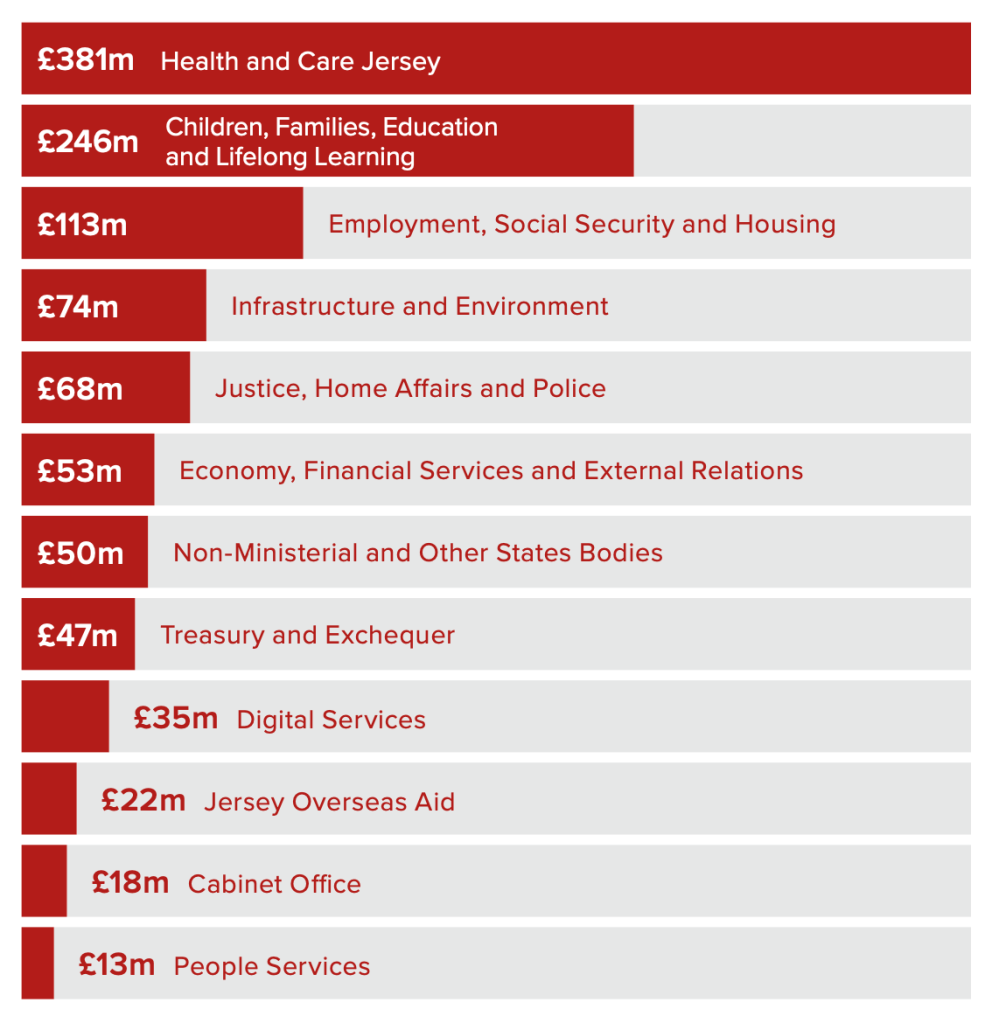
£113m departmental spend in Employment, Social Security and Housing
£74m departmental spend in Infrastructure and Environment
£68m departmental spend in Justice, Home Affairs and Police
£53m departmental spend in Economy, Financial Services and External Relations
£50m departmental spend in Non-Ministerial and Other States Bodies
£47m departmental spend in Treasury and Exchequer
£35m departmental spend in Digital Services
£22m departmental spend in Jersey Overseas Aid
£18m departmental spend in Cabinet Office
£13m departmental spend in People Services
How much will be spent on capital projects next year?
£174.7m capital expenditure on the new hospital

£60.8m capital expenditure on estates
£34.1m capital expenditure on infrastructure
£25.2m capital expenditure on information technology
£11.6m capital expenditure on replacement assets and minor capital
£1.8m capital expenditure on feasibility
How much of our island’s key funds will be spent?
£353m expenditure from the Social Security Fund on pensions and other benefits
£96m expenditure from the Long Term Care Fund on long-term care benefits
£59m expenditure from the Health Insurance Fund on health benefits
What do the Ministers say?
The Chief Minister, Deputy Lyndon Farnham, said: “Despite global uncertainty and lower-than-expected income in 2024, this Budget sets out a clear and responsible strategy: controlling the growth of public spending, reducing our reliance on external consultants, and directing investment towards health, education, infrastructure, and economic resilience.
“Through the ‘Investing in Jersey’ programme, we are taking a long-term view, renewing public assets in a way that extends beyond political cycles. The Jersey Capital Investment Fund will provide transparency, certainty, and continuity in delivering major infrastructure projects. By streamlining government operations and supporting our economy, from digital healthcare to maintaining a competitive finance sector, Jersey is well positioned to respond to current pressures while building a secure and prosperous future.”
The Minister for Treasury and Resources, Deputy Elaine Millar, added: “This year’s Budget takes a balanced and strategic approach to supporting Islanders while preparing Jersey for future challenges. It provides tax relief to help households manage the cost of living, while also introducing health-focused measures such as taxes on vapes.
“Key investments in health and children’s services, alongside the capital programme aims to enhance infrastructure, including Fort Regent and new healthcare facilities, and modernise government systems. The Budget also emphasises long-term financial resilience, with prudent borrowing and investment decisions that reflect a shift away from short-term fixes. Overall, it positions Jersey as a place of opportunity, stability, and forward-thinking governance.”
What could the Budget mean for you? Try our interactive tool…
Who are you in Budget 2026?
Tap the option that sounds most like you to see how Jersey’s Budget 2026 could affect your pocket and the services you use.
This guide is based on headline measures from Jersey’s proposed Budget 2026–2029. Final decisions rest with the States Assembly when the Budget is debated.
