

The ‘Lived experiences of termination of pregnancy in Jersey’ report was commissioned by the Government, and produced by the Centre for Reproductive Research and Communication at a cost of £10,790.
The expert team has experience of conducting research on abortion, contraception, pregnancy, and public health.

Pictured: Former Health Minister Karen Wilson said that it was “really quite clear” that Jersey’s 27-year-old abortion law needed reviewed.
The report was quietly published in February, alongside the results of a survey created to inform potential changes to the island’s abortion law.
The Termination of Pregnancy (Jersey) Law was introduced in 1997, and has remained largely unchanged for over 25 years.
A full review of this legislation was announced in summer 2023, with then-Health Minister Karen Wilson describing it as “really quite clear” that the law needed to be updated.
But despite announcements that legislative changes would be voted on by States Members before the end of 2024, it emerged earlier this year that the island’s Termination of Pregnancy law would not be updated until the end of 2026 because of “resourcing challenges”.
This could now be brought forward a year, after the Health Scrutiny Panel this month submitted an amendment to the Government’s spending plans calling for funding to prioritise updating the “outdated” abortion law by the end of 2025.

Pictured: Deputy Louise Doublet is Chair of the the Health and Social Security Panel.
Within that amendment, the Panel pointed to evidence from the CRRC’s ‘Lived experiences of termination of pregnancy in Jersey’ report.
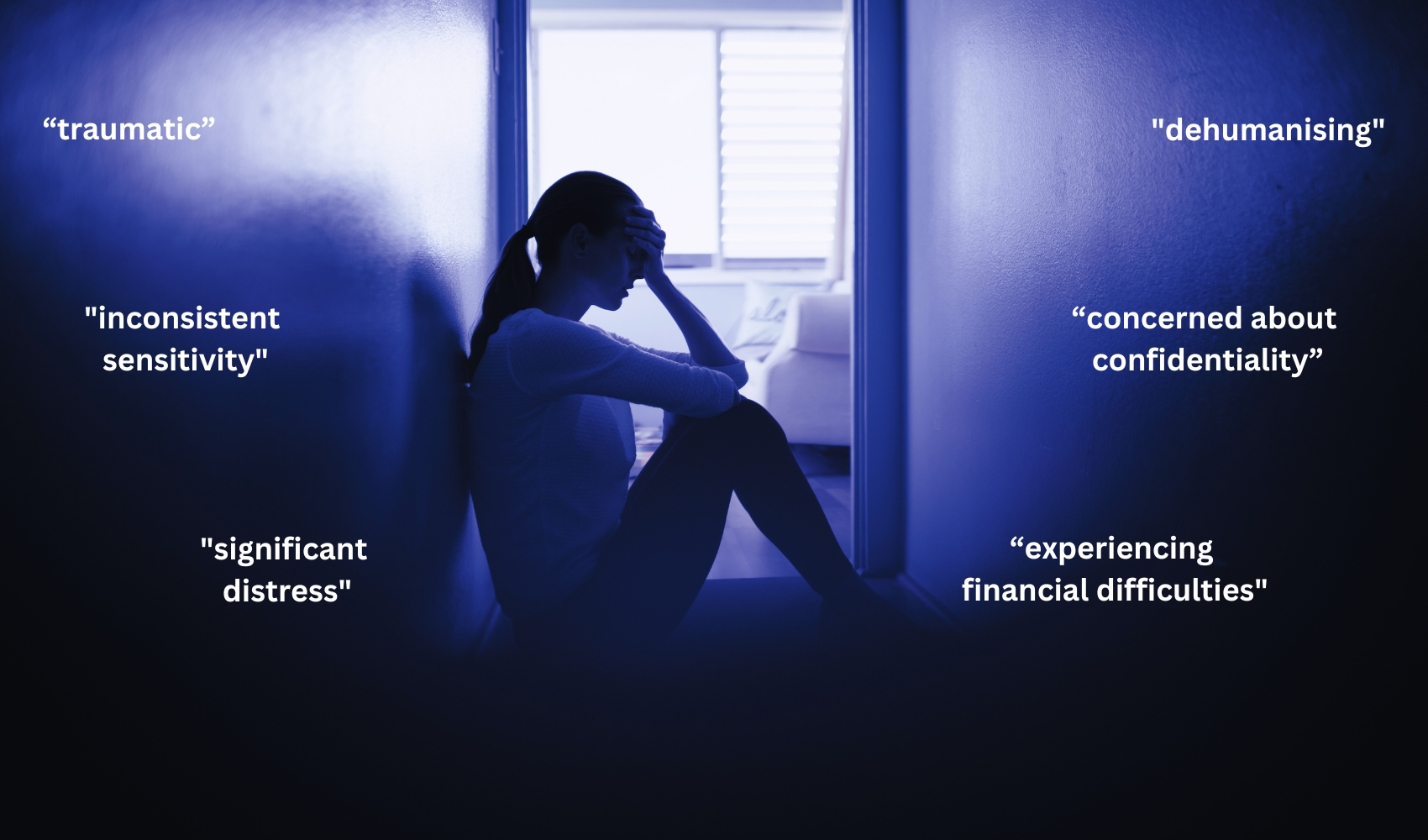
The study found that the Jersey’s current legal framework for termination caused “significant distress” to participants – with some needing to travel off-island for care.
In addition, the study found that patients were often unaware of the specific legal requirements, and found the abortion process “confusing and stressful”.
The report noted that “participants were concerned about confidentiality”, and encountered “inconsistent sensitivity” from healthcare professionals.

Pictured: An abortion in Jersey costs £185 if the person receiving it is entitled to access Government health care, and over £500 if they are not.
Researchers found that “accurate and transparent information” about abortion and the associated costs was “challenging” for participants to access on the Government of Jersey website.
The costs associated with having an abortion were “a concern for most participants, and presented barriers to those who were experiencing financial difficulties”, the report said.
However, researchers acknowledged that “many participants expressed gratitude for the health care they received within the service”.
The expert team highlighted eight “pinch points” during the abortion process in Jersey.
Express took a look at each one in more depth…
Challenges posed by Jersey’s current abortion law
The report found that the island’s 12-week gestational age limit for termination on the grounds of distress “appeared to be well-known by participants”.
One of the interviewees, Participant A, described it as “one of the very difficult things about living in Jersey”.
She said: “Sometimes women don’t find out until too late to have a termination in Jersey, and that in itself is quite traumatic.”

Pictured: The 12-week gestational limit can be problematic for people who use contraceptive methods which stop or mask periods.
Another interviewee, Participant D, was concerned that she would not have much time to repeat the termination if it was not successful.
She said: “It was actually a little bit stressful when I got there because they said that sometimes there can be issues with the medical termination and that I was… Because I was almost eight weeks…There’s a twelve-week limit…that’s why I’ve got to also do the pregnancy test a month after the termination. So that was my stress because I was just thinking if I turned out to be pregnant now, obviously, I’m past my 12 weeks.”
The researchers found that other aspects of the abortion law “were not as well-known by participants and came as a surprise during the process of seeking care”.
Participant E described how she was “unaware” that termination is not available on request, and that she could be refused care.
“I didn’t realise that… the GP could sort of say no, I guess. I had no idea about any of it,” she said.
Confidentiality
Researchers found that “all participants… were concerned about confidentiality”.
Concerns were raised by participants about Jersey being a “small place” where “everyone knows everyone”, and “if anyone gets a whiff of your business, everybody knows”.
Researchers found that “this was compounded by the fact that termination services are delivered in an outpatient unit in the main hospital on the same day each week”.
Participant E explained: “Because it’s an outpatient facility, there were quite a few people in there, but I was very aware that, like, Tuesdays are ‘the day’.”

Pictured: There were concerns around that fact that abortion services only take place at the General Hospital on a Tuesday.
Participant C described sitting in the waiting room next to a friend of the man with whom she became pregnant.
She said: “Jersey is a very small island. We’ve got a really small community. So, yes, when I went into the waiting room, I’d already recognised two or three women…I was waiting in the waiting room, again they just… with the whole not being discrete, they literally shout your full name out.
“At the time, with Jersey being so small, I was sat next to the… well, the guy that I was seeing, obviously it was his baby. But I was sat next to his best friend.”
The report said that participants offered several suggestions that they felt would improve their experience and protect their confidentiality, including moving abortion care to GP surgeries – which were felt to be more private – and providing care remotely through telemedicine.
Cost of termination
The report found that all participants “described cost as a significant source of distress and confusion during their termination care”.
Two participants had not realised that they were liable for the cost of the termination until they had started the process of accessing care.
Researchers stated that the “cost of £185 for a resident and £511 for a non-resident represents an inconsistency in the way that healthcare is funded in Jersey”.
The exception to self-funding an abortion is for terminations on the grounds of fetal abnormality, or where necessary to save the person’s life or prevent grave permanent injury to their physical or mental health.
These terminations are fully funded if they are carried out in Jersey, and if patients are required to travel to the UK mainland for care their costs are covered and transport arranged for them.
Participant B told researchers that she felt she had to terminate an unplanned but not necessarily unwanted pregnancy because of financial pressures.
“I don’t believe I was offered enough support from an emotional perspective,” she said.
“Equally, I think it was more about the practical support. You know, how can the government help me have this child without feeling scared that I’m going to lose my home?”
The termination itself then posed a cost which she struggled to fund.

Pictured: The report found that all participants “described cost as a significant source of distress and confusion during their termination care”.
Another participant described how the process for seeking funding support for the termination was confusing, “dehumanising”, and felt inappropriate.
Participant A reflected on how the cost of travelling overseas for care had the potential to impact some women on lower incomes.
She said: “Because many, many people, the reason why they might choose to terminate would be financial, and the fact that you then may need to travel to the UK, pay for hotel accommodation, pay for the flights – all of that is additional cost.
“And when you think that, okay, it’s cheaper than the cost of a child over its lifetime, but some women don’t have that money up front, to be able to access that service.”
Travelling overseas for termination of pregnancy
One participant told researchers about the emotional impact of travelling to the UK for a procedure to induce fetal demise, before returning to Jersey for an induction and delivery.
Participant A said: “I guess the way I can describe it is feeling like a human coffin. Because you are carrying around your dead baby, knowing they are dead, knowing that you’re going to have to deliver them, and you have no control over when that will be.”
Participant A also described the physical impact of travelling.
“I think that the way that you’re transported backwards and forwards from the hospital is great,” she said.
“The downside is that, sometimes, with the flight times, you’ll have an appointment at nine o’clock in the morning, and then they’ll put you on the 8pm flight back from Southampton, and so it can be a really, really, really long day. But, you know, that’s just the logistics of living on an island, I think.”

Pictured: Some islanders have to travel to the UK for abortion care.
Islanders who have a pregnancy beyond 12 weeks’ gestation seeking a termination on grounds of distress are also required to travel to the UK for care – but do not receive any financial or logistical support to do so.
One participant told researchers about her experience of seeking an abortion when she was a teenager with few resources and little familial support.
Participant B said: “Because my parents didn’t know, I had to end up going a week before starting university, having the termination completely on my own, and then going to start university with absolutely no support or anybody knowing about it.
“It was harrowing as a 17-year-old to not only try to keep it from my parents but also try to pay the money for the flights, for somewhere to stay, being completely on my own.”
Poor provision of information
Researchers found that “participants reported a lack of easily accessible information on how to access termination of pregnancy in Jersey”.
Participant E said: “When I was googling how I would even go about having a termination in Jersey, I found that there wasn’t any direct path.
“I had to go to the GP, and that’s when they explained what the thing was. It wasn’t online. I couldn’t find any information about the process online, in Jersey, specifically.”
She went on to state that there was “loads of information about all these classes that you could go to if you were pregnant, and all the things [to] do if you were going to keep it”, but no information on the termination process, care pathway, costs, or treatment options on the Government of Jersey website.

Pictured: One participant had to turn to TikTok for abortion information after she struggled to find help on the Government of Jersey website.
Participant E explained how she found some information on what to expect during a medical termination on the social media platform TikTok.
Some interviewees also reported a lack of information regarding the termination process, particularly regarding medical termination of pregnancy.
Participant C said: “I think if they just clearly said… what I would experience and how excruciating it would be… and just [be] realistic about it.”
Stigma and judgement
The report stated that “several participants expressed feeling that their care was negatively impacted by the stigma associated with termination of pregnancy”.
One participant who had a termination for fetal anomaly told researchers that she felt she was not given adequate pain relief during her delivery and attributed this to the fact she was terminating the pregnancy.
“I was concerned about the pain relief options during the delivery, because I had done a lot of research into what could be made available to me,” said Participant A.
“That is one element of care that I don’t think was managed well in Jersey, because I think that I was treated as a woman who was delivering a healthy baby, and so I wasn’t given all of the pain relief that I could have been given, and that, I think, could’ve been managed better.”

Pictured: One interviewee called for “more staff training around why people might have a termination”.
She also described receiving insensitive care when she delivered her deceased fetus in the maternity unit, highlighting a need for additional training on compassionate communication.
“I think it’s more… maybe more staff training around why people might have a termination, and the context that I was delivering it,” she said.
“It wasn’t like I’d just decided, at 22 weeks, I was going to have a termination; there were factors involved that meant that it was a grief-filled process, I guess.”
Another participant told researchers that she had received much better care during and after her miscarriage than she had during her termination.
“It kind of felt like you had a termination so you don’t need love as much, and support and time,” said Participant B.
Service capacity and waiting times
Participants reported that service capacity issues and waiting times delayed their termination, caused them to miss work and family events, and generated anxiety during their care, according to the study.
Abortions in Jersey are delivered at an outpatient clinic at the General Hospital on Tuesdays only.
Researchers found that “this affords patients very little flexibility to plan their terminations around their work commitments, caring responsibilities, and other aspects of their lives”.
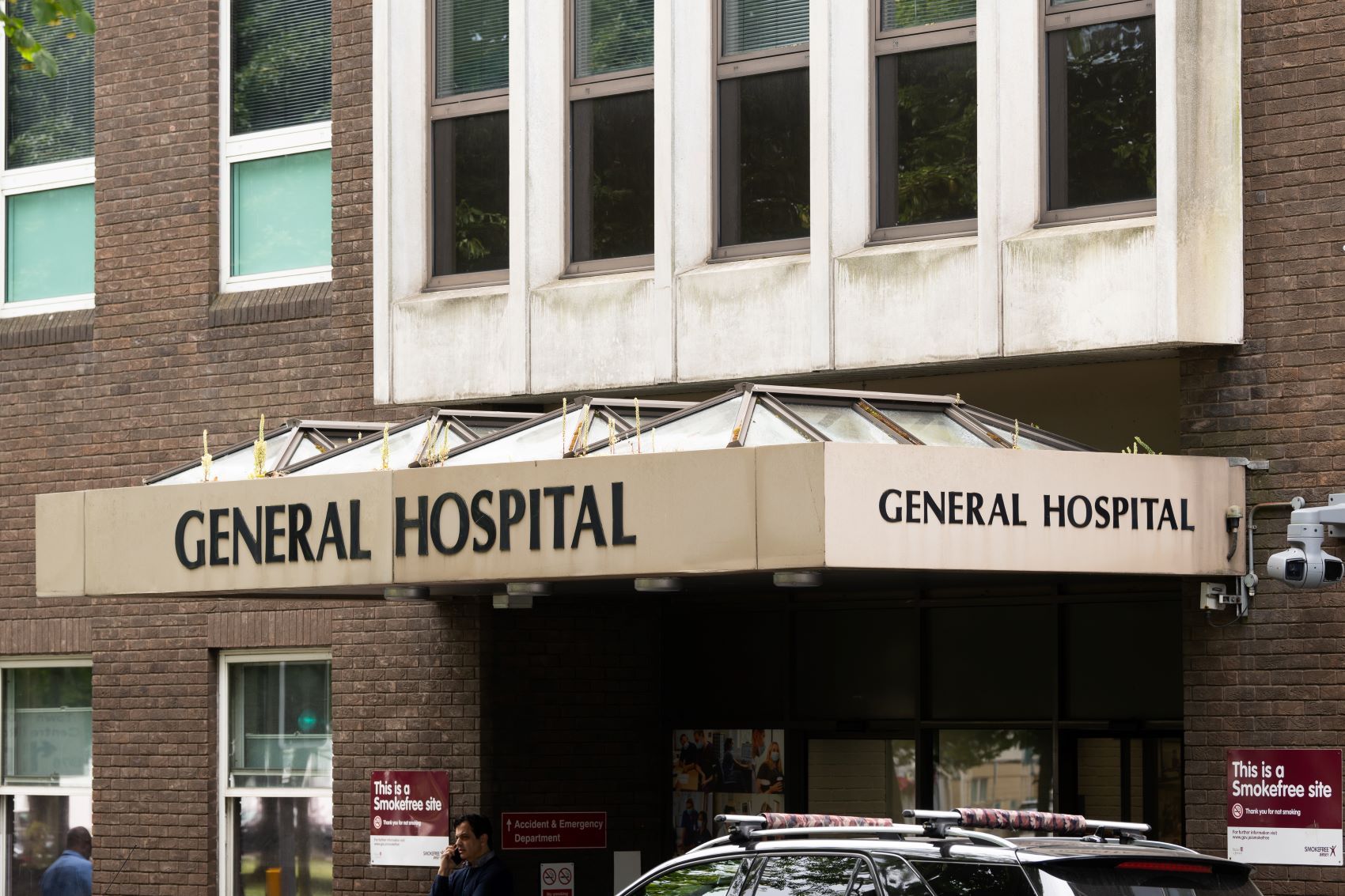
Pictured: Abortions in Jersey are delivered at General Hospital on Tuesdays only, which “affords patients very little flexibility”.
One participant missed a family wedding to attend her appointment, while others described the barriers with trying to schedule the appointment around work commitments.
Patients seeking terminations in Jersey are required to make multiple visits to the hospital to collect the two different medications used to induce a medical termination.
Researchers found that, for one participant, this intersected with other service capacity issues and created “further barriers to timely termination care”.
Participant C described how the hospital had run out of the medication required when she went to have her abortion.
She said: “There was actually no more medication, so they were like, ‘You’ll have to come back tomorrow’.
“So, I had to go back the following day to our hospital pharmacy that was only open at certain times. So, yes, that was something as well.
“Yes, it just turned into a bit of a farce.”
Care that did not ‘fit’ with expectations
Researchers found that “all participants, apart from Participant A who had a termination for fetal anomaly, described feeling that receiving termination care in the hospital was unnecessary”.
Interviewees described the process of going to their GP, and the multiple visits to the outpatient clinic and hospital pharmacy as “a lot of dotting around”.
The report said: “Participants suggested that locating [abortion] care in a GP practice, freestanding clinic, or providing care remotely was preferable to attending hospital.”

Pictured: Participants suggested that it would be better to have abortion care at their GP practice, rather than in hospital.
Participant A, who had a termination for fetal anomaly and delivered on a maternity suite, experienced “insensitive comments from theatre staff”.
She said. “I went down to theatre for the placenta removal … This could’ve happened to any bereaved parent, but one of the theatre staff was just treating me like I’d delivered my baby, and so was asking me what I’d had, and what I was going to call it.”
Researchers also found that participants who sought financial assistance for their abortion “felt it was inappropriate to be discussing their private medical details with staff at Social Security”.
Participant D described the process of talking to staff about her abortion as “dehumanising”, and said: “I feel like it would’ve been a lot easier talking to a nurse or a doctor in the hospital when they went through how to pay there.”
READ MORE…
“Outdated” abortion law could see full update by end of 2025
Doctors have “discretion” to waive abortion fees
Quarter-century-old abortion law will not see update until late-2026
FOCUS: “Another cost for the ‘privilege’ of womanhood”
“Deeply concerning” that rape victims have to pay for abortions
FOCUS: Jersey’s “lost” gynaecology ward
IN NUMBERS: What do islanders think about Jersey’s abortion laws?
Contraception survey launched as local options fall further behind UK
