
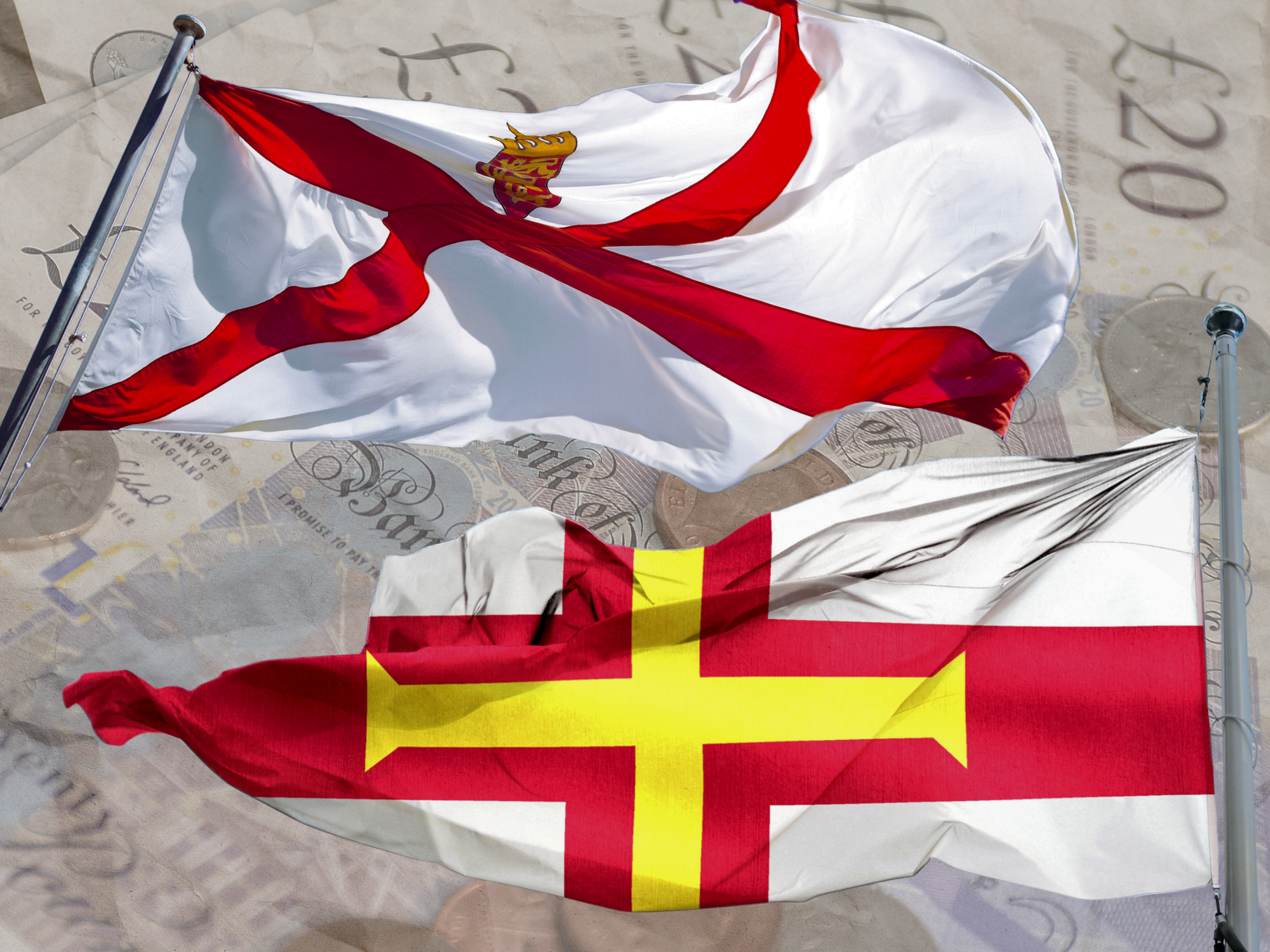

Nearly two decades after Jersey introduced its own GST regime, Guernsey now appears to be heading towards a similar turning point in 2028 – with politicians being told there is effectively no alternative if they want to avoid painful cuts to public services.
A specialist panel of experts set up to examine alternatives to the island’s proposed “GST+ package” has concluded that no other option would raise enough money quickly enough without risking damage to the island’s economy or international reputation.
Guernsey’s States previously backed the GST+ concept in principle, but it has now been confirmed that deputies will decide ‘once and for all’ this summer whether to proceed. If approved, GST will be introduced in two years’ time – 20 years after Jersey introduced its own version following fierce political rows and public protests – scenes which have also played out across the water in recent years.
Had your daily Bailiwick Express-o?☕
Your free daily news email – freshly brewed every day with Jersey’s latest news, breaking stories and essential updates.
Sign up for freeSo, is this really it for Guernsey, and how did the island get here? The island has, after all, appeared close to introducing GST many times before…
Winding back the clock… the early 2000s fight for competition
Both islands’ GST stories start in the same place… back in the early 2000s, as all of the Crown Dependencies, much like today, were grappling with the question of international competitiveness.
In the early 2000s, Jersey, Guernsey and the Isle of Man all faced mounting international pressure over their corporate tax regimes – particularly from the EU and OECD – while simultaneously competing fiercely against one another for financial services business.
With competitor jurisdictions such as Cayman, the Bahamas and Bermuda already operating zero-tax regimes on all business, Gibraltar and the Isle of Man moved quickly to announce that they would achieve an effective rate of tax on the profits of financial services of around 10%.
Addressing Jersey’s States Assembly in 2002, the then-President of the island’s leading Policy and Resources Committee, Senator Pierre Horsfall, said the committee was “determined that we do not sit back and allow rival jurisdictions to steal a march on us on tax competition, because our vital economic interests would be at stake were we to do so”.
“We simply cannot afford to ignore such competition if we are to retain the service providers who currently do business in Jersey,” he said, adding: “No doubt the same can be said for Guernsey.”
In the following years, after Jersey had made its own intentions clear, Guernsey politicians and economists were beginning to reach the same conclusion.
An Independent Working Group report published in 2006 warned that Jersey and the Isle of Man had effectively “set the benchmark for other offshore finance centres, including Guernsey, to respond”.
“This places pressure on Guernsey to follow suit, if the Island’s economy is to remain competitive and retain its international financial services,” the report stated.
Jersey takes the plunge… while Guernsey hesitates
In Jersey, GST ultimately became part of the answer to replacing lost corporate tax revenues and was introduced in 2008 under the then-Chief Minister Frank Walker.
He led the States through debates on introducing a goods and services tax of 3%. That GST now stands at 5% and is levied on most goods and services, including food.
LISTEN
Former Chief Minister Frank Walker on why GST was the right call for Jersey.
The proposed introduction of GST was resisted with a petition signed by 17,000 people which Mr Walker said was unprecedented, but he was firm that it was the right thing to do, previously telling Express: “Nobody liked it, nobody wanted it, but we had to do something significant and we decided that GST was the ‘least worst’, so ultimately it was introduced in 2008.”
But while Guernsey also pondered a consumption tax of some sort to lessen the blow of its own change to corporation tax, efforts to actually introduce one in tandem fell short.
A goods and services tax was again suggested in 2010 as the island’s financial deficit grew but there was no political appetite to bring it in then either.
By 2013, the States elected in 2012 had agreed to carry out a Tax and Benefit Review. Its key points included “the need to restrain public expenditure and to maintain a limit on the tax burden set by the States on households”, while it also noted “a clear majority against the introduction of GST”.
A decade… and then deadlock
A decade – including a pandemic and a suggestion of 8% GST in 2021 – passed before the proposals felt close to reality again, when they were to be discussed as part of a landmark States debate over how the island should be financed in future.
In 2023, the island’s States Members twice rejected plans to introduce GST.

At the end of that year, at the conclusion of four days of debate, the then-Chief Minister Peter Ferbrache – who had included GST as a key pillar of his plan to deal with a financial deficit of £100m per year facing the island and pay for vital infrastructure including development of the island’s hospital – said the States of Guernsey was at an “impasse” and suggested there should be an early general election because he could not get backing for his flagship policy. In return, he was met with calls to resign or face a vote of no confidence.
In November 2024, it was agreed that the committee in charge of the island’s finances would work on tax reforms, including 5% GST, after States Members threw out a plan to put income tax up by 2p in the pound.
But, by February of the following year, the then-new Chief Minister Lyndon Trott said that he didn’t believe 5% would be “enough”.
Following the 2025 summer election, the next Chief Minister Deputy Lindsay de Sausmarez named tax reform as one of five “super priorities” for the political term, stating her determination that a decision would be made once and for all.
Why Guernsey now says there is ‘no alternative’
Guernsey’s proposed package would see GST introduced from 2028 if approved by the island’s politicians in July.
The island’s leading Policy and Resources Committee says the move is now central to solving what it describes as a long-running “structural imbalance” in Guernsey’s finances, with government spending consistently outstripping income.

Chief Minister Deputy Lindsay de Sausmarez explained that the committee had explored every realistic option before returning to GST+.
“When I stood for this position, I promised to leave no stone unturned in our efforts to examine all the options before bringing recommendations to the States, and that’s what we’re doing,” she said.
The package under consideration goes beyond simply introducing GST. It also includes proposed reforms to income tax allowances, social security changes, and other measures designed to broaden the island’s tax base.
Guernsey politicians have also examined alternatives, including changes to corporate taxation, transport taxes, savings through public sector efficiencies, and even a possible visitor levy aimed at tourists.
However, the Sub-Committee found those measures would not generate enough revenue on their own.
Deputy de Sausmarez said significant spending cuts alone would likely prove politically and socially unacceptable.
“It’s clear that to plug the financial gap through expenditure reduction alone we would need to go well beyond the scope of what efficiencies can deliver,” she said.
“That scale of expenditure reduction could only reasonably be achieved via service reductions.”
The States says it needs to generate around £50m in additional annual revenue, while separate work is continuing on corporate tax reforms and transport-related levies – including possible measures linked to electric vehicles as fuel duty revenues decline.
Guernsey has also been watching Jersey closely on international tax reforms, including the implementation of OECD ‘Pillar 2’ rules applying minimum corporate tax rates to the world’s largest multinational firms.
Where does Jersey stand on GST now?
These days, GST is a significant structural part of Jersey’s public finances – generating more than £100m for the Treasury each year.
According to the States’ 2025 Annual Report and Accounts, £122m was raised through GST last year – just £5m short of budget. The 2026 Budget forecasts that figure will rise to £132m, accounting for around 10% of the island’s total tax take.
But while GST is now firmly embedded in Jersey’s tax system, debate around it has never fully disappeared.
With cost-of-living pressures rising sharply in recent years, calls to remove GST from food have repeatedly surfaced.

In 2022, Reform Jersey’s Deputy Raluca Kovacs’ proposition to remove GST from food was defeated by 28 votes to 17.
While the plan didn’t secure the backing of the Assembly, it did get approval from one of the island’s leading retailers, with Coop CEO Mark Cox stating: “Removing GST from basic foods at a time of rising food prices would be welcomed and we would commit to ensuring the reduction was passed on to consumers.”
Last year, a petition calling for GST to be removed from food was backed by more than 1,000 islanders.
But their calls were rejected by ministers, who argued that having a broad 5% rate of GST was simpler to administer for businesses and government, and that removing the tax from food would be unlikely to lead to “observable price reductions”.
And despite lingering public frustration over the tax, GST does not currently appear to be a dominant issue ahead of this year’s election.
Analysis by Express of candidates’ vote.je profiles found that GST was referenced by just six individuals.
