

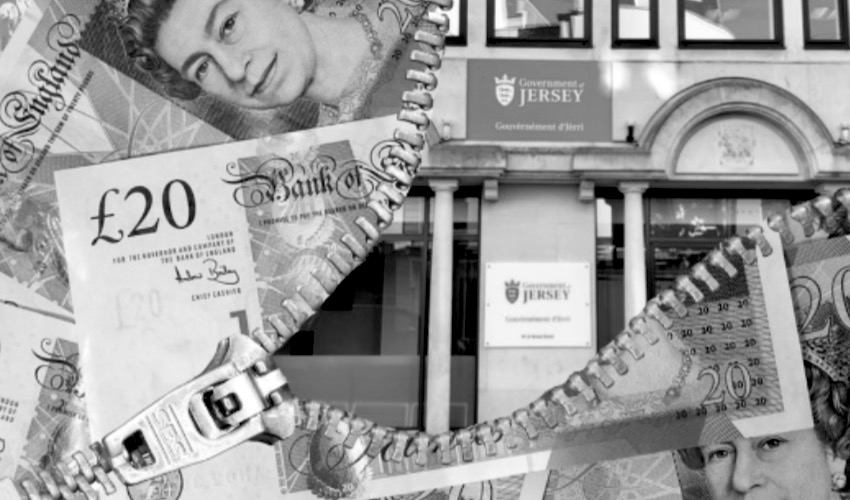
According to the Fiscal Policy Panel (FPP), it’s therefore time for the government to borrow more to plug its deficit rather than seeking quick fixes in the form of drastic spending cuts or drawing on reserves.
The group of academics, who are tasked with advising Ministers on the income forecasts that underpin the annual Government Plan, published their latest predictions in a new report this morning.
This forecast, which updates their previous one from March, is for a slightly sharper contraction this year, due to the weaker outlook for profits in the banking sector following the cut in interest rates.
They said the economy will be smaller in the long-run as a result of the pandemic, and that this will lead to a permanent imbalance of revenues and spending – known as a ‘structural deficit’ – if action isn’t taken.
The panel is therefore recommending that the government pushes to close this gap by 2024.

Pictured: Dame Kate Barker chairs the Fiscal Policy Panel.
Led by former Bank of England adviser Dame Kate Barker, the panel says: “It would be appropriate for Jersey to borrow, rather than to draw significantly on reserves, to attempt to smooth the economic cycle.
“This means that in the absence of a substantial balance on the Stabilisation Fund, Government should consider financing both the automatic stabilisers and discretionary fiscal policy, such as the covid-19 stimulus, through borrowing.
“This is preferable to excessive fiscal consolidation, which would intensify the structural impact of the very sharp short-term fall in economic activity.
“Borrowing remains a sensible option to fund investment. If this results in a physical asset that either provides a financial return or provides services that Islanders need over time, then it need not reduce the overall net asset position – it reduces net financial assets but increases physical assets. In Jersey, examples include a new hospital, infrastructure and housing.”
In May, Jersey signed a deal with banks allowing it to borrow up to £500m. So far, the Government has only drawn down £5m of that.
Other forecasts and recommendations from the FPP include:
- Gross value added (GVA – a measure of economic output) to fall by 7.5% this year followed by a gradual and partial recovery
- A fall in employment, particularly in sectors such as hospitality and retail that were most affected by restrictions during the ‘stay-at-home order’
- A sharp fall in profits in both the banking sector and in the sectors most affected by stay-at-home (hospitality and retail)
- Inflation to increase from current very low levels but remain subdued this year and next

Pictured: Treasury Minister Susie Pinel.
Treasury Minister Susie Pinel said: “The coronavirus pandemic has presented a huge challenge to our economy this year.
“The FPP’s updated forecast demonstrates that we are unlikely to see an immediate and complete recovery from the forecast recession.”
