Jersey and Guernsey were singled out during a House of Commons debate on illicit finance, as MPs called for tougher transparency rules in Crown Dependencies and once again warned that patience with offshore ‘secrecy’ is running out.
The discussion – held last week ahead of a summit on illicit finance which had originally been scheduled for this month – saw politicians from across the UK political spectrum argue that the Crown Dependencies must do more to help tackle money laundering, tax abuse and hidden ownership structures.
“Time-bound commitments” sought
Several MPs highlighted figures suggesting that up to £788 billion in illicit finance flows through UK-linked systems each year when Crown Dependencies and Overseas Territories are included.
Former International Development Secretary Sir Andrew Mitchell was among those to directly reference the Channel Islands.
“These issues must be dealt with. On Guernsey and Jersey, and to a lesser extent on the Isle of Man, we need specific, time-bound commitments by the time of the British G20 summit so that we can hold our heads up,” he said.
“The scale of dirty money going through London, the overseas territories and the Crown dependencies is absolutely appalling, and we need to clean up our act.”
“Achingly slow” progress
Liberal Democrat MP Steff Aquarone also criticised what he described as “achingly slow” progress towards public registers showing the true owners of companies and assets, arguing that journalists and members of the public should be able to access that information freely.
“The overseas territories and Crown dependencies are part of our British family, but part of being a family is calling them out when they are doing wrong,” he said.
Labour MP Phil Brickell said the upcoming summit would need to address transparency in Crown Dependencies and Overseas Territories, while other speakers argued that the UK had a responsibility to ensure jurisdictions under the British umbrella met the highest standards on beneficial ownership disclosure.
Responding for the UK government, Foreign Office Minister Stephen Doughty acknowledged concerns raised by MPs but pointed to progress made across several jurisdictions.
While much of the criticism was directed towards the British Virgin Islands, he confirmed that the government remained engaged with Crown Dependencies and Overseas Territories on improving access to beneficial ownership information.
Mr Doughty said the planned Illicit Finance Summit, now rescheduled from June to December, would focus on issues including property-based money laundering, cryptoassets, asset recovery and international enforcement.

He said the event would seek “concrete commitments” to close loopholes exploited by criminals and corrupt actors.
War of words
It comes weeks after Baroness Hodge sparked a fresh war of words with Jersey and Guernsey by suggesting Westminster could step in if the Crown Dependencies failed to move faster on ownership transparency.
Ahead of a visit to Guernsey earlier this month, the UK Government’s anti-corruption champion warned that patience was running out and said Britain could ultimately “force the hands” of Jersey, Guernsey and the Isle of Man if progress stalled.
“European countries are making progress on beneficial ownership transparency, and I want Guernsey to join others to adopt public registers that meet much higher standards, at a faster pace,” Baroness Hodge told Express.
Jersey’s previous External Relations Minister, Deputy Ian Gorst, who is hoping to retain his role in the new government, pushed back strongly, insisting the Island’s company register was a domestic matter and not one for the UK government to dictate.
He said: “This is not the first time that Baroness Hodge has made such commentary or suggestions, and we disagree with that. The way that Jersey and the other Crown Dependencies hold their beneficial ownership information in their company registers is a wholly domestic matter, and it’s not something for the UK to interfere with.
“We are very firm in our conversations with them, and even in extremis, if they decided to draft an Order in Council, we wouldn’t implement it.”
Deputy Gorst argued that Jersey already shares information rapidly with UK authorities when requested and said international co-operation, rather than public registers, was the key tool in tackling financial crime.
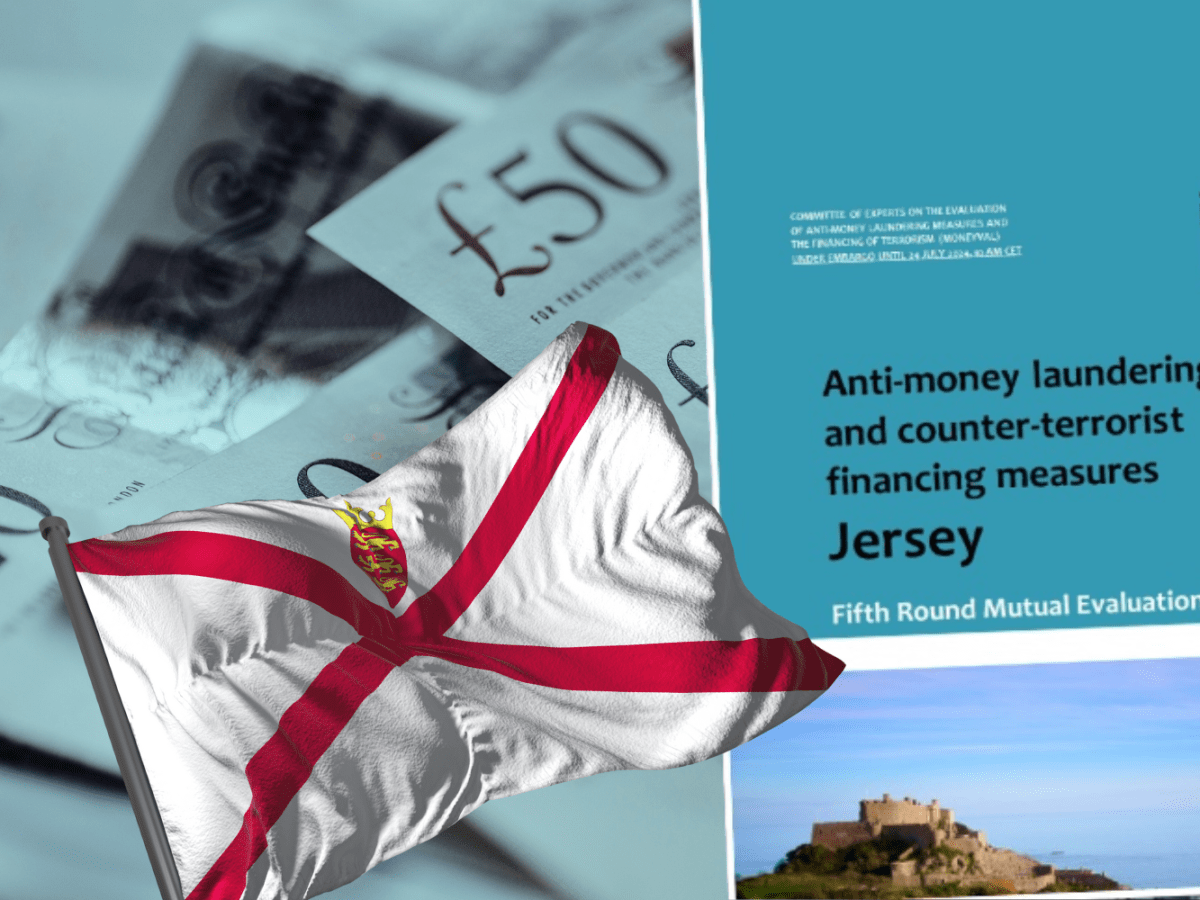
The Island also scored strongly in its latest Moneyval inspection.