


Guernsey could face action from the UK if it fails to improve transparency about who owns offshore companies.
That’s the message from the UK’s Anti-Corruption Champion, Baroness Margaret Hodge.
Baroness Hodge visited the island on Monday with Justice Minister Jake Richards to persuade Deputies to go further in tackling illicit finance.
The UK government wants the Crown Dependencies and British Overseas Territories to catch up with the EU, which is introducing tougher rules to tackle money laundering and terrorist financing.
Baroness Hodge told Express: “Money laundering and fraud are not just evil – economic crime threatens our security and damages our public services.
“We desperately need strong transparency so we can identify and follow the money to root out the bad actors.”
Without improvements, criminals and terrorists would “continue to launder their dirty money through the UK and the Crown Dependencies”.
Nearing the end of the road
She said she would “much rather work cooperatively” with the islands’ governments but her patience was “wearing thin… [along with] many of my Parliamentary colleagues”.
In a thinly-veiled threat, the former Labour Party Minister said the government could “consider revisiting the advantages” of the Crown Dependencies being linked to the UK – or could even introduce new laws forcing their hand.
Deputy Lindsay de Sausmarez, President of Policy and Resources (P&R), said Guernsey was “rightly proud of our accurate, verified and up-to-date register of beneficial ownership and we are pleased to share our experience and expertise with the UK”.
Deputy de Sausmarez said Baroness Hodge’s visit was part of an “ongoing dialogue” with the UK and the “vital” fight against financial crime.
What is ‘beneficial ownership’?
Companies formed to hold investments typically have many shareholders.
These can be people or other companies, which in turn are owned by still more shareholders.
In some cases, shares can be owned by companies, whose shares are owned by other companies – and so on.
This makes it hard to work out which actual people own a company.
A company’s ‘ultimate beneficial owners’ are the real people who ultimately own a company – no matter how far removed.
While there are many legitimate reasons companies invest in other companies, criminals – including terrorists and hostile foreign governments – can use complex ownership structures to hide their investments and ‘launder’ money.
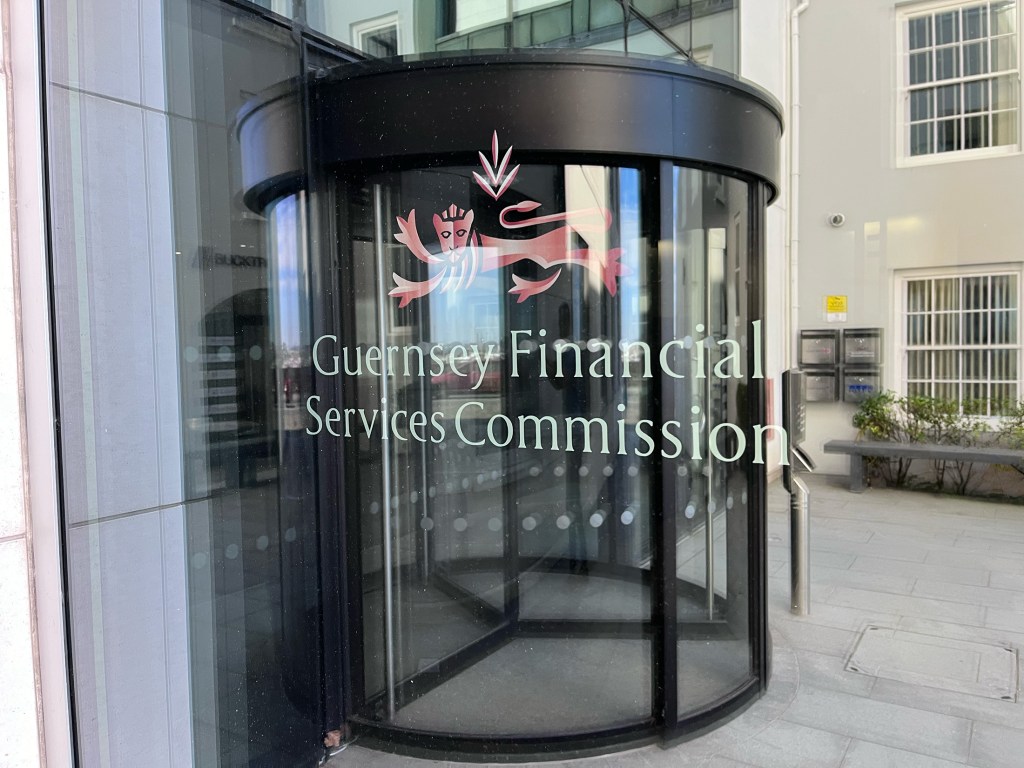
Over the last two decades governments around the world have been trying to introduce tighter anti-money-laundering laws to crack down on financial crime.
Following a 2022 court ruling, the EU changed who could access company ownership registers to people with a ‘legitimate interest’, such as law enforcement and tax authorities, as well as journalists, researchers and anti-corruption groups.
Similar schemes have been rolled out in the Cayman Islands and Turks and Caicos Islands, and are expected to be introduced in Anguilla, Bermuda, and the BVI later this year.
“European countries are making progress on beneficial ownership transparency, and I want Guernsey to join others to adopt public registers that meet much higher standards, at a faster pace,” Baroness Hodge told Express.
‘What matters most’
Guernsey recently held a public consultation about creating a ‘legitimate interest access’ framework.
However, a States spokesperson defended the status quo, saying Guernsey’s register already delivered “what matters most – rapid access to verified data for law enforcement and tax authorities in Guernsey, the UK and other jurisdictions”.
Guernsey has already granted access to its register to ‘obliged entities’ – regulated financial services businesses needing to conduct customer due diligence, the spokesperson added.
The visit was “an opportunity to demonstrate first-hand” that Guernsey’s “verification of this data is done to the highest standard – something the UK has not yet implemented itself”, they added.
Outdated prejudices
Deputy de Sausmarez said Guernsey’s “robust” approach had “been praised by external authorities, including MoneyVal and the UK’s own Home Office”.
“It is a shame that outdated prejudices about Guernsey continue to be reiterated for the apparent purpose of generating media headlines.”
P&R Member Deputy Andrew Niles said it was “true that much is at stake”.
Guernsey and the other Crown Dependencies played an “important role” supporting billions of pounds of investment, he said.
Deputy Niles continued: “What is sometimes overlooked is that this investment is supported by a framework that places transparency, verification and the fight against illicit finance at its core.
“Guernsey has demonstrated that it is possible to facilitate international capital flows while maintaining some of the highest regulatory and beneficial ownership standards in the world.”
He said independent assessments like MoneyVal provided “objective evidence that Guernsey is not simply committed to tackling financial crime in principle, but is delivering effective outcomes in practice”.
