

The Jersey Care Commission has raised concerns about its financial future – warning that government cost-cutting initiatives could derail vital regulatory work.
Published this week, the Commission’s latest annual report said that its long-term financial sustainability “remains challenging” amid the government’s continued drive to make savings, and warned that insufficient funding could affect its ability to deliver “key initiatives”.
But the regulator said that it “continues to monitor this risk closely in the context of increasing demand”, and would “take steps to mitigate any potential impact” on its programme.
While the JCC is an independent regulatory body – funded in part by fees collected from registered health and social care providers and professionals – a significant portion of its income is derived from government funding.
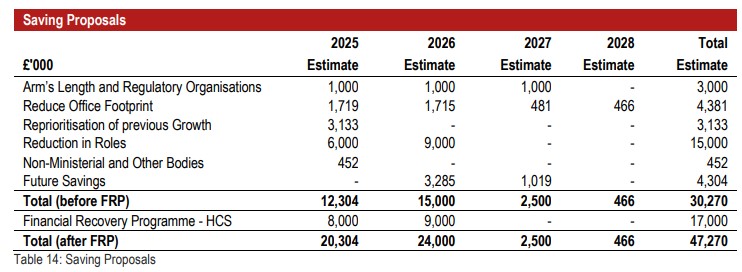
The government’s current budget, which was approved last year, included a commitment to review grant-funded arm’s length organisations and States-funded regulatory bodies, with yearly savings targets of £1 million earmarked in 2025, 2026 and 2027.
The budget’s “ambitious savings targets” were acknowledged within the JCC’s annual report, which stated that this could have “implications for the Commission’s future resourcing”.
Insufficient funding or unexpected financial pressures could affect the ability to deliver key initiatives, invest in necessary resources, and maintain high regulatory standards
Jersey Care Commission
The report continued: “While the Commission operated within budget for 2024 and anticipates this will continue in 2025 without affecting its core functions, longer-term financial sustainability remains challenging.

“The Commission continues to monitor this risk closely in the context of increasing demand and will take steps to mitigate any potential impact on its regulatory programme.”
It warned that, as the Commission expands its regulatory responsibilities, its financial sustainability would continue to be “a critical consideration”.
“Insufficient funding or unexpected financial pressures could affect the ability to deliver key initiatives, invest in necessary resources, and maintain high regulatory standards,” it added.
Writing in the foreword of the report, JCC chair Dr Nigel Acheson – who took up his role at the start of this year – said: “While I was not in post during the period covered by this report, I have been deeply impressed by the commitment and professionalism of the Board, Chief Inspector, and staff, and by the vital role the Commission plays in efforts to ensure the quality and safety of health and social care in Jersey.”
Outgoing chair Glenn Houston said he took “immense pride” in the progress the Commission has made.

He continued: “However, I am equally aware of the significant work that remains. The
introduction of regulation for acute Hospital, Ambulance, and Adult Mental Health Services is a vital next step.
“It will not be without challenge. Regulation requires collaboration, investment, and a shared commitment to improvement.”
Mr Houston added: “But the benefits; safer services, empowered providers, and increased public confidence in the health and social care system – far outweigh the costs.”
IN NUMBERS…
Last year, the Jersey Care Commission:
- Prepared for and undertook 114 statutory inspections, a further nine inspections, and two reviews publishing the resulting reports.
- Registered and renewed the registrations of more than 3,900 Health and Social Care workers to enable them to work in Jersey.
- Continued to develop partnerships with UK Regulators, including agreeing to working with the Care Quality Commission in England to support the regulation of acute Hospital, Ambulance, and Adult Mental Health Services.
- Prepared for regulation of acute Hospital, Ambulance, and Adult Mental Health Services by consulting on and preparing new standards.
- Delivered a digital registration system and portal to enable Health and Social Care professionals to access on-line registration and update their own details.
- Worked with professional regulatory bodies such as the General Medical Council, and the Nursing and Midwifery Council, to ensure protection of title and that professionals working in Jersey are subject to robust fitness-to-practise processes when required.
- Joined as an Organisation Member of the Institute of Regulation.
