

The States of Guernsey has pledged to give out £243,000 over the next three months in response to “the continued pressures on the industry caused by the war in Ukraine”, whilst Jersey farmers last received Government support in in September 2022.
The recent funding package announced by the States of Guernsey highlights the continued hardships faced by dairy farmers after Brexit, the war in Ukraine, and unfavourable weather conditions.
Since Brexit hit, imports of feed and other products have become a lot more complicated for farmers in Jersey and Guernsey.
The second blow to dairy farmers came with the war in Ukraine, which will have been ongoing for a year this Friday. The conflict has had a severe effect on the import prices of fertiliser and feed. Russia, as a top supplier of these commodities, has reduced many of its exports and the price of fertiliser has also risen rapidly alongside that of gas.
The impact of these pressures on Jersey’s dairy industry can be seen through milk prices, which rose in February 2022 and again at the start of 2023.
The price rise this January was at an extra 15p per litre.
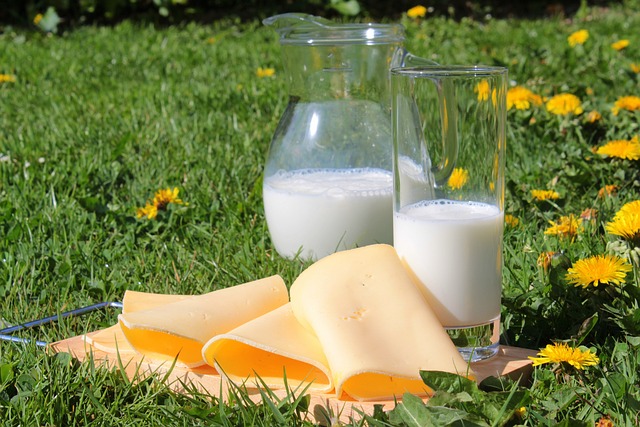
Pictured: Jersey milk prices have risen twice in the last year.
“Jersey dairy farmers are now feeling the full effect of rising costs on their farms”, says Phillip Le Maistre, Chair of the Milk Marketing Board in Jersey.
Last year, both the States of Guernsey and Jersey recognised the problems dairy farmers face, and initiated emergency funding packages.
In Jersey, this amounted to £400,000 in support on a funding-per-cow basis.
Guernsey’s Government has now decided that further financial aid is needed to save the dairy industry from negative profits.
Deputy Lindsay de Sausmarez, President of the Committee for Environment and Infrastructure in Guernsey, said that “in this current financial climate, emergency funding is needed to see our farmers through this interim period while we carry out a review on the sector’s long-term sustainability”.
In Jersey, no further emergency package has been announced for the dairy industry, although a credit scheme was set up last year by Deputy Kirsten Morel.
This credit scheme allows for financial support in the deliverance of public goods. Mr Le Maistre said that he welcomed the scheme and, while it does increase financial support for 2023, he said that “there is still some way to go to make sure that all farmers in Jersey are on a level playing field with other countries”.
There has been a considerable decrease in Jersey dairy herds over the past 20 years, threatening the industry and its production.
In 2021, agricultural support in Jersey was £24 per capita, versus £386 in Norway and £154 in Northern Ireland.
“The Farming industry is working closely with Deputy Kirsten Morel and his department to try and find ways of addressing this imbalance in funding, and finding significant extra support for 2024,” said Phillip Le Maistre.
There has been no announcement as to whether Jersey will follow Guernsey’s recent emergency steps, aimed specifically at the dairy industry.
