


A PhD student from Jersey is carrying out a new project to better understand and find new ways to treat a chronic liver disease.
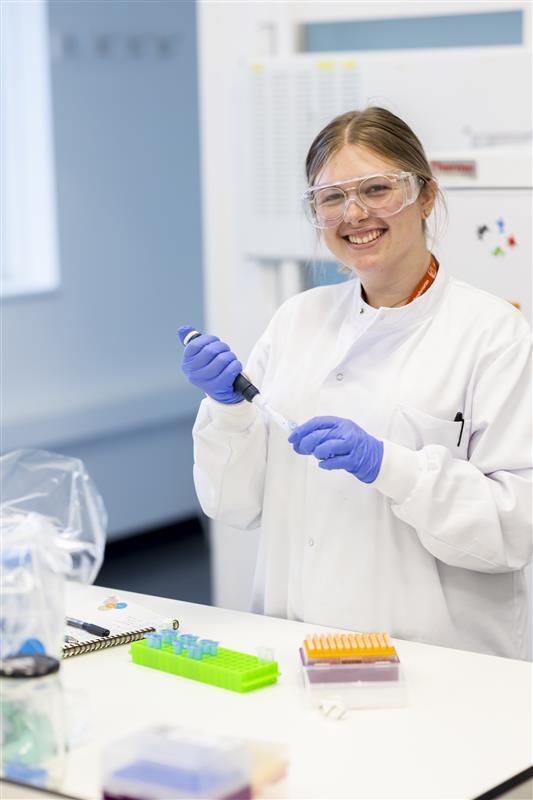
Former Hautlieu student Millie-Rose Doolan is currently developing new ways to treat Metabolic Dysfunction-Associated Steatotic Liver Disease (MASLD) as part of her PhD.
Commonly know as fatty liver disease, MASLD is estimated to affect up to one-in-five people in the UK.

The disease is caused by having too much fat in the liver, and is increasing in prevalence due to globally rising obesity levels.
Mild cases of MASLD can be reversed with lifestyle changes, but severe cases can lead to liver failure and an increased risk of cancer.
Research on how the disease affects people differently is limited, meaning that not much is understood about how the disease progresses. This is what Millie is working to find out at Southampton University.
Using donated liver samples from patients across the phases of the disease, her research will generate 3D organoids – tissue cultures derived from stem cells – to work out ways to help the liver to self-repair and any possible interventions.
Millie explained that MASLD is a “global health problem” with up to 30% of the world’s adult population likely to be affected.
“By creating 3D organoids using patient tissue, we can delve deeper into how the disease progresses and identify potential targets for treatment,” she said.
Millie’s research – which is funded by the National Institute for Health and Care Research, Southampton Biomedical Research Centre, and the Wessex Experimental Medicine Network – forms part of her university’s ground-breaking work to tackle some of society’s most pressing health challenges.
The PhD student previously completed a summer placement working with diabetic patients with Jersey’s Preventative Screening Programme, and wants more opportunities for students to explore medical research as a career.
“This experience further fuelled my ambition to be part of medical research,” she said.
“When I was in school, we didn’t have the opportunity to interact with researchers from universities, especially islanders who went on to be involved in research.
“I want young people in Jersey to know that studying for a PhD and working with leading researchers to create an impact is a fantastic career path and entirely possible.”
She added: “I’m proud to be carrying out this PhD, which will hopefully develop a better understanding of this disease to help patients in the future.”
