


A diplomatic storm has blown up over the right of French boats to fish in Jersey’s territorial waters. It even prompted France’s Minister for the Sea to say that the country was “getting ready for battle” and lobbying Brussels to get Jersey removed from the recently signed UK/EU trade deal.
She, along with fishing representatives in France, are saying that Jersey is refusing to abide by the new treaty by not licensing boats from Normandy and Brittany, who historically have been able to fish up to three miles off Jersey.
The tussle even made the national news this weekend, with the Daily Express reporting that Jersey had “hung up” on the French regarding talks and had decided to “stop the interim system” currently in place.
Environment Minister John Young, however, said that this couldn’t be further from the truth.
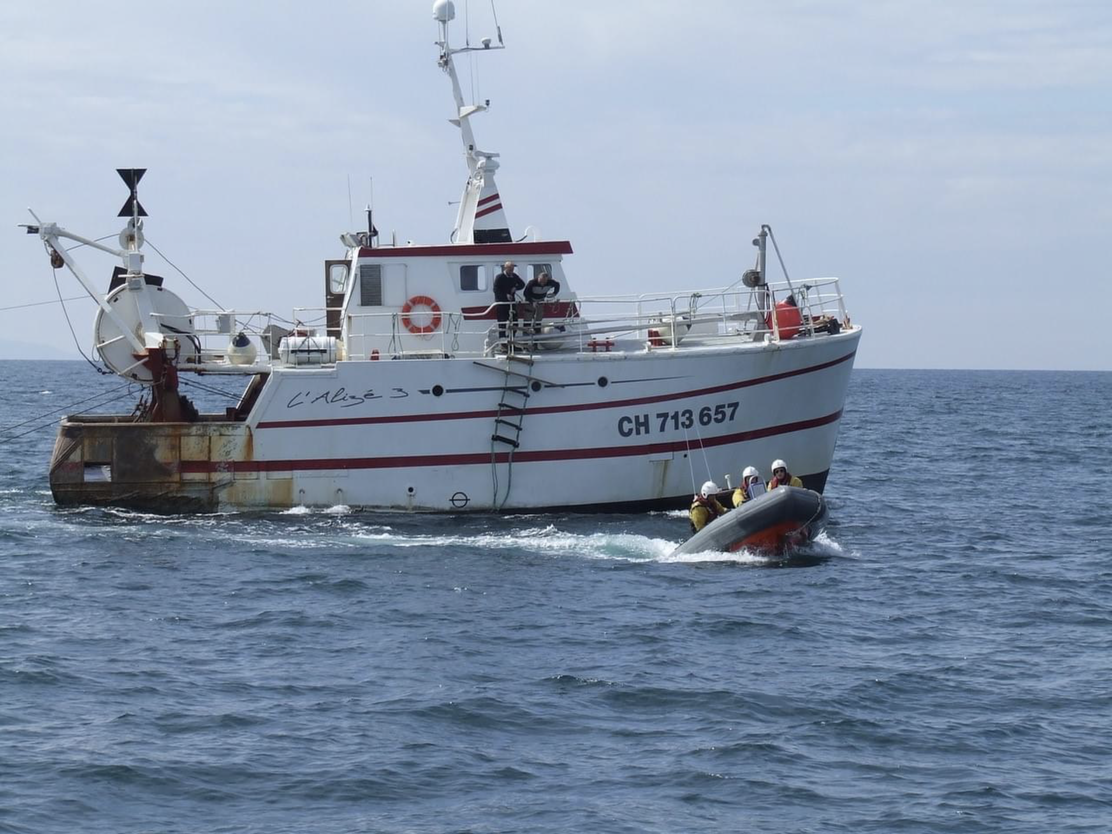
Pictured: Under the UK/EU trade deal, Jersey takes back full licensing control of its waters.
“We are in a very tense and worrying situation because if this part of the deal is rejected, it all falls away for Jersey, including tariff-free trade,” he said.
“The External Relations Minister had a conversation with the French on Friday and my Assistant Minister Gregory Guida spoke to the French media on Sunday to explain our position.”
Deputy Young said that Jersey had proposed an interim arrangement after the UK/EU deal had been signed which would honour existing licences – issued under the Bay of Granville Agreement, which was superseded by the new deal – for a four-month period.
“We recognised that we have a long and valuable relationship with the French, so we wanted to give both them and us time to implement the new licensing regime,” he said.

Pictured: Jersey’s territorial waters stretch out to 12 miles of the mean water mark, with licensed French boats allowed within three miles of the Island.
“However, we received a clear message from the UK and EU that they wanted no interim arrangements and the terms of the trade deal should be followed to the letter and introduced straight away.”
That deal gave Jersey full licensing powers over its territorial waters but with the proviso that French boats could still fish up to three miles and existing licences had to be honoured – providing that it could be proved that each licensed boat had fished in the area on at least 10 occasions in any one year between 2017 and 2020.
“When we asked the EU for that proof, we were simply sent a list of about 350 boats, which we knew was generic and not up to date,” said Deputy Young.
“But being proactive and wanting to be helpful, we issued licences to about 60 French boats which, through our own records, we knew were legitimate and met the criteria.”
Deputy Young added that he was encouraging all French fishermen with a licence under the Bay of Granville Agreement to send their evidence, as set out in the new agreement, to Jersey as soon as they could.
Under the deal – which was agreed by Brussels and London on Christmas Eve and backed by the States the following Sunday – both sides have 90 days to walk away if they don’t like the terms that relate to Jersey.

Pictured: Environment Minister John Young: “We know we have to implement the new agreement fairly, objectively and indiscriminately”.
The fear for Jersey is that the French convince the EU to enact that clause, which means that the Island falls out of the deal, tariffs apply to Jersey produce (but not the UK) and the Bay of Granville Agreement returns.
However, Deputy Young said that Jersey has been clear in its view that the Bay of Granville agreement, before it was replaced, had swung far too much in favour of the French, who were not only increasingly fishing in Jersey’s waters but also failing to adhere to its provisions about conservation, such as accurately recording what they were catching and where it was caught.
The Bay of Granville Agreement, which was signed in 2000 and formalised a 182-year-old convention of shared fishing grounds, allowed French boats to fish up to Jersey’s three-mile limit, in exchange for Jersey boats being able to fish closer to France. However, it is understood that those French waters have become unproductive, prompting increased fishing around Jersey.
“We know we have to implement the new agreement fairly, objectively and indiscriminately,” said Deputy Young. “We also know that our own fishermen and merchants have encountered massive bureaucratic problems when they’ve tried to land produce in France. We are doing all we can to resolve this tricky situation.”
