

Jersey has been warned not to follow the NHS healthcare funding model by a leading London-based surgeon who claimed it is “about to bankrupt the UK”.
Professor Sue Clark made the comments last night at a conference organised by the Friends of Our New Hospital campaign group.
The leading London-based consultant surgeon – who has semi-retired to her home island – called for the next States Assembly to prioritise developing a new funding system, potentially including insurance-based or co-funded models.
Professor Clark advised Jersey to look to other models of funding outside of taxation, such as co-payments or insurance top-ups, and learn from other healthcare systems – such as France, the Netherlands and Scandinavian countries – where health outcomes were better than the UK.
The way health is organised and paid for in other small jurisdictions, such as Ibiza, the Canary Islands and Singapore, should also be looked at, she advised, and Jersey should ask for guidance from such organisations as the well-respected think tank The King’s Fund.
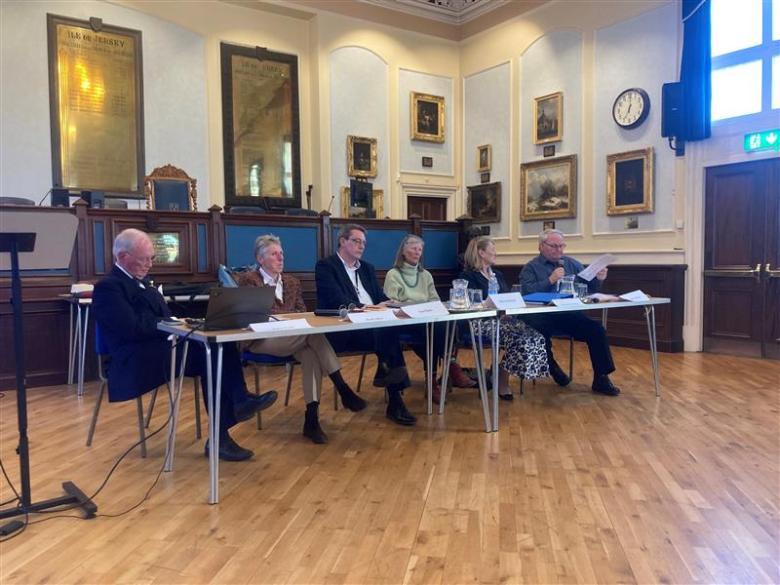
Professor Clark was one of several speakers at the Town Hall conference, which was attended by around 80 people, including a number of candidates in June’s election.
She said: “In Jersey, we have an opportunity not to go down the NHS-taxed model, which just creates a political football. Unpopular as it might sound, healthcare is a commodity that you purchase.
“I am not saying that we follow the US model of healthcare-if-you-can-afford-it, but there can be a happy medium, and Jersey needs to look to more successful models.
“There is a concern that many managers in Jersey have come from the NHS, but they need to move beyond it because it is not appropriate for Jersey.”
Other speakers included Family Nursing & Home Care chief executive Rosemarie Finlay, who also chairs the Health and Care Partnership Board, mental-health director Andy Weir, and Friends of Our New Hospital member Graham Bisson, who gave a compelling first-hand account of his experience with accessing Long-Term Care.
As well as future funding, underlying themes of the conference included the central role of prevention, looking at the whole system of healthcare, digital investment and introducing a single electronic patient record, the importance of changing the way we think and talk about mental health.
After the two-hour meeting, which included a question-and-answer session, organiser Mary Venturini said: “I was happy with the response because healthcare is a very complex subject, which is the reason why it is often pushed aside.
“What seems to me to be increasingly obvious is that it involves us all: we need to understand that it does not just start when we feel sick and need a GP or the hospital.
“Health should not be hospital-centric but start in the home and at school – housing, education and healthcare are all linked.”
