


Jersey Water has pledged to work with the Government to find the best way to remove all traces of PFAS from the island’s water supply after more than a thousand islanders signed a petition calling for a dedicated treatment plant.
The water company confirmed its commitment to tackling the trace amounts of PFAS contamination in the island’s water supply.
It comes after Environment Minister Steve Luce last week announced plans to introduce PFAS regulations later this year after a petition calling for a Government-funded treatment plant gained nearly 1,300 signatures.
He added that Jersey Water is in an “advanced position” to put treatment solutions in place.
The public petition, 'Clean Jersey's water, build a treatment plant and improve PFAS related healthcare,' has received a response from the Minister for the Environment, and the Minister for Health and Social Services, after gaining more than 1,000 signatures.
— States Assembly – Jersey's elected parliament (@StatesAssembly) February 27, 2025
You can read their… pic.twitter.com/cOcg6G92QU
In response, Jersey Water’s Head of Water Quality said the company is working closely with the Government to make sure any new technology chosen is suitable for the island’s needs
Jeanette Sheldon said: “The public, the Government and Jersey Water are fundamentally all focused on the critical need to understand and address the challenges and risks posed by PFAS pollution in the island.
“While the environmental impact of these man-made chemicals goes beyond water, we are committed to playing a key role in identifying and implementing solutions to treat PFAS, so that we can maintain the safety of the mains supply and islanders’ confidence in its quality.”
She added: “As the Government of Jersey moves forward with introducing specific regulatory standards for PFAS, it is essential that any treatment technologies we adopt are appropriate for the island’s needs and also integrate with our existing water supply infrastructure.
“Working closely with the Government, our focus is on investigating and selecting the right treatment solution for Jersey, based on the most up-to-date scientific evidence, global best practices, and compliance with the future regulatory limits the Government sets for the island.”
The Government last week said that it is looking at international solutions, including a $30 million treatment plant in Australia, as possible models for Jersey.

PFAS – known as “forever chemicals” because they do not easily break down – have been linked to health risks including elevated cholesterol, and kidney and testicular cancers.
While Jersey Water’s latest report confirmed that 99.95% of mains water samples meet current EU and UK regulatory standards, chemicals can be found in higher concentrations in some parts of the island.
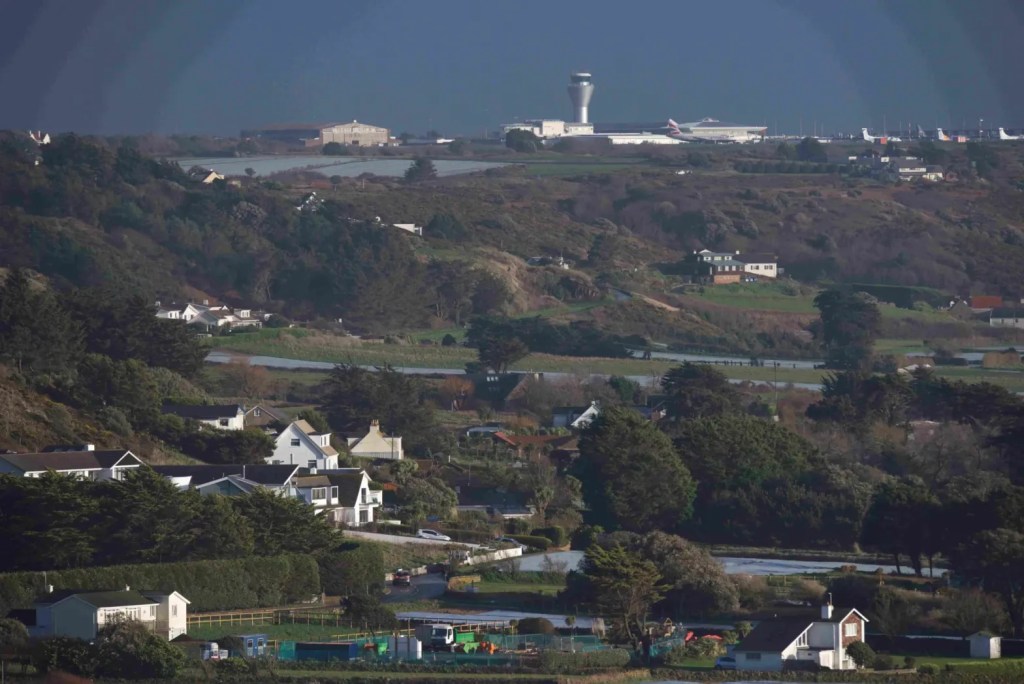
The principal source of contamination in these areas was a type of PFAS used in firefighting foam at the airport until the 1990s.
That foam, which was sprayed for years, seeped into the ground and contaminated private water supplies in the area below the runway.
Concerns over the exposure were first raised by Sarah Simon, an islander living in the polluted area suffering from skin, thyroid, and autoimmune issues.
She felt PFAS was to blame for her health conditions, and, after testing her own blood, Sarah found high levels of the chemical in her body.

Health Minister Tom Binet has announced the government will create a “clinical review service” to assess health impacts and offer possible treatments for residents like Sarah.
Deputy Binet said: “These reviews will provide comprehensive health assessments and potential interventions for those affected.”
He added that training will be provided for healthcare workers about PFAS later this year.
The Health Minister also explained that a panel of experts is already investigating ways to lower PFAS levels in the blood, with preliminary research indicating that the most effective option appears to be cholesterol-lowering medication.
Meanwhile, PFAS expert Dr Steve Hajioff, who chairs the Government’s Scientific Advisory Panel on the issue, has suggested that Jersey should take a proactive approach to regulation by anticipating where international standards will be in the coming years and implementing them now.

He also explained that treating water in Jersey would be much easier than in other jurisdictions due to the way the system is organised.
“Other than those households that are on borehole supplies, you would only need to treat the water in the two water treatment plants in order to get the levels lower for the overwhelming majority of Islanders.
“That’s a problem that every other country in the world would be deeply jealous of, because to do the same in the UK, where everything is mixed after it’s been through treatment plants, would be an absolute nightmare.
“So Jersey, once again, can be more fleet of foot than a lot of other countries can, which is great.”
LISTEN…
Listen to the interview with PFAS expert Dr Hajioff below or search ‘Bailiwick Podcasts’ on your favourite podcast provider…
