


Less than half of prisoners leaving HMP La Moye last year had a job lined up on release, it has emerged.
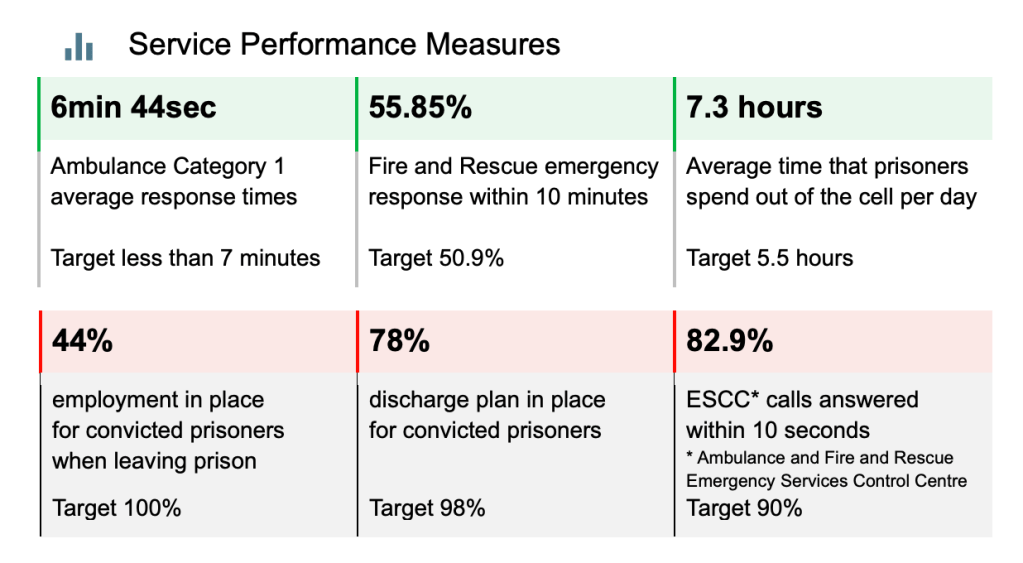
The latest States of Jersey Annual Report and Accounts revealed that just 44% of inmates leaving prison had work secured.
This is far below the Government target of 100% of prisoners having employment in place on their release.
The report also showed that only 78% of convicted prisoners left custody with a formal discharge plan last year – falling short of the 98% goal set by the Justice and Home Affairs Department.
While 91% of those released had accommodation arranged, the report’s annex made clear that most placements were short-term – such as shelters and guest houses – due to challenges accessing affordable, stable housing.
It read: “Lack of housing availability and rising rental and deposit costs continue to pose a challenge in securing suitable stable accommodation for people leaving prison, with most accommodation placements being transient or temporary, such as shelters or guest houses.
“Prison leavers without stable accommodation are more likely to break the law again, so from 2025, the Prison Service will focus on stable accommodation figures, to better reflect the challenges faced.”
The report also revealed that 79% of convicted prisoners took part in education or vocational training in 2024.
“The Prison Service recognises the need for development of education provisions and will continue exploring options to improve the availability of courses for prisoners,” it added.
The findings come despite a push by the Prison Service to build a “rehabilitative culture” at La Moye with an intention of “releasing better neighbours” – with efforts focused on employment, education, and housing.

A damning review of Jersey’s prison service earlier this year revealed a series of failings, including inadequate support for those leaving custody.
In March, an external review by HM Chief Inspector of Prisons found that “poor facilities,” “insufficient resources,” and a “serious failure in leadership” resulted in the “near collapse” of the facility’s work and education provision over the past seven years.
Since the last inspection in 2017, the range of activities offered to inmates had “substantially reduced,” with “decisions taken by previous leaders” ending accredited training in carpentry, industrial cleaning, cookery, and bricklaying.
External reviewers also found that the prison was not providing training to help prisoners gain employment on release, with a survey showing that “significantly fewer” prisoners were attending education or vocational training than in 2017.
The report found that about a quarter of prisoners were released homeless last year – including some “high-risk men” – which reviewers described as a “concern.”
There is an “urgent need” to offer a provision that usefully occupies and incentivises prisoners to behave while in custody, the document said.
It added that no prisoners achieved qualifications in English, mathematics, or English as a foreign language during 2024 due to a lack of teachers.
The Home Affairs Minister has said the prison’s management team is working on an internal action plan and that “improvements to several of the concerns raised are already in train.”
