


The tax, which is running in the Isle of Man and which has just been agreed in Guernsey, is based on a charge calculated on profits earned by retailers.
If it works, the tax would solve one of the biggest problems with the “Zero-Ten” company tax system, which allows foreign-owned non-finance firms to pay no tax at all to the States.
Because “Zero-Ten” only taxes local shareholders on company profits, companies such as Normans, de Gruchy and BhS don’t pay any company tax here – although they do pay Social Security contributions, and the States take tax from their employees.
The “Tesco Tax” proposal in the Isle of Man – named after the supermarket group because it’s the largest non-local business operating there – is levied on major retailers with annual profits of more than £500,000, and has been assessed and approved by the EU Code Group that reviews tax fairness.
Estimates for how much it might raise go up to £3.5 million.
In Guernsey, the estimate is for up to £2 million in revenue per year.
The charge hits both locally and non-locally owned companies – but the vast majority of retailers making big profits in Jersey are UK-owned.
During last night’s Any Questions meeting organised by change.je, Treasury Minister Alan Maclean said that they were at the early stages of considering if a charge could work, and if it would satisfy the EU rules that led to the adoption of “Zero-Ten” in the first place.
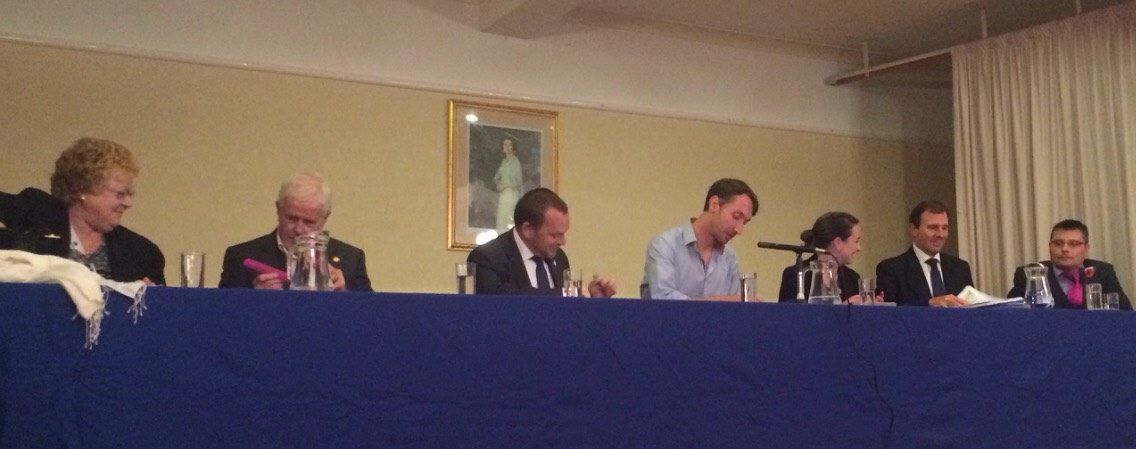
Senator Maclean told the meeting of around 60 people that work was being carried out to see if the tax could work.
He said: “Where shareholder profits go off-Island, we retain the tax on employees but the shareholders who don’t live here pay tax in their own jurisdiction.
“From our point of view, to be able to consider a tax of that nature – which would not just be for retailers – we have got to ensure that it’s ‘Code Compliant’.
“I’m not sure that Guernsey has got that data, but we are trying to collate it.”
