


Laws around advertising prescribed medicines – including medicinal cannabis – will be tightened this month following mounting concerns about unsafe prescribing and mental health harms.
The Medicines (Advertising) (Jersey) Order 2026, which will come into effect on 13 January, formally bans advertising that could lead members of the public to use prescription-only medicines.
The change delivers on a commitment made by health officials last year after warning that medicinal cannabis advertising was contributing to inappropriate use and increased psychiatric admissions.
The law replaces advertising rules dating back to 2000 and tightens restrictions around indirect or lifestyle-based promotion.
Health officials previously highlighted large medicinal cannabis adverts at Jersey Airport as an example of the problem.
Under the new law, such adverts are no longer permitted – even if they do not explicitly encourage people to seek a prescription.
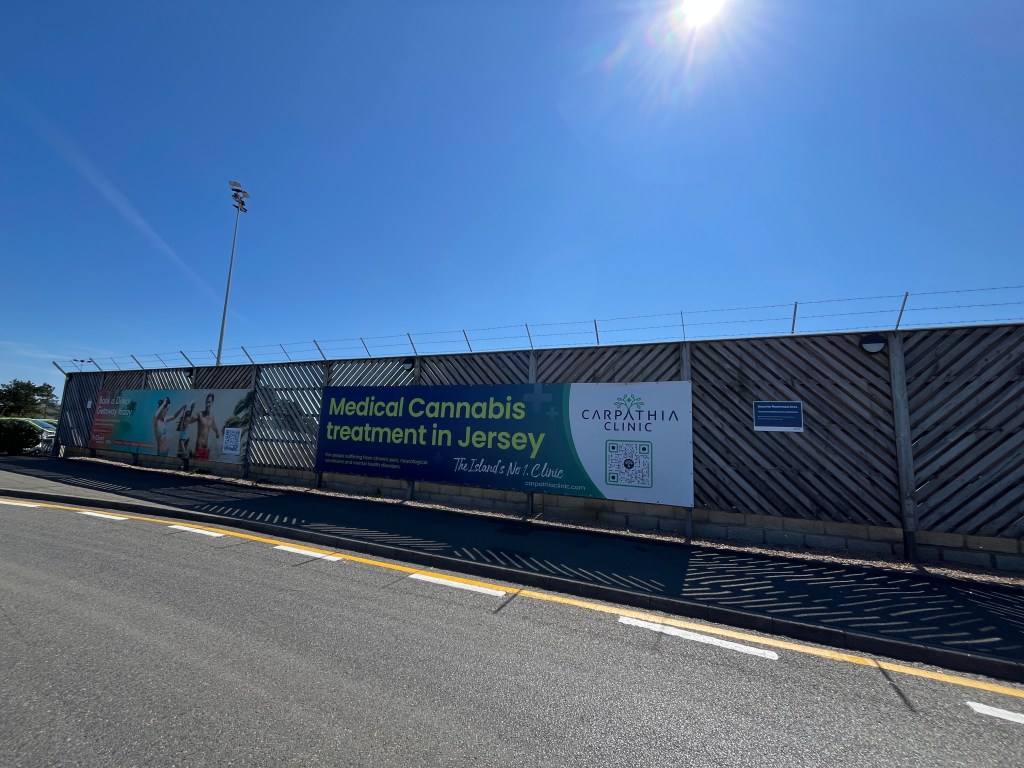
Any advertisement that is “likely to lead to the use” of a prescription-only medicine is now prohibited.
The previous law was narrower and less explicit – leaving room for indirect promotion, branding, and lifestyle advertising that did not directly encourage people to seek a prescription.
It comes after Mental Health Director Andy Weir raised concerns about prescribing practices for islanders with serious mental illness amid a “notable increase” in inpatient mental health admissions for those prescribed large amounts of medicinal cannabis.
Health leaders also warned of a developing “black market” in prescription drugs, with “anecdotal evidence” from service users suggesting that “quite a lot” of medicinal cannabis was being sold in the island.
The new law also goes further than a simple advertising ban by restricting the content and tone of any permitted medicinal advertising.
It prohibits advertisements that claim guaranteed benefits, exaggerate effectiveness, or suggest that a medicine has no side effects.
Advertisers are also barred from implying that a product is safer or more effective simply because it is described as “natural”.
The law further prevents adverts from suggesting that a person’s health would suffer if they do not take the medicine.
It also bans the use of endorsements or recommendations from celebrities, scientists, or healthcare professionals.
In addition, advertisements for medicinal products must not be directed at children or young people.
Breaching the new advertising rules will be a criminal offence, with anyone found guilty facing up to two years in prison or a fine.
Health Minister Tom Binet previously acknowledged that Jersey had been “swift to legalise medical cannabis without making sure that we’ve done all the homework to regulate it properly”.
While the new advertising ban does not regulate prescribing itself, it is part of a broader effort to rein in the industry – alongside work to improve oversight, data sharing, and potential regulation by the Jersey Care Commission.
The government is also due to debate proposals that could end prosecutions for personal cannabis use and even pave the way for a government-run cannabis supply trial next month.
