

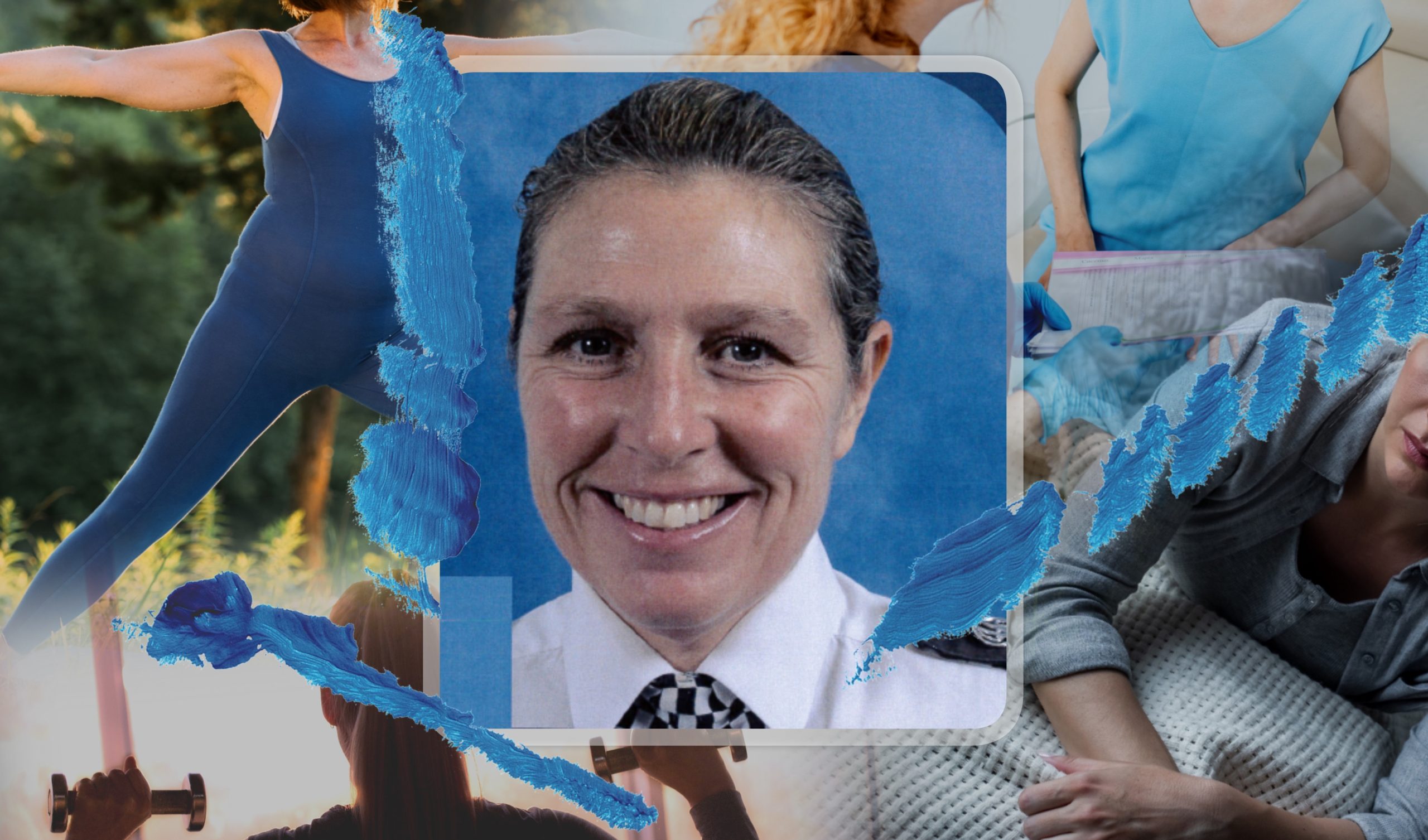
PC Joana Carter, a School and Youth Focus Officer, is the ‘Menopause Champion’ for the States of Jersey Police and has been delivering several presentations to her colleagues on the subject, what people can look out for in their colleagues, and how to have what can be sensitive conversations.
She is part of the ‘One Voice’ group established by Sergeant Martin Davies to discuss various areas of diversity and inclusion such as neurodiversity and LGBTQ issues. As a result of this work, Sergeant Davies recently won the award for Diversity & Inclusion Champion at the Government’s ‘Our Stars awards’,
Joana says she didn’t hesitate to join the group to help bring more awareness of menopause within the force. “Why am I passionate about it? First, because I went through it,” she explains.
A variety of symptoms

Pictured: One of the symptoms Joana has been experiencing is memory issues, which means she has to take notes instead of relying on her “sharp brain”.
Joana experienced perimenopause – the period during which the body transitions to menopause – from 2017, and then menopause around 2020 at the age of 50.
She first spoke to a doctor after her family pointed out she was being more “abrupt” than usual. While she says she is “very lucky” to not have had symptoms as serious as others, Joana still experienced the most common ones.
“I had really bad memory and brain fog,” she explained. “You feel inept because you cannot remember. I always had a sharp brain, now I have to take notes. My sleeping pattern really changed, I had hot flushes. My skin got quite dry so I now make sure to moisturise after I have a shower. I also had this feeling that something was crawling on my feet. Some people feel they are going mad or they are hallucinating when that happens.”
“I also get quite angry sometimes, but I do not take it out on people. I am usually a very happy person so I’m lucky I didn’t get depressed, but people can get very low. You can get very emotional, you don’t feel confident in yourself anymore.”
A new diet and more exercise

Pictured: Joana walks regularly on the North Coast.
Many people will be prescribed hormone replacement therapy (HRT) to help manage their symptoms but Joana cannot due to the potential side effects. She has however found alternative ways to alleviate the effects of menopause.
“HRT is amazing, I recommend it to everyone that can have it, I am just one of those unfortunate people who cannot take it because of health reasons,” she said.
“When you go through menopause, you tend to put on weight, you put on a tummy because of the lack of oestrogen. I changed my diet a little bit, I follow the Mediterranean diet and I upped my exercise. During covid, I was walking every day on the north coast, even just 25 minutes has helped my wellbeing. I also go the gym at the weekend.”
Joana also uses the Balance app, created by Dr Louise Newson, a menopause specialist, to track her daily symptoms, which has helped her identify some of her triggers as well as remember all the symptoms she has experienced and their frequency when she speaks to her doctor.
A mental health toll

Pictured: “People report poor memory and concentration, irritability, hot flushes, and sometimes, they take time off work to deal with that so menopause will affect the way your work,” Joana said.
While most of the symptoms are physical, there is also a mental health toll for menopause, one that can affect someone’s relationships – a recent survey from the Newson Health Menopause Society found that seven out of 10 women blame menopause for their divorce – as well as their day-to-day job.
“People report poor memory and concentration, irritability, hot flushes, and sometimes, they take time off work to deal with that so menopause will affect the way your work,” she explained. “It’s quite challenging if you are going through that, it’s very, very hard. Some people they cannot function, so we should give them flexibility. Some people cannot work from home, so we have to think about that too. If you are in an office, you can try and manage it, but if you are not feeling great, you are not going to be in your optimum condition.
“Some people have left their jobs because of managers not being understanding. It’s important as managers to talk about it. There are adjustments that you can make for your staff. If people they are being supported, they will want to stay. Some people have had to leave but then it means you lose so much knowledge and so many skills.
“If you are a very good manager and you know your team, you will notice if someone is not doing well or if they are not as they normally are, and then you can point them to their doctor for more support.”
Education, education, education

Pictured: “Young girls should be educated as part of their PSHE lessons, but so do young boys,” Joana said.
As such, Joana hopes the employment policy the Government is working on will give managers tools on how to deal with menopause. “It should be flexible, but it also has to give managers a clear understanding of what they are looking out for.”
In her presentations and on a daily basis, Joana has been open about her experience at work – when she forgets something or is feeling hot flushes, she will tell her colleagues “I’m having one of my menopause days”. “They all laugh because they know,” she adds.
She is keen to see more awareness of menopause, not only for managers so they can support their colleagues better, but also within the general public.
“It needs to be more spoken about,” she said. “It’s all about education, it’s something we need to look at for the future. Young girls should be educated as part of their PSHE lessons, but so do young boys. Males might not go through menopause physically, but they will need to know about it to support people in their lives.
“You have got to talk about it. People never used to talk about it. We want people to understand that talking about menopause is important. We have to be open about it and be able to talk about it. We are quite lucky at the police that our Chief, Robin Smith, is very supportive. In his old force, he was the menopause champion.”

Pictured: Joana believes every workplace should have a menopause champion.
She hopes that with more awareness, people will be able to support each other.
“If you are educated about it, you will know what to look out for,” she said. “We need more people to talk about it, it’s not a taboo anymore.
“It’s about education people and being visible. It’s great to have an awareness month or Menopause Day because it gets people talking about it and it gives managers the opportunity to get someone in for a talk.
“There should be a champion in each work force to talk about these issues. It would be great if different agencies, even in private sector or in banks, if each would have that champion to tell their teams.
“And we need to empower men, we need to get more males on board!”
This article first featured in the Menopause Edition of Bailiwick Wellbeing, a weekly guide to wellness in work and island life, delivered to your inbox each week. Sign up for free now here.

