The cases put forward for the independent review of Jersey’s Neurology Department were not selected randomly as agreed, it has emerged – in a development that mirrors the controversy surrounding the recent rheumatology review.
The Royal College of Physicians neurology review, which found that “overstretched” neurology staff have been pressured to follow “unsafe practices”, confirmed that the agreed method for selecting patient cases was not followed.
As part of the terms of reference originally agreed between the Neurology Department and the independent experts, the review of 12 clinical records was supposed to include three sets of four “randomly selected” cases starting from June 2023.
But the review, made public for the first time yesterday, noted that “a specific random sampling method was not employed and, instead, the clinical records were chosen by the neurology team”.
Despite the deviation, the reviewers chose to proceed, stating that the review was intended to understand clinical pathways “rather than cases of concern” and to inform future models of care.
However, the reviewers made clear that the process would not be able to address any “wider clinical concerns”, adding that the Neurology Department “would need to seek a process separate to this one to consider those”.
Express revealed a similar departure from the agreed terms of reference as part of the Royal College of Physicians review into Jersey’s Rheumatology Department, which revealed a “lack of governance, not just in rheumatology but across the healthcare organisation” when it was published in early 2024.
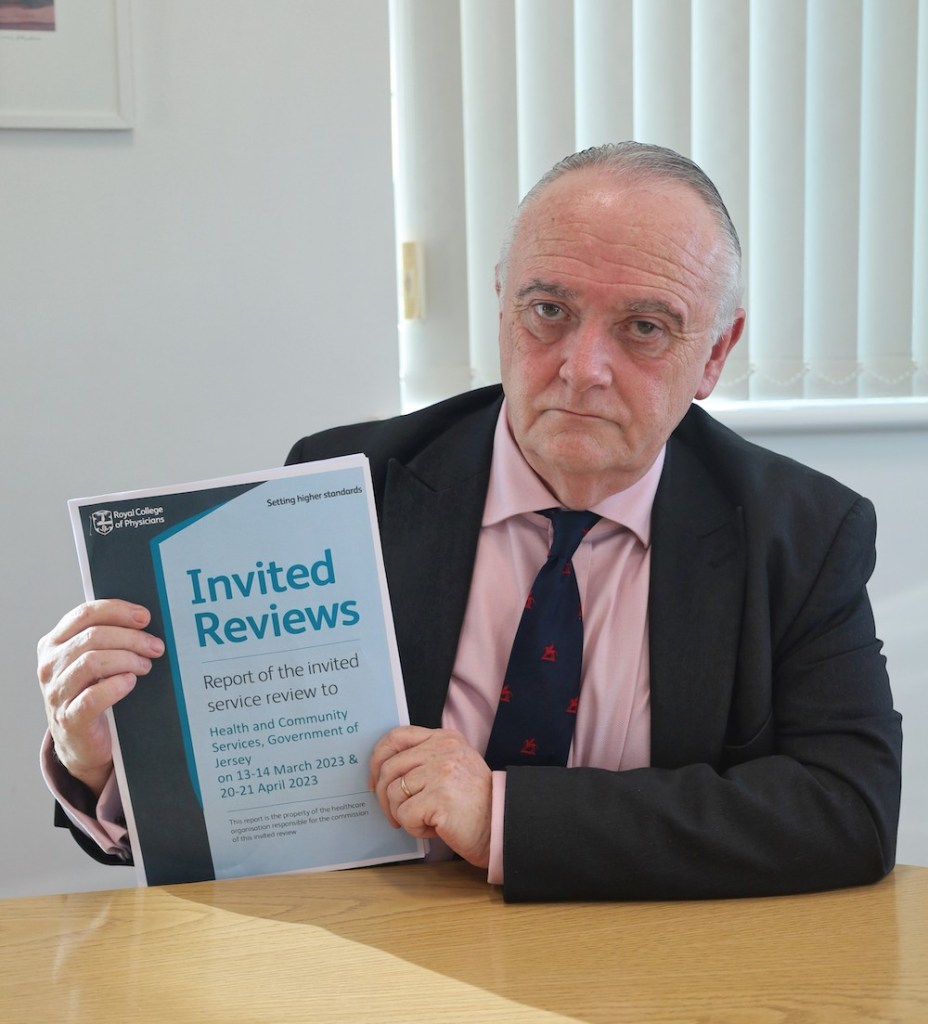
In the rheumatology review, the original terms of reference required a mix of cases: six flagged by the department due to concerns, six selected at random using an “every nth case” method, and six chosen by the consultant.
However, it later emerged that all 18 cases were instead provided by the Health Department and drawn exclusively from a subset of patients treated with biologic drugs – rather than from the wider rheumatology patient pool.
The government refused to explain how the cases were selected, why biologics patients alone were chosen, or who made the decision.
In the neurology review, medical director Simon West told Express there had been “quite a bit of back and forth with the college” about case selection, which delayed publication.
Mr West said the cases were picked by “one individual within the medicine care group who did select the cases randomly from a set of notes”.
He said that the individual had “no knowledge of neurology”.
The college was informed that the cases weren’t selected randomly at every “nth” case but decided, he said, to “proceed with the review”.
“I think the reality is that there are a couple of different things you could say about the case selection,” added Mr West, claiming that the reviewers “have actually gone on to say that the case note review wasn’t a fundamental part of the review”.
Of the 12 clinical cases examined, seven demonstrated “good practice”, and the remaining five were marked as having “room for improvement” – but the review’s wider findings paint a picture of systemic strain, outdated procedures and governance gaps.