


Enforcement of breath testing as part of new maritime regulations will be based on “reasonable grounds”, the Minister behind the “proportionate” legislation has said – as States Members yesterday voted to approve the changes.
Economic Development Minister Kirsten Morel, who has political responsibility for air
and sea transport policy, said the “measured” approach would “avoid penalising responsible operators”.
His proposition to alter the Harbours (Inshore Safety) Regulations had already been approved in principle in July, but was referred to the Economic and International Affairs Scrutiny Panel.
The key changes include new offences for the dangerous and careless operation of a vessel, including where serious injury or death has occurred, as well as aggravated offences for when alcohol or drugs are involved.
This offence will allow for breath testing based on suspicion of careless behaviour, without the evidence or suspicion of injury or fatality
Deputy Kirsten Morel
It also grants the police and harbourmaster new powers to breathalyse vessel operators based on reasonable suspicion of careless operation or serious harm.
The Economic and International Affairs Scrutiny Panel had previously cited a need for clarity over how the new regulations will be enforced, raising concerns over an alleged lack of detail within a Memorandum of Understanding between Ports of Jersey and the States police.
But during yesterday’s debate, Deputy Morel stressed that Members were being asked to vote on the regulations, describing the MoU as a “living document” that could be reviewed “on a regular basis”.
The panel had also criticised the lack of a standalone offence for operating a vessel while under the influence.
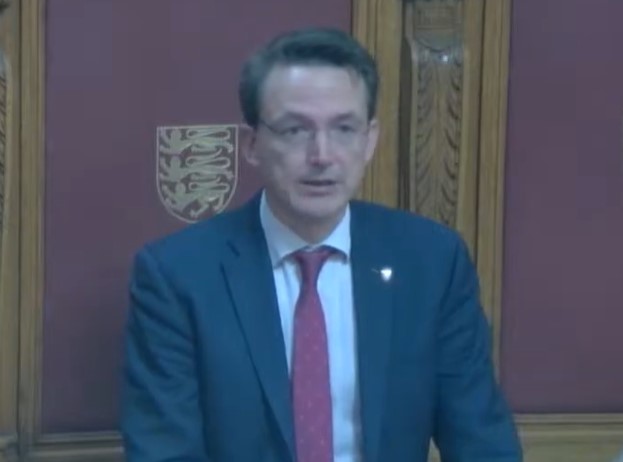
Speaking before the vote, Deputy Morel said: “To ensure those who use our waters are doing so safely, I’m introducing an offence for careless operation whilst under the influence.
“This offence will allow for breath testing based on suspicion of careless behaviour, without the evidence or suspicion of injury or fatality.
“The aim is to avoid penalising responsible operators.”
In September, former Jersey Lifeboat Association chair Ben Shenton told the panel that he believed there should be random breathalysing, contending that “the threat of a random check” could act as a deterrent even if they were conducted “very rarely”.
But Deputy Morel said there was “no evidence of a consistent problem of people dangerously operating vessels whilst under the influence”.
“Thus, I’m not introducing random breath tests, making the offences proportionate to the level of risk,” he continued.
“I think it is appropriate to say here that, rather, enforcement will be based on reasonable grounds for testing.
“This approach mirrors that of other jurisdictions, including the UK and Guernsey, where random testing does not occur.
“This is also consistent with the road traffic law, where police officers cannot randomly breath test drivers without reasonable suspicion or lawful cause.”
Deputy Morel said he was proposing a “measured approach”.
He added: “This proposition represents an important step in strengthening our maritime law, ensuring it is fit for purpose in protecting all who enjoy our waters, and establishing clearer duties and legal responsibilities and ensuring proportionate charges can be levied against those who behave improperly.”
The regulations were approved by the States Assembly yesterday with a standing vote.
