


Two bids to secure funding to replace the island’s 25-year-old phototherapy machine have failed because “more vital equipment has had to be prioritised” – leaving Jersey without the dermatology treatment since it was suspended during the pandemic.
Phototherapy is a form of dermatology treatment that uses artificial ultraviolet (UV) light to treat skin conditions such as psoriasis, eczema, and vitiligo.
It can also be used to treat babies who are suffering from newborn jaundice.
Jersey’s phototherapy service was first suspended in March 2020 in response to the pandemic – and has not re-opened since.
Last year, the Government said that there were “both staffing and equipment matters to be addressed before the service can be reinstated”.

Deputy Jonathan Renouf this week asked the Health Minister for an update on the purchase of a new phototherapy machine.
In response, Deputy Tom Binet explained that two bids for funding to replace the 25-year-old machine had failed – preventing the service from re-opening.
He said: “The equipment required to provide this [phototherapy] service is over 25 years old and spare components are now no longer manufactured.
“As a result, the only viable option for reinstating the service is to invest in new equipment.
“Although two capital replacement bids have been submitted, neither has been successful as different, more vital equipment has had to be prioritised.
“This has prevented us from re-establishing the service.”
Deputy Binet said that the replacement bid will “continue to be re-visited” alongside other opportunities to resource the phototherapy service.
He added that a recent quote for a new phototherapy machine was £70,000.
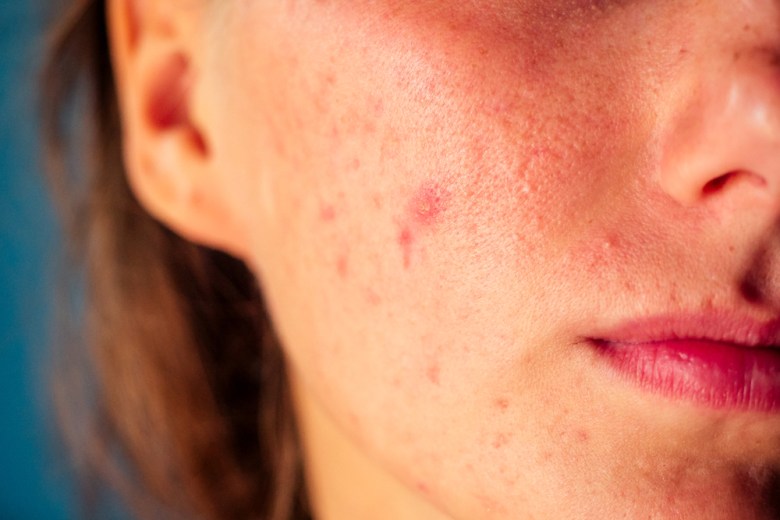
Deputy Renouf also asked the Health Minister to confirm the amount spent on ciclosporin for skin conditions in the past five years.
Ciclosporin is used as an off-label drug for the treatment of various inflammatory skin conditions, including atopic dermatitis, blistering disorders, and connective tissue diseases.
Deputy Binet confirmed the total spent on ciclosporin for skin conditions in Jersey from 2019 to 2024 was £60,230.
“It is important to note that the use of ciclosporin is indicated following individual patient assessment,” the Minister said.
“Some of the annual revenue spend could be mitigated by utilisation of a machine.”
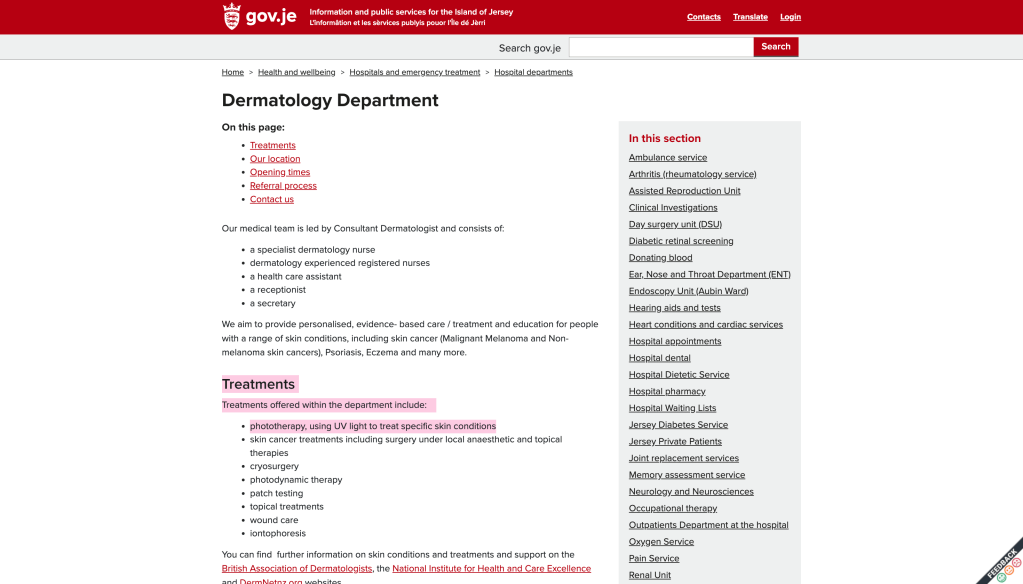
This dermatology department has faced ongoing issues in recent years – with one of the longest wait lists in the Health service.
Last year, it was announced that a full review of the dermatology service was to be undertaken after it emerged that more than 750 patients have been waiting over six months for a first appointment.
But the most recent report of the Health Advisory Board – a group of experts brought in to drive improvements in Jersey’s Health Department – found that there had been “significant improvements in dermatology, attributed to leadership and the addition of a new consultant”.
The report said: “December is the third month in a row that has seen a reduction in patients waiting over 52 weeks for their first outpatient appointment.
“This is directly attributable to the ongoing work in dermatology, to reduce the access times.”
The board praised the “success story” in dermatology – but noted that it was not yet being replicated across other specialties.
According to the Government’s dashboard of secondary care waiting lists, there were 834 patients waiting for a first outpatient appointment in dermatology as of 28 February 2025 – with a median waiting time of 17 weeks.
READ MORE…
Phototherapy service never restarted after pandemic suspension
