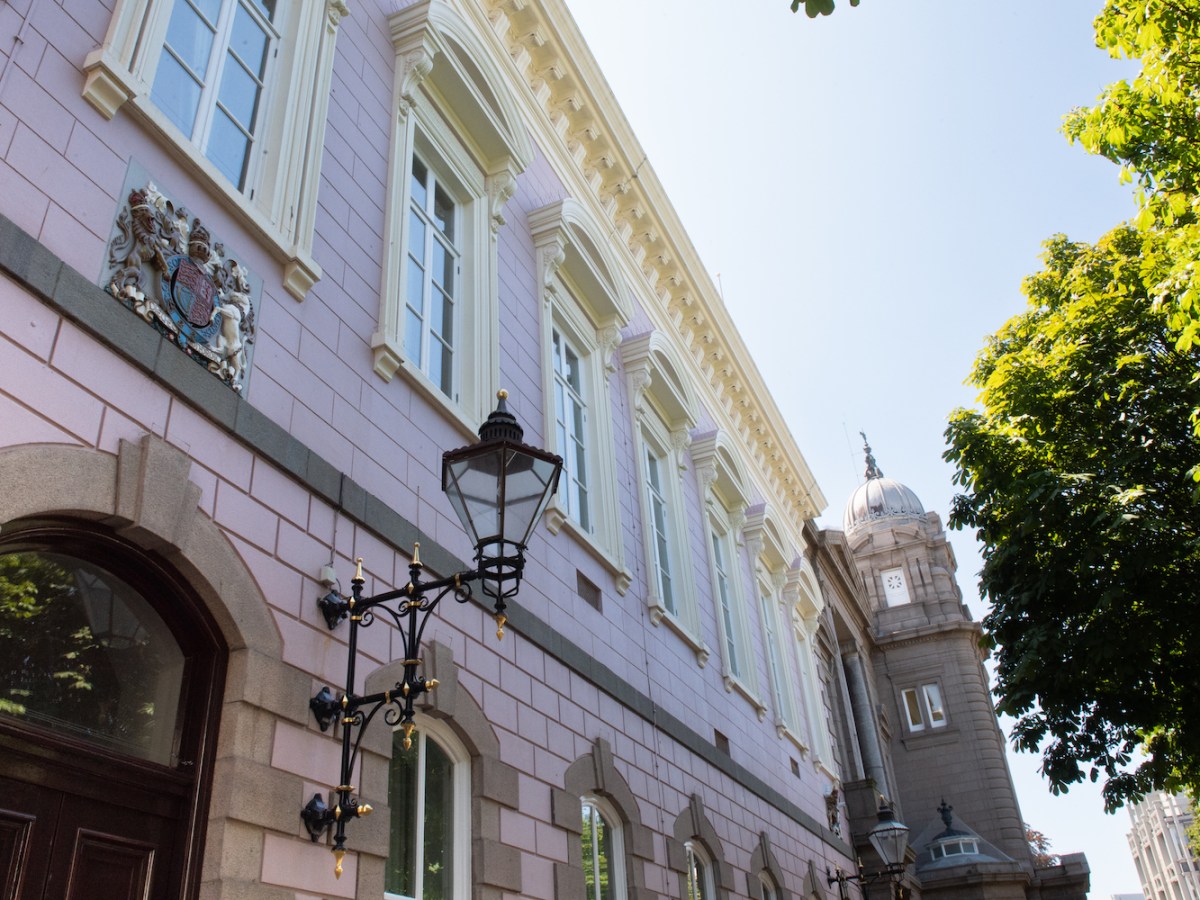
Senior Planning officials and a former Legal Adviser in the Law Officers’ Department have denied being biased or acting with malice towards a man who has brought them to court over a 15-year planning dispute.
Builder and developer Michael Neville is accusing nine defendants – seven civil servants, an honorary police officer, and the States Employment Board – of misfeasance in public office.
Misfeasance is a form of misconduct which occurs when a public official, public servant or public body knowingly and willingly acts to cause loss or harm to a third party.
The trial started in the Royal Court last week.
Principal Historic Environment Officer Tracey Ingle, former Chief Executive Officer of Planning and Environment Adrew Scate, former St Helier Centenier Danny Scaife, and former legal adviser Advocate Robin Morris all gave evidence yesterday.
All four refuted Mr Neville’s allegations.
The dispute revolves around two listed properties, 17 and 19 Devonshire Place, which Mr Neville bought in 2007.
Mr Neville alleges that he was unfairly targeted by planning officers – for unknown reasons – when he was served an enforcement notice, and eventually convicted, for placing UPVC windows on the two listed properties he had bought.
Mr Neville bought 17 and 19 Devonshire Place in 2007, which were listed as ‘Buildings of Local Interest’.
At the time, they had metal Crittall windows, the court heard. These had been authorised in the 1970s, replacing the original timber sash windows.
Mr Neville replaced the windows on the rear of the property with UPVC windows, relying on “accepted practice” that this would be fine if they weren’t visible to the public.
He was refused a retrospective planning application.
In 2010, Mr Neville was found guilty in the Magistrate’s Court of breaching planning laws and fined £1,000.
However, three years later, he successfully appealed his conviction in the Royal Court.
The bar for misfeasance in public office is high, Advocate Steve Meiklejohn, defending, explained in the trial this week.
Ms Ingle explained that planning decisions in Jersey are based on policies in the Island Plan, and that her role sees her advising on what is best from a heritage perspective – but that there can be “tension” between Island Plan policies, and that ultimately planning officers who make decisions on applications have to strike a “balance”.
The 2002 Island Plan, which was in place at the time of the renovations, said that “windows on buildings of local interest should be appropriate to the character and history” of the building.
“UPVC is not an appropriate material for windows in registered buildings,” she added.
She said that she had been contacted by enforcement officer Keith Bray to help with the wording of an enforcement notice, though she maintained that she was not “involved” with the enforcement notice.
She described an incident in which Mr Neville had visited the Planning offices to see a file and she was the only available person to speak to him.
Ms Ingle said: “Sadly I have to say… that day, I experienced the most angry and aggressive response to me being in someone else’s presence.”
She said that an email she had sent to the enforcement officer – which he would use to shape the text of the enforcement notice – was “heritage advice”, but that she would not have a role in writing enforcement notices.
Ms Ingle also had a conversation with architect Mike Waddington, during which he had tried to convince her to find a compromise.
She said that she was “shocked” when she came back to the office and found out the retrospective planning application had been refused and Mr Waddington hadn’t told her.
“That email did stay with me,” she said.
In the 2010 trial, Ms Ingle said that she had been under the impression that she was a defence witness – rather than a prosecution witness.
She told the court at the time that she had had no involvement with drafting the enforcement notice, though she admitted that she had helped Mr Bray with the wording and discussed the retrospective application with the enforcement team.
Mr Neville’s lawyer, Advocate Mike Preston put to her: “You were involved in the collective decision to serve that notice.”
Ms Ingle replied: “I was not involved in the collective decision to issue that notice. I offered heritage advice.”
She described how she had seen the building, but not the rear.
Advocate Preston put to her: “You had knowledge of Devonshire Place when you gave advice. You had knowledge of Devonshire Place when you gave evidence, didn’t you?”
Ms Ingle replied: “I had familiarised myself with various buildings of St Helier, including Devonshire Place.”
She said she was “genuinely sorry” that she had forgotten this during the Magistrate’s Court trial and denied having ever lied in court.
In his evidence, Mr Scate said his department handled thousands of applications a year and he wouldn’t get involved with them.
But he did say he sent out an email in which he claimed that Mr Neville had made a threat against Peter Le Gresley, then Assistant Director of the department, and one of the defendants in the case.
In it, he advised, among other things, that staff should “position themselves in a meeting room to enable escape” when they met Mr Neville.
Mr Scate said that in the Planning department, this type of situation was relatively common as they dealt with “a subject that creates angst for some people”.
He said he “would have expected a letter to be sent to Mr Neville”, but Mr Neville was not informed.
Mr Scate added: “I don’t know if any attempts to normalise relationships with Mr Neville occurred post the letter being sent.”
Advocate Preston said that Mr Neville denied having made such a threat, adding that there was only the perception of a threat.
Mr Scate accepted that a previous report into the department – which found that there was no guidance at all on enforcement, which still weren’t in place by 2010 – was “a scathing criticism of parts of [his] department”.
He further argued that members of the public who aren’t happy with a planning decision can take steps like an appeal of the decision – though Advocate Preston said this would be expensive once they start needing lawyers.
“If you are in this industry, you should be aware of your rights,” Mr Scate said.
Mr Scate denied that he had acted with malice.
Advocate Robin Morris, who at the time was Legal Adviser in the Law Officers’ Department, said in his evidence that he could not remember the time around the Magistrate’s Court trial due to health reasons.
“I would never, ever act with malice, bias or mala fides,” he said.
“I always did my best… That was my whole philosophy in life.”
Centenier Danny Scaife – who charged Mr Neville in 2010 – also denied the allegations of misfeasance in public office.
The trial continues, with closing speeches due to be heard tomorrow morning.