

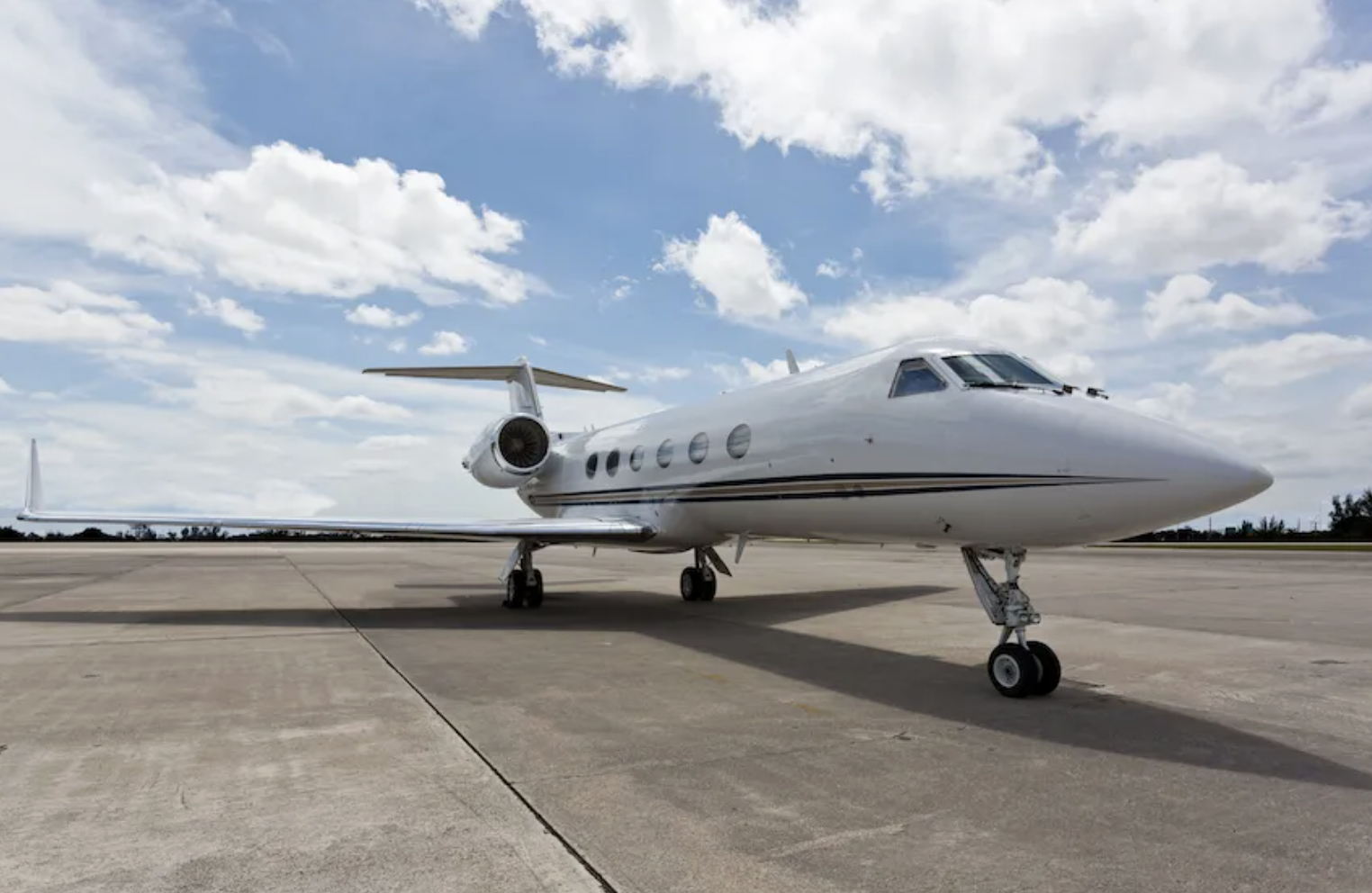
A new charge on private jets flying into Jersey helped generate more than a quarter of a million pounds for the airport’s green projects within its first eight months last year.
Ports of Jersey confirmed in its recently published 2025 accounts that it had pocketed £273,652 in the first year of their new private aviation “decarbonisation charge”, which sees aviation operators forced to pay up to 150% of their landing fees.
The charge, introduced on 1 May last year following backing from ministers and the Jersey Competition Regulatory Authority, was billed as a way to “incentivise sustainable behaviours” among wealthy private jet users while helping fund Jersey’s net-zero ambitions.
Operators who can prove they are meeting sustainability criteria pay an additional charge equivalent to 100% of their landing fees. Those who fail to meet the standards are hit even harder – paying 150% of their landing fees.
Polluter pays pushes
The move follows years of political pressure to make private aviation contribute more towards the island’s climate targets, amid concerns that private jets are among the most carbon-intensive forms of transport.
Back in 2023, ministers pledged to investigate a “polluter pays” levy on private aircraft as part of efforts to fund Jersey’s estimated £300 million transition to net zero.
Government reports at the time cited research showing private jets are between five and 14 times more polluting than commercial aircraft when passenger numbers are taken into account.
Treasury Minister Elaine Millar later confirmed that work on a “carbon tax” for private jets was underway, although ministers stopped short of introducing a formal tax through the States Assembly.
Instead, Ports of Jersey has now effectively implemented the policy through airport charging mechanisms.
Where’s the money going?
The money has already been funnelled into a string of environmental projects at Jersey Airport – including £185,780 on upgrades to the airport terminal heating system, £39,000 on switching operations to hydrotreated vegetable oil fuel, and £40,000 on replacing a diesel mower with an electric version.
Ports of Jersey claimed the projects funded by the levy delivered an estimated carbon reduction of 125.5 tonnes of CO2 equivalent in 2025.
The report described the introduction of the charge as “a key milestone” in its decarbonisation strategy, confirming it will remain in place for future years.
“We will continue with the Private Aviation Decarbonisation Charge, with the charge increasing to 150% of movement fees for those not meeting the sustainable behaviours criteria,” the document said.
Ports emissions falling
Future spending plans include electrifying airport heating systems, buying new electric fire service vehicles and constructing a new airport substation to help move operations away from fossil fuels.
The report also revealed that Ports of Jersey’s own Scope 1 and 2 emissions fell by 10% in 2025, with the organisation noting that its decarbonisation activities prevented the release of 114 tonnes of carbon emissions compared with the previous year.
The full annual report is available online.
