
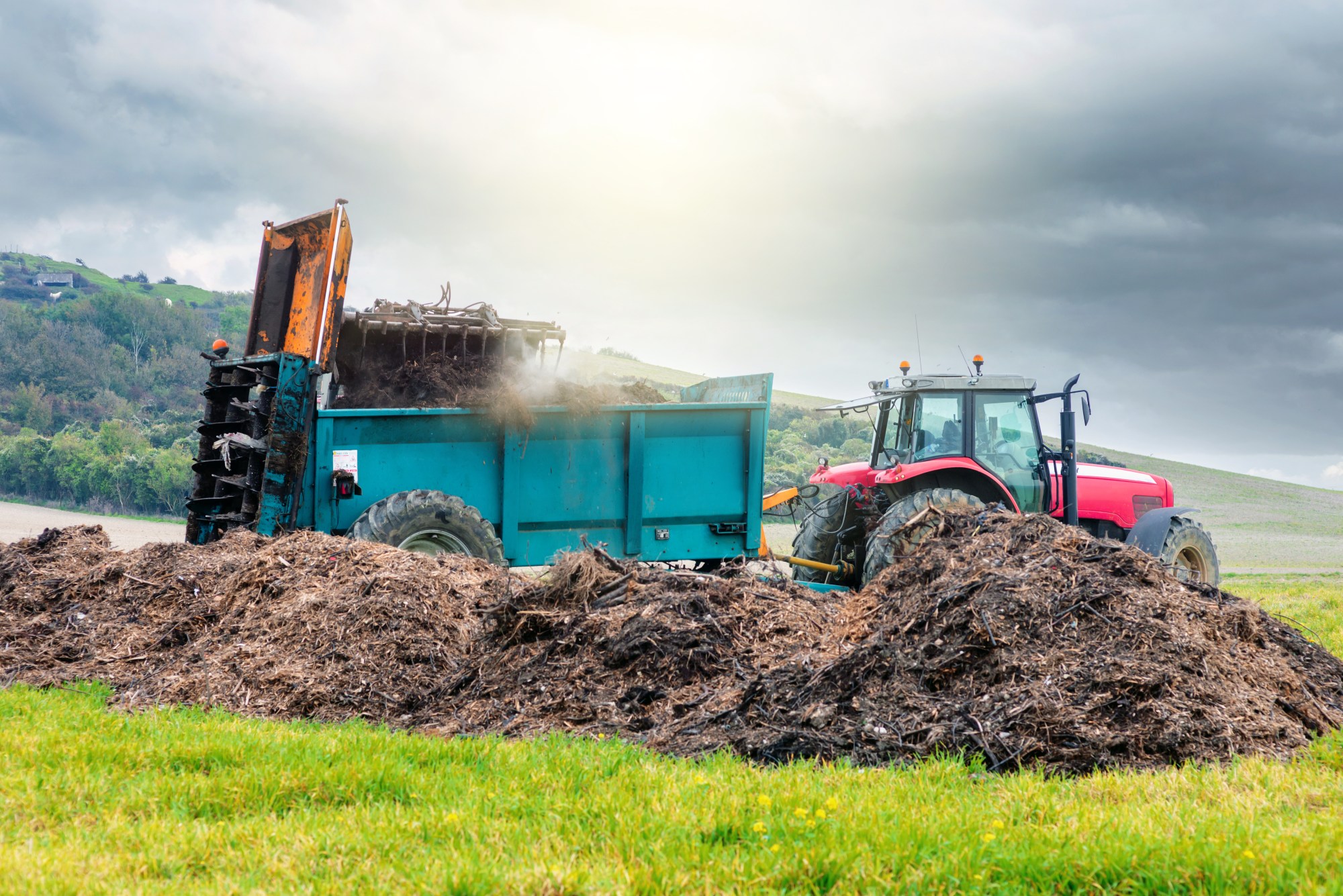

The locations of more than 100 fields where treated sewage material was spread on Jersey farmland have been made public.
The newly released list identifies 111 fields in nine parishes where biosolids were applied during 2024 and 2025, along with the dates of application.
St John accounts for the most entries, with 32, followed by St Peter with 20 and St Ouen with 17.
The list also names fields in Trinity, St Mary, St Brelade, St Martin, St Lawrence and Grouville.

Biosolids are produced when wastewater is treated at Bellozanne. Some are spread on agricultural land as a source of nutrients and organic matter; the rest is sent to the Energy Recovery Facility for incineration.
According to the government, 1,845 cubic metres were applied to Jersey land in 2024.
A freedom-of-information request seeking the locations of the impacted fields was originally submitted by Water Awareness Jersey chair Paul Le Claire.
The government intially declined to response, but was forced to reveal the locations of the impacted fields following an intervention by Information Commissioner last month.
The response revealed that more than 12,000m3 of sewage sludge had been spread on Jersey’s fields in the past five years, and “low levels” of PFAS were found in the applied biosolids.
Infrastructure Minister Deputy Jonathan Renouf said he had wanted the field details published, but sought clarification of the Information Commissioner’s decision before release because of concerns about how it might be interpreted.
“My preference would always have been to publish the details of these fields,” he said.
“I know under the previous Council [of Ministers] there were concerns over commercial sensitivities, but for me that is balanced by the public’s right to know what is being spread on the fields where their food is grown.”
Information Commissioner Paul Vane revised the wording of his original decision to remove any suggestion that the listed fields might be contaminated by PFAS, but his requirement to disclose the information remained in place.
Deputy Renouf said the Information Commissioner had made no finding that fields receiving biosolids were contaminated.
“We have hard scientific data which shows that these fields are not contaminated,” he added.
We have hard scientific data which shows that these fields are not contaminated
Infrastructure Minister Deputy Jonathan Renouf
The government confirmed that PFAS chemicals have been detected at low levels in Jersey’s biosolids.
Testing found PFAS levels in fields outside the known contamination area near Jersey Airport that had received biosolids were comparable with background levels elsewhere in the Island.
The government said that biosolids can be spread only where a landowner or farmer agrees and the land has been assessed as suitable.
It added that controls include testing the material, checking water pollution risks and maintaining buffer zones around water sources.
Fields where biosolids were spread in 2024 and 2025
- St John: J870A, J871A, J875, J878, J899, J251, J252, J254, J249, J280, J16, J20, J21, J26B, J920/921, J19, J39, J54, J38, J61, J81, J58, J82, J877, J877A, J879, J880, J881, J805, J821 and J348.
- St Peter: P595, P136, P136A, P119, P434, P466, P521, P594, P595A, P76, P82, P85, P391A/B, P465, P467, P351, P365, P372, P383 and P395.
- St Ouen: O1928, O1935, O500, O417, O456, O474, O475, O476, O478, O322, O304, O305, O306, O309, O320, O1417 and O1423A.
- Trinity: T1198A, T1198B, T1198, T791/792, T764, T765, T703, T1133, T1059, T1107, T1108, T1149 and T1151.
- St Mary: MY632 & MY634, MY633, MY634A, MY631, My202, My204, My201, My206, My207, My644 and My645.
- St Brelade: B416, B417, B353, B415, B414, B354 and B246.
- St Martin: Mn550, MN15, MN21, MN20, MN129 and MN199.
- St Lawrence: L460, L387 and L465.
- Grouville: G836 and G838.
