


The way Jersey funds its most vulnerable pupils is set to come under scrutiny this year, as key “inclusion” elements of the island’s school-funding formula are reviewed.
Published this week, the Jersey Funding Formula for Schools 2026 report explained that while the overall funding system is “largely unchanged” from 2025, there is a need to revisit how additional support for children with extra needs is calculated and distributed.
The report states that: “The inclusion components of the formula will be reviewed in 2026.”
The formula document also highlights a shift towards issuing four-year budgets.
The bulk of school funding is allocated directly to schools through the formula, which is an iterative process and subject to annual reviews.
The current methodology has successfully enabled a transition to increased inclusion funding in the education system and there is an opportunity to stabilise this, enabling more effective long-term planning for resources
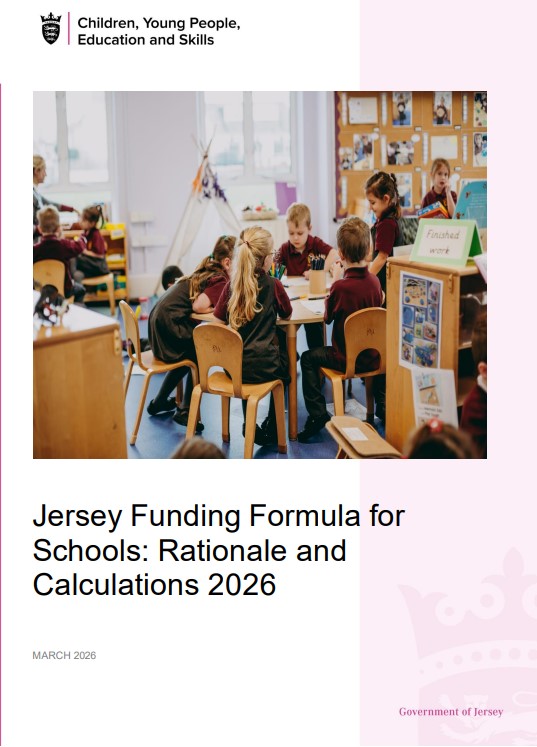
Jersey Funding Formula for Schools 2026 Report
This approach was introduced in 2022 in a bid to ensure schools “have transparent and equitable budgets” and that the funding system was “flexible for the future”.
The latest report highlights “the shift to issuing four-year budgets in line with the government’s main annual budget process, following the feedback from schools and to support planning”.
“Allocations through the School Funding Formula now include funding for the current year as well as indicative budgets for the following three years,” it explained.

A major transition several years ago meant that schools receive further funding if they have more students with special educational needs or low prior-attainment levels, as well as pupils who speak English as an additional language or who have speech and language difficulties.
Under the old system, costs were allocated to each spending area – such as building maintenance and teacher salaries – but did not reflect the needs of the children.
The report described inclusion funding as where “the changing needs of children and young people often have funding implications for schools beyond their budget”.
“In these instances, budget is made available for schools from the central inclusion team to support individual children and young people.”
It also notes that the “inclusion components” of the formula will be reviewed this year.
“The current methodology has successfully enabled a transition to increased inclusion funding in the education system and there is an opportunity to stabilise this, enabling more effective long-term planning for resources,” the report continued.
“This is likely to include how records of need and additional resource provisions are funded amongst other areas.”
