


Jersey’s competition watchdog has committed to “further surveillance” of the construction sector after a review found “signs of poor market functioning” and “potential competition risks” within the scaffolding, concrete, and residential construction markets.
The Jersey Competition Regulatory Authority this morning published its final report following months-long analysis of the island’s construction sector.
The review, which analysed market structures, consumer experiences, and comparative data, concluded that “effective competition is essential to the future of the island’s construction sector”.
It also confirmed the vital role that construction plays in Jersey’s economy, and the challenges the sector continues to face – from limited consumer choice in some areas and rising costs, to structural issues unique to the island.
“Effective competition is key”
The JCRA concluded that scaffolding, aggregates and concrete, and residential construction have been identified as initial ‘markets of interest’ due to signs of “poor market functioning” and “potential competition risks”.
Although the watchdog has not set out clear next steps, it revealed plans to use its ‘competition toolkit’ to address competition concerns or issues “proportionately and appropriately” within different markets.
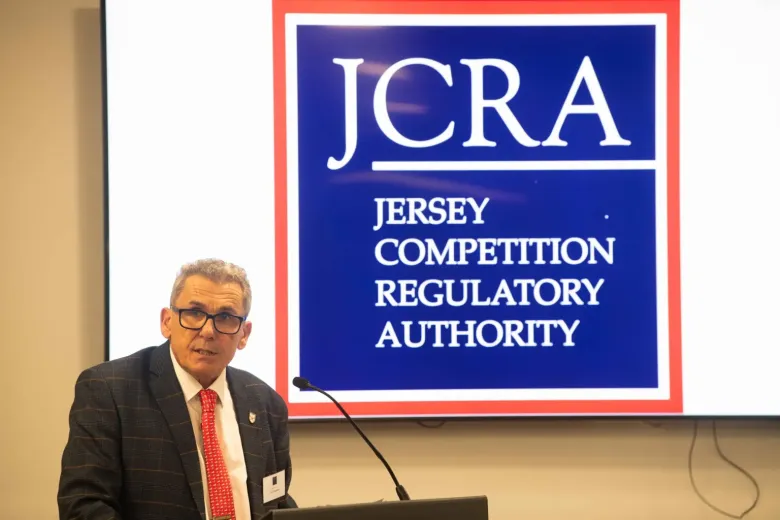
JCRA CEO Tim Ringsdore said: “Since publishing our draft report in April, we’ve heard loud and clear from businesses and consumers. There are real concerns about how the construction sector operates – and we’re committed to further surveillance of the market.
“This isn’t about pointing fingers – it’s about building a stronger, fairer sector. Jersey needs a thriving construction industry to deliver homes, infrastructure and jobs. Effective competition is key to making that happen.”
“Significant engagement” from open letter
The review focused on scaffolding as an area of concern after receiving complaints about sharp price rises in the wake of Storm Ciarán.
Survey responses received as part of its review had highlighted “post-storm price disparities” and “difficulties in sourcing scaffolding contractors”, while stakeholder feedback pointed to “potential risks on the scope for collaborative pricing practices among larger companies”.
This led the regulator to take the unusual step of issuing an open letter to scaffolding businesses to encourage compliance with the island’s competition law.
The authority said: “Information received through the review raised concerns regarding how businesses may be operating within the scaffolding market, particularly regarding price setting.”
The JCRA then issued an open letter to all scaffolding businesses on 22 July 2025, which “generated significant engagement from market participants and members of the public”.
“Close links between construction firms”
The review also found “close links between construction firms”, with sub-contracting being common.
“This results in regular communication, contact and engagement between businesses,” the report said.
The JCRA noted that, in Jersey’s small economy, collaboration between businesses is often necessary – particularly in sectors like construction where sub-contracting is common.
But while such cooperation can be positive, the watchdog noted that it also carries risks of breaking competition law.
The JCRA has therefore updated its leniency policy to encourage firms to step away from anti-competitive arrangements, is revising its guidelines to make rules on anti-competitive practices clearer and more practical, and is developing new guidance to help businesses collaborate fairly without harming competition.
In addition, it will run ongoing awareness sessions with trade associations and membership bodies to ensure businesses understand the law and how to stay compliant.
Competition tool decision in coming months
Further market engagement is also underway with scaffolding firms, and the watchdog confirmed that it will “decide on the appropriate competition tool to use, if any, in the coming months”.
Speaking to Express following the publication of the open letter in July, local scaffolding companies strongly rejected suggestions of price-fixing or profiteering.
C&M Scaffolding co-owner Lee Camfield described the regulator’s concerns as “a load of rubbish”, while A&A Scaffolding Solutions managing director Alex Wareham said the regulator’s concerns about price fixing “couldn’t be further from the truth”.
The construction industry is one of the island’s largest, representing around 10% of Jersey’s workforce and over 7% of its total economic output.
However, the sector has seen the collapse of a number of firms – both large and small – in recent years.
The Style Group – which included AC Mauger, Style Homes and Style Windows – collapsed last month.
It followed the earlier closures of Camerons, JP Mauger, Kalmac, MAC Energy and Eden Interiors in 2023 and 2024, and K-Land Construction and Nicholson Builders this year.
