

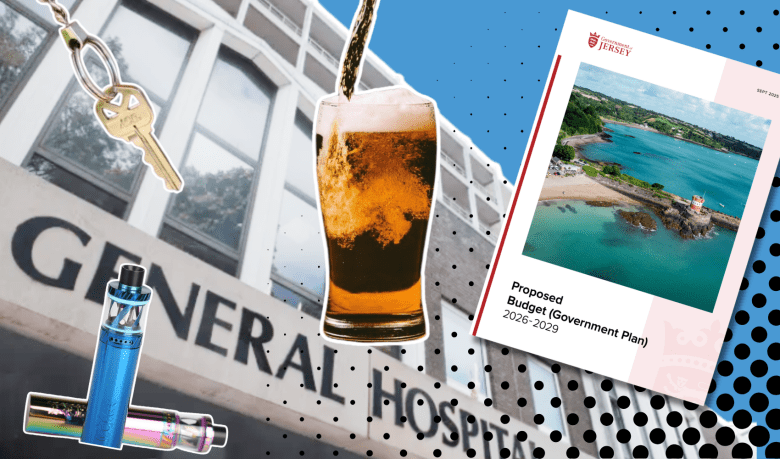
Jersey’s Budget for 2026 and beyond has been approved amid rare cross-Assembly agreement that public spending is too high – but sharp disagreement over whether the current government has been doing enough to rein it in… So what was said, and how did each States Member vote?
Ministers’ spending plans were agreed with 29 votes in favour, 10 against, and one abstention after four days of at-times tense debate.
Budget 2026-2029 in a nutshell
The Budget includes a mix of household support, targeted tax rises and longer-term investment, with some clear positives for working families and businesses. Personal tax allowances will rise by £550, lifting the income tax threshold to £21,250, alongside increases to child allowances, childcare tax relief and higher childcare tax relief – measures ministers say are aimed at easing cost-of-living pressures and supporting workforce participation. For hospitality, the introduction of tap relief will cut duty on a pint of draught beer by 5.4p, partially offsetting inflation-linked increases elsewhere.
Alongside this, duties on fuel, tobacco, vaping products and higher-emission vehicles will rise, while the most polluting cars face sharply higher Vehicle Emissions Duty. A 1% cut to the higher rate of stamp duty on non-main residences has been included to stimulate activity in a subdued property market. New charges will be introduced for unnecessary Emergency Department visits and missed outpatient appointments, while significant funding continues for core services such as Health, Education and long-term care, backed by major capital investment in the new hospital, infrastructure and digital systems.
The Council insists that their plans – which involve £1.28bn of departmental spending, and more than £1bn of capital investment over four years – strike a balance between protecting services and reining in growth, but political opponents throughout the week argued fiercely that it relied too heavily on reserved and future borrowing.
Closing the debate last night, Treasury Minister Deputy Elaine Millar commented: “This is the final budget of this government,” she said. “It reflects difficult decisions… guided by one principle, to prioritise investment in what matters most: health, housing, children and infrastructure.”
She insisted ministers had not shied away from the need to control public sector growth, but said it had to be done “in a planned way to make sure public services remain deliverable”.
“We are not going to keep creating structures and bodies that we simply cannot afford,” she said, making clear she would not support new commissioners or an ombudsman.
Deputy Millar said Jersey had deliberately avoided tax rises to give certainty to households and businesses, describing the Budget as “a plan for Jersey’s future” rather than “just a set of numbers”.
Responding to a call from Deputy Bailhache to the new government for strict sweeping cuts, Deputy Millar said that work had already begun to “resize” the public sector, and that recommendations for doing so would be presented to States Members at a workshop in February.
Earlier, Chief Minister Lyndon Farnham framed the Budget as a pragmatic response to global inflation, weak growth and post-pandemic pressures.
“We are not in crisis,” he said, “but there is a real risk if we fail to act.”
Echoing the comments of the Treasury Minister at All Island Media’s recent Question Time event last week that Jersey had become accustomed to behaving like a much larger jurisdiction, Deputy Farnham said: “We are spending like a big country… regulating like a big country… centralising like a big country,” he said. “We are a small island. This is not who we are, and this is not who we should become.”
Mr Farnham said the Budget marked “an important start” in slowing the growth of public expenditure, pointing to reductions in reliance on consultants, estate consolidation and recruitment controls. He also noted that had all amendments been accepted, public spending would now be at least £100 million higher.
“This Budget is not built for the next headline, but for the next generation,” he said.
However, Public Accounts Committee Chair Deputy Inna Gardiner said the Budget relied too heavily on reassurance rather than evidence.
“This budget is saying a lot, ‘Trust us, we know what we are doing,’ without giving details as to how that’s going to be achieved,” she told the Assembly. “When you look past the headlines, the story is different.”
She warned that borrowing to fund current spending risked normalising overspends – particularly in Health – and said difficult decisions on sustainable healthcare funding had again been pushed beyond the election.
Ms Gardiner said Jersey risked entering “not a crisis, but managing decline”, arguing the Budget lacked a clear growth strategy beyond finance and failed to address demographic pressures.
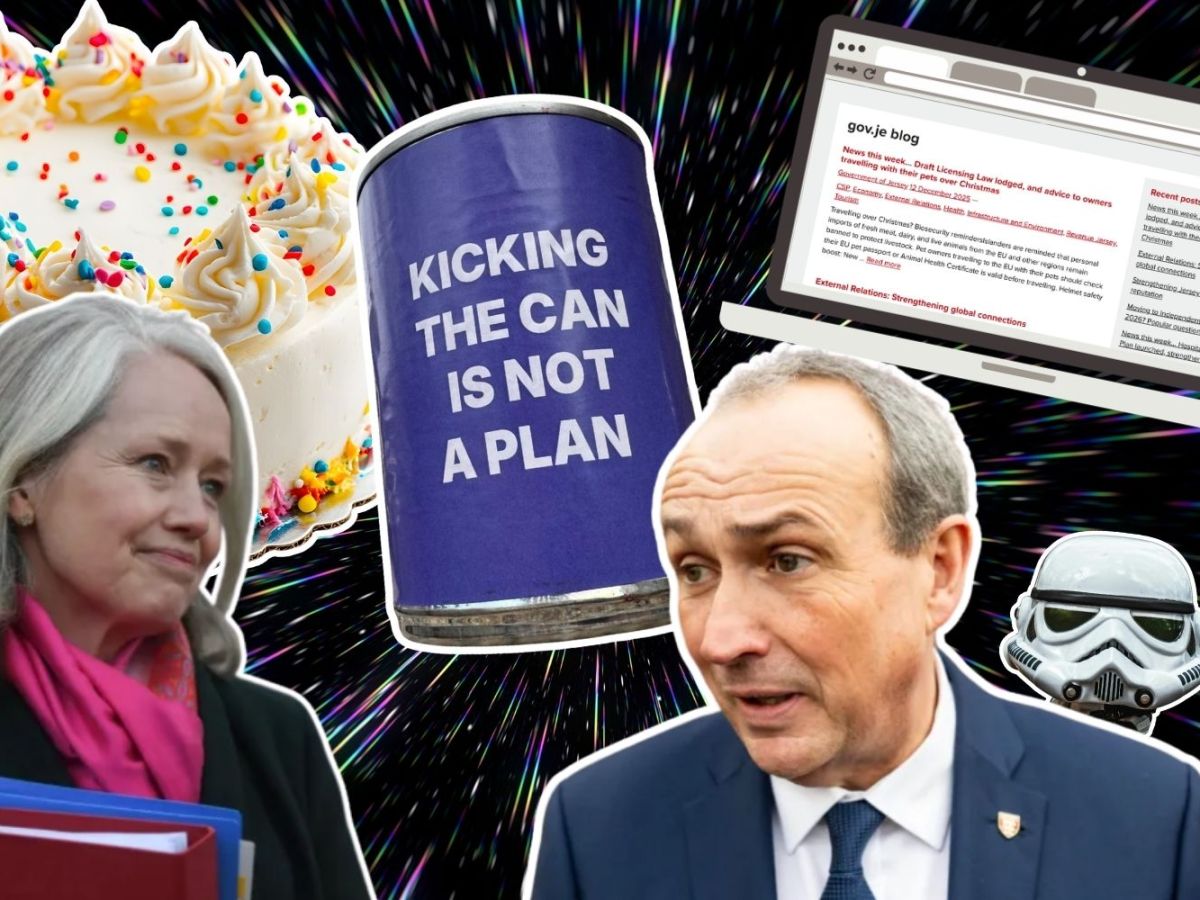
Deputy Sir Philip Bailhache likened the Budget to a “mortar bomb” handed to the next government, while Deputy Jonathan Renouf framed the debate as a cinematic saga – dubbing it a “States Wars” franchise, with Jersey forced to wait until after the election for ‘A New Hope’.
Despite concerns over ballooning public service spending, Ministers suffered an early bloody nose over plans to trim funding for the Environment Department – which had led to warnings that Jersey could lose its battle with Asian Hornets – with the Environment Scrutiny Panel successfully rallying against the move.
Later, the Children and Home Affairs Scrutiny Panel also secured around a quarter-of-a-million in funding for the States of Jersey Police, whose representative body had warned their funding was insufficient and that public safety was at risk.
Former Chief Minister Deputy Kristina Moore was among the Budget’s fiercest critics, telling Members the island had been left in a “precarious” state after nearly two years of the current administration.
“He has had 22 months to deliver a different vision,” she said of Deputy Farnham. “What he has left us with is an unsustainable, precarious position.”
She referenced the Question Time event, noting that Institute of Directors chair Alex Ruddy had described the Budget as as “concerning”, while the PAC chair had called it “short-term” and former Senator Ben Shenton had used the phrase “tin-can”.
Who voted against?
Deputies Steve Ahier, Max Andrews, Alex Curtis, Inna Gardiner, Hilary Jeune, Helen Miles, Kristina Moore, Jonathan Renouf, Karen Wilson, and Constable Marcus Troy (St Clement) voted against.
Deputy Lucy Stephenson abstained.
Eight were absent for the final vote: Deputies Philip Bailhache, Kirsten Morel (Economic Development Minister), Philip Ozouf (suspended), and Moz Scott, and Constables Richard Honeycombe, Philip Le Sueur, Deirdre Mezbourian, Karen Shenton-Stone and Richard Vibert.
“I don’t think he is setting us on a good path for the future,” she said. “I think there is an extreme amount of work to be done.”
Housing Minister and Reform Jersey Leader Sam Mézec struck a more positive tone on social media following the debate, reminding Islanders of reasons to be cheerful about the Budget, and claimed it as a win for party politics.
Among the measures that would make a “real, practical difference” to Islanders’ lives he highlighted were 15 hours a week free childcare for 2 to 3 year olds, an expanded Pension Plus scheme, a ‘back to school bonus’ to help parents with the costs of uniforms and supplies, and a Stamp Duty incentive for right-sizers.
“Reform Jersey members are proud to have helped shape and secure these wins. They show what can be achieved when an organised party guided by a positive manifesto takes a leading role in our politics,” he said.
However, some Reform Jersey politicians lamented that their suggested amendments did not win backing.
Among them was Deputy Catherine Curtis, whose push to bring back mortgage interest tax relief for homeowners – bringing them in line with landlords, who still receive it – narrowly failed, 19 votes pour against 21 contre.
Another which generated strong debate was Deputy Tom Coles’ a renewed attempt on behalf of Reform to abolish the upper-earnings limit (currently £317,304) for social security contributions and the long-term care tax to raise an additional £6 million a year for the Social Security Fund and £11 million a year for the Long-Term Care Fund, but this was also defeated.
Meanwhile, a compromise agreed between Deputy Montfort Tadier and a minister resulted in unanimous support for an amendment seeking to protect levels of spending on arts, culture and heritage. Deputy Tadier wished to limit the definition to exclude certain areas in order not to dilute the Assembly’s previous support for a total of 1% of overall revenue spending to arts and the related areas. Deputy Tadier accepted an amendment to his proposal from Economic Development Minister Kirsten Morel to retain the Jersey Music Service and the teaching of Jèrriais within the 1% heading but to exclude the Jersey Library and Community Compass.
After the compromise proposal was backed unanimously with 44 Members in favour, Deputy Tadier said he was satisfied with the “damage limitation” that would ensure the 1% for arts was not constantly devalued.
READ MORE…

Something went wrong. Please refresh the page and/or try again.
