

As Chair of the Guernsey Development Agency, I am grateful to be offered an opportunity to dispel inaccuracies which have recently been reported surrounding the proposed regeneration of the Bridge and surrounding areas.
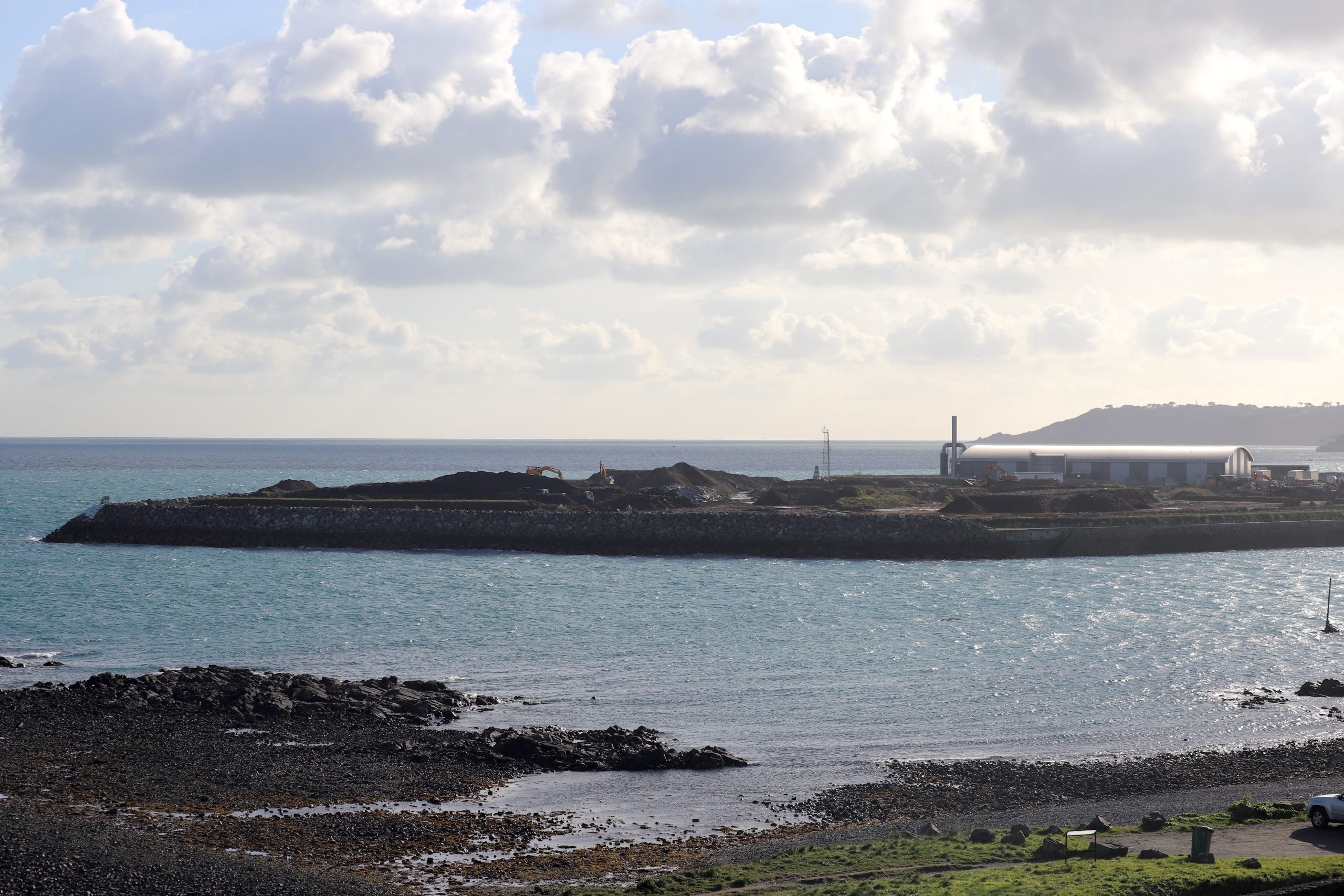
As most islanders know, Guernsey has a growing mound of inert waste stored at Longue Hougue and the Black Rock development has been identified as a location for this waste. The team at the GDA has spent recent months working on a land reclamation plan which – dependent on its size – would use at least twelve years’ worth of tipping material.
One of the most positive parts of this plan is that the option we will be recommending to States members would make the revetment (the large wall which would protect the area of reclaimed land) cost neutral to the States, alongside the creation of much-needed land for housing and community and green spaces. These areas would be fully funded by the cost of tipping fees over the duration of the fill time. The creation of the revetment would also significantly reduce the cost of flood defences, which we know the island will be forced to invest in over the coming years, both to protect the north of the island and to unlock a number of sites awaiting development, including Leale’s Yard.
Recent media reports have seen Deputy van Katwyk expressing his concerns that “loads of contaminated soil” will be used in the proposed project to reclaim land at Black Rock. This statement could be misleading and therefore requires further explanation.

All soils contain lead and other heavy metals from natural or manufactured sources. Therefore, all soils can be described as ‘contaminated’. The important measure is the degree of contamination, the contaminating substance and the leachability of the compounds. Before inert waste even reaches Longue Hougue, tests are carried out to ensure compliance with Guernsey Waste’s Contaminated Soil Technical Advice Note. This note clearly states that any hazardous waste is stored at Mont Cuet. Meanwhile, to quote the Technical Advice Note; “Contaminated soils categorised as non-hazardous inert waste are stockpiled at Longue Hougue land reclamation site for use in future land reclamation.”
Therefore, the public can be assured that hazardous waste is not even stored at Longue Hougue, therefore it will certainly not be used in the Black Rock land reclamation site. We must also stress that only materials being stockpiled at Longue Hougue will be transferred to Black Rock. There is no intention to excavate material previously deposited at the site.
We hope that this puts paid to any misleading narrative that the proposed reclamation project will use anything other than non-hazardous inert waste.
Deputy Van Katwyk has also stated publically that there is a lack of suitable data to inform an Environmental Impact Assessment for the Black Rock development. This is not accurate. An Environmental Impact Assessment is currently under way with Haskoning, the world – leading sustainability engineering f irm, which is also assisting on the design of the revetment.
Conservation of our environment is central to every single element of our work, and our team has collaborated with a host of local environmental groups including La Societe Guernesiaise, Environment Guernsey, and Agriculture, Countryside and Land Manage ment Services. We have also undertaken numerous tests, including air quality monitoring and traffic surveys, as well as mapping the potential impact on mearl beds, eel grass and scaly crickets, in order to mitigate any environmental impacts.
Deputy van Katwyk has stated that he is yet to see a forecast of economic benefits. We can assure islanders that considerable work has been undertaken and shared on the economic benefits of this project, specifically the opportunities for tourism – Deputy van Katwyk’s area of responsibility on the Economic Development Committee. The proposed 24 -hour marina offers significant opportunities to attract more visiting yachtsmen for short stays and permanent boat storage, which will also potentially open doors to a whole new industry focussed on marine maintenance. The GDA is on cours e to present a full business case for the vision for St Sampson’s to the States in November2026 .
There is clearly growing interest in the work of the Guernsey Development Agency and the Black Rock project, and we appreciate that the public is keen to hear more about regeneration of the Bridge. Up until this point, we have been fully focussed on developing extensive and detailed plans and updating the many committees and organisations our work touches, including STSB and its individual trading entities, Harbours, Environment and Infrastructure, the DPA and Policy and Resources. In the coming weeks, we plan to ensure we meet with every States committee to present an update on our work. We have also offered every States member the opportunity to meet with us individually or as a group to walk around the site and hear about our progress.

We are aware that Deputy van Katwyk holds reservations about the proposed development and therefore invited him to visit the site with us late last year. During this ‘walk and talk’ we addressed his queries. Therefore, we are slightly surprised to see these public statements, as all of the issues raised were explained face -to -face in December 2025.
Deputy Van Katwyk – the vice president of the Development and Planning Authority – has claimed in media coverage that he is not biased over the Black Rock project; however, it does appear that his actions and public statements place a question mark over that statement. It remains to be seen how this might manifest when the time comes to present our plans to the DPA. Meanwhile, we remain open to positive and constructive dialogue with all stakeholders.
Peter Watson
Chair, Guernsey Development Agency
