

I asked the Policy and Resources Committee ten straightforward questions about how the new GST tax would actually work. I wanted simple answers, so that shopkeepers, charities, and ordinary families could plan ahead.
Most of my questions got proper answers. But three didn’t. And those three matter more than you’d think.
1. They won’t say what the rules even are
Small shops that sell cheap items are allowed to give you a simple receipt instead of a big complicated one. The rule for what counts as “cheap” was set back in 2009. Prices have gone up a lot since then.
I asked: will you update that limit so it’s fair for today’s prices?
Their answer, in plain English, was: “Maybe. We’ll see.”
Think about that. They’re about to bring in a brand-new tax on everything you buy… and they can’t yet tell shopkeepers what the basic paperwork rules will be. How is any small business supposed to get ready for a tax when the government hasn’t even decided the rules yet?
2. They don’t know how honesty boxes will work
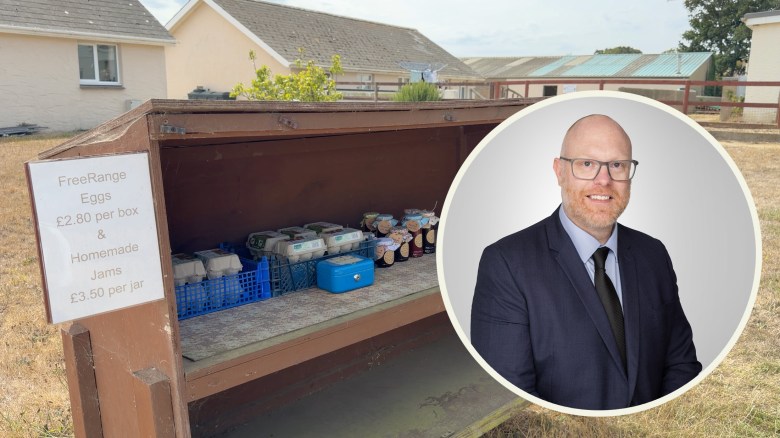
You know the little hedge veg stalls you see by the road, where you put your money in an honest box and take your carrots? Those stalls are too small to bother with GST themselves. That part’s fine, that’s all sorted.
But here’s what isn’t sorted: if a café or a farm shop, for example, buys vegetables from one of those stalls, they’re supposed to be able to claim some of their GST back. I asked how they’re meant to do that, when the stall can’t give them a proper GST receipt.
They didn’t answer. Not even a little bit. They explained why the stall doesn’t need to worry, and just skipped over the part where a larger business is left with no idea how to get their money back.
That’s not a small detail. That’s the kind of everyday question a bookkeeper needs an answer to before they can even open their books.
3. They won’t say if charities and parishes are being treated unfairly
This is the big one. If a school hires out its hall, or a charity runs a shop, or a parish does something similar to what the government does: will they be taxed the same as the government, or worse?
I asked directly. Twice, really: is this unfair, and if it is, will you help the people affected cope with the extra paperwork and cost?
They didn’t say yes. They didn’t say no. They gave a long explanation of what kind of things might be taxed, and a list of ideas they’re “still considering.” That’s not an answer. That’s a shrug in a suit.
If you run a parish hall, a charity shop, or a small community group on this island, you deserve to know now – not sometime later, after the law’s already passed – whether you’re about to be treated worse than a government department doing the exact same thing.
Why this should worry you, whether or not you like GST
I’m not writing this to tell you GST is right or wrong. I’m writing this because before we’re asked to hand over a slice of our wages every time we buy milk, bread, or school shoes, the people bringing in this tax should at least be able to tell us how it will actually work.
Right now, on some pretty basic, practical questions, they can’t. They’re building the plane while it’s already halfway down the runway – and asking the rest of us to get on board anyway.
Linked here, I’ve listed exactly what I asked and exactly what I was told, word for word, so you can judge for yourself.
Deputy Rob Curgenven
