


The purchase and installation of new road sensors on some of Guernsey’s busiest roads has added up to more than £45,000.
A Freedom of Information request has shown that the bulk of that money was spent last year when an order was placed for RoadPod VM-I road sensors for six sites.
The Committee for the Environment and Infrastructure said that they cost just over £26,000, while the price of two temporary (movable) RoadPod VT road monitors added just over £3,200 to the project’s overall cost.
The rest of the money was spent in 2026 – with five more temporary (moveable) road monitors being ordered this month, at a cost of £8,700.
Two RidePod BT temporary cycle counters were bought in January 2026 for
£2,700.
While the temporary/moveable structures don’t need installing, as Traffic and Highways staff are tasked to do that as part of their work, installing the fixed road sensors cost £4,500 when that work was carried out in April.
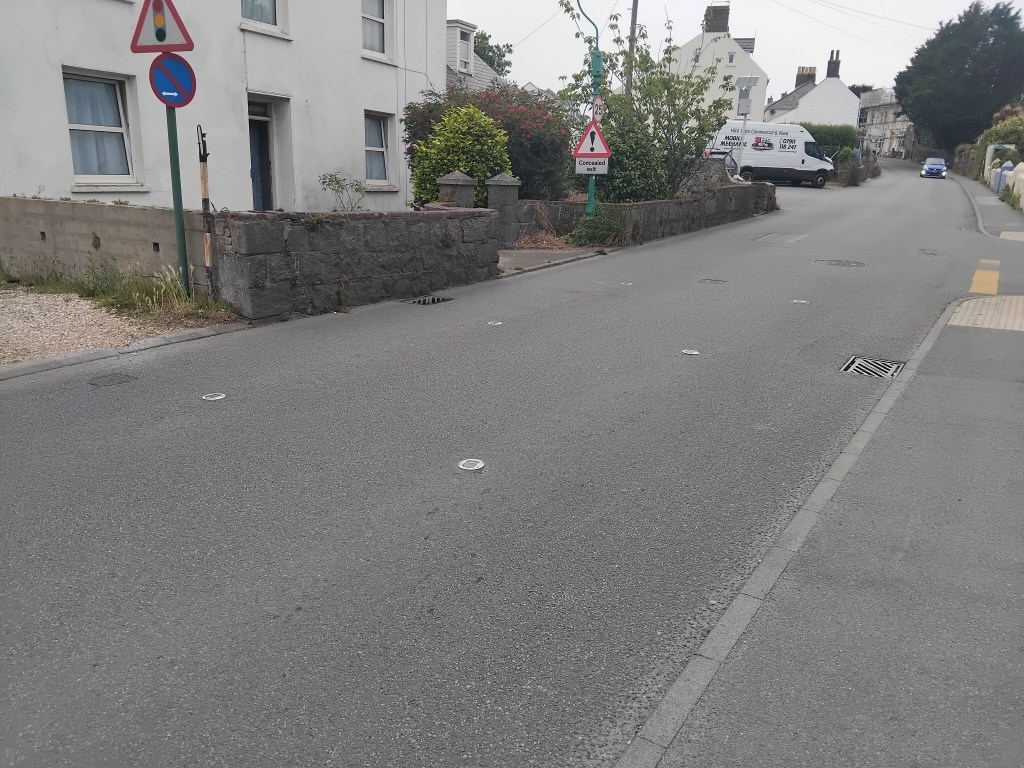
The road sensors have been put on a variety of roads including Vale Road, Les Banques, Vazon coast road, La Grande Rue (St Martin’s), Braye Road, and Rue des Bordeaux.
E&I said those, and the temporary/moveable structures, have been bought to collect traffic volume, speed data, and the distance between vehicles.
The sensors can classify vehicles by length but they can’t identify individual vehicles, which was a query made in the FOI.
E&I clarified that the data being collated will help official bodies look at “short, medium and long-term trends on the volume of traffic using arterial routes”. This will help feed into work to try and reduce the overall volume of traffic “by encouraging active transport solutions, public transport and vehicle sharing”.
This work is not new, having been approved by the then-States when the On-Island Integrated Transport Strategy was adopted in 2014.
The data will also help plan for new housing and commercial developments, and can be used by the police in assessing road accidents.
E&I denied that the road sensors are being used to draft a distance charging tax, saying “this workstream is still under investigation” and that the road sensors are not collecting that data anyway as “vehicles cannot be individually identified”.
