


There was more than one accident per week involving cyclists or pedestrians during the first 30 weeks of this year.
A Freedom of Information request asked “how many pedestrians and cyclists have been hit by drivers up to the end of July this year” and also “how many pedestrians have been hit on crossings for the same period?”.
The response from the Committee for Home Affairs referenced ‘RTCs’ instead.
The data showed that between 1 January and 31 July there were 20 RTCs involving cyclists and 14 involving pedestrians.
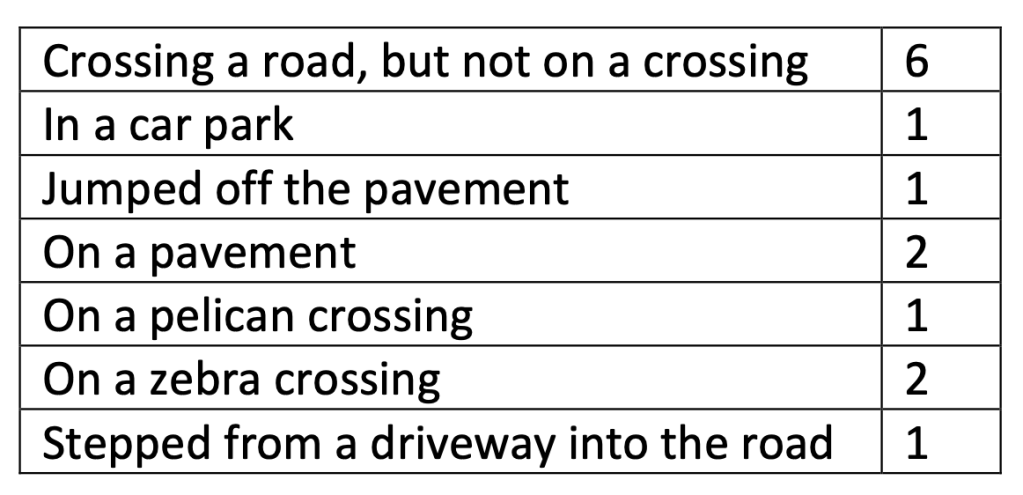
The location of incidents involving cyclists was not shared but those involving pedestrians included six where people were “crossing a road, but not on a crossing”, one where a person “jumped off the pavement”, and one where someone “stepped from a driveway into the road”.
Others were recorded as being “in a car park”, “on a pavement”, “on a pelican crossing”, or “on a zebra crossing”.
Although FOI requests are published anonymously, the person who asked the questions has said they will make a similar request at the end of 2025 for the full year’s data.
They had wanted to see a ‘heat map’ of where different road traffic collisions occur to see if “problem areas” can be identified.
However, HA said that is not done.
“Guernsey Police do not publish a heat map of different RTC types and their location to identify problem areas,” said the response.
“RTC warnings are regularly published on social media channels, however the cause of a collision is not shared at this stage. Guernsey Police regularly share media releases following convictions for an offence which caused an RTC, which are intended to raise further awareness around road traffic offences and their dangers.
“Guernsey Police hope that published RTC warnings not only helps motorists plan their journeys, but helps the public understand local risks and encourages safer driving behaviour. Guernsey Police are open to publishing further data in relation to RTCs to further positive road user behaviours and publicise any emerging risks as identified.”
