


Aurigny borrowed a jet over the weekend when three of its own planes were unable to fly.
The States-owned-airline said G-PBOT was already out of action having its annual winter maintenance when G-OATR was damaged by a third-party Ground Handling company in Manchester last Tuesday. Then, on Thursday, G-OGFC experienced a parts failure on arrival at Gatwick, leaving it immobilised.
Philip Smallwood, the airline’s Chief Operations Officer, said these issues combined left Aurigny short of aircraft.
“Scheduled annual maintenance of aircraft impacts aircraft availability for all airlines, large or small,” he explained.
“At Aurigny, we compensate for the planned non-availability of one of our aircraft by reducing the number of scheduled flights during winter to ensure we still have a standby aircraft on the majority of days, even though we have one fewer aircraft at our disposal. In this way, when an unforeseen event occurs that impacts our operating fleet, we have recovery options available.”
Mr Smallwood said the airline acted quickly to ensure people could keep flying.
This included leasing an Airbus A320-232 from Titan Airways.
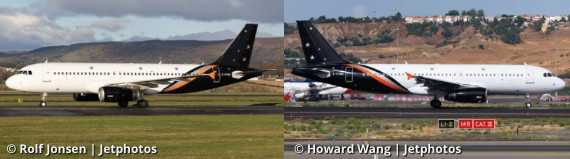
“Over the last week, our resilience has been stretched; however, safety always remains our number one priority”, added Mr Smallwood.
He explained that G-OATR was back in action on Sunday and G-OGFC is expected back in service on Wednesday.
Mr Smallwood also said that Aurigny’s sudden return to the Guernsey-Jersey route, and its enhanced timetable to and from Southampton, has not impacted its overall performance, despite these recent issues.
He said the latest UKCAA monthly punctuality and reliability statistics indicate that Aurigny’s punctuality rate ranked 3rd amongst UK carriers, and its cancellation rate was lower than the UK average and near 5-times lower than other UK regional carriers serving the Channel Islands in the same month.
Philip Saunders, the airline’s Chief Commercial Officer, said the recent events had been “unfortunate”.
He thanked all passengers for their understanding during this time.
“With a schedule design that typically requires three or four operating ATRs, depending on the day of the week and time of year, and one standby aircraft, our aircraft standby ratio is higher than any other UK carrier. It is unfortunate that two of our operating aircraft have been impacted by irregular events at the same time as our winter maintenance programme. Thank you to our customers for their patience and understanding, and we apologise for any inconvenience caused.”
