


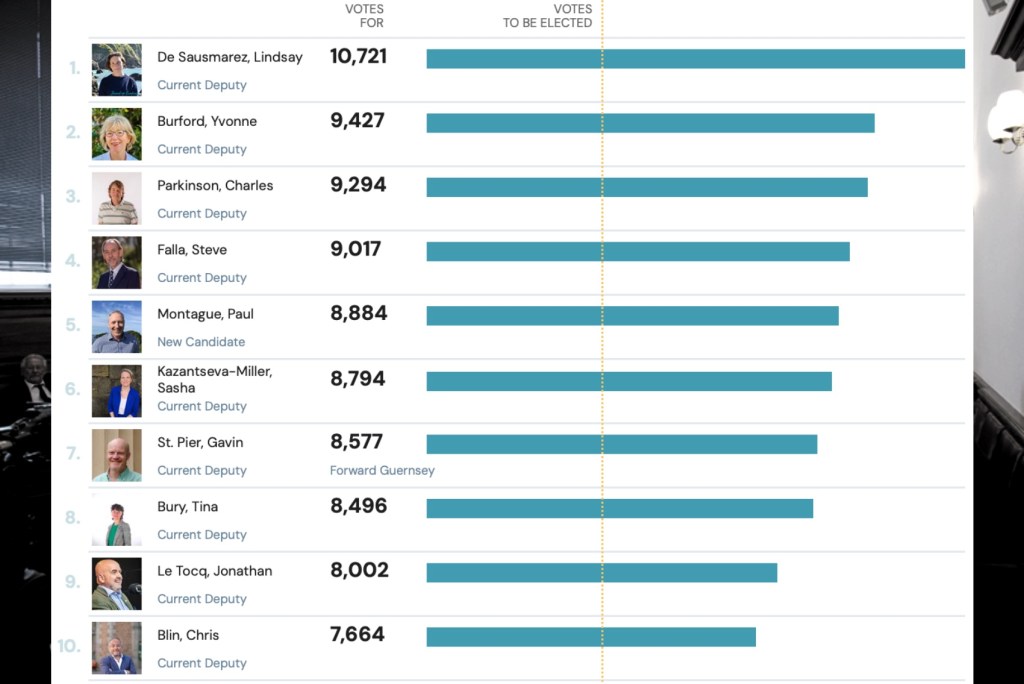
Deputy Lindsay de Sausmarez has had an incredible start to the 2025 – 2029 political term.
She began the term topping the island-wide poll with 10,721 votes, marking her strongest election performance yet having previously come 21st in the 2020 election and securing a district seat in 2016.
She received approximately 1,300 more votes than the second-placed candidate.
Following her election success, Deputy De Sausmarez was then appointed as the President of the Policy and Resources Committee, making her the first woman to hold the top spot in Guernsey’s political cast.
She won the position after a three-way contest against Deputy Jonathan Le Tocq and Deputy Mark Helyar, securing 22 votes in the first ballot, which was more than half of the available votes.
To find out how Deputy De Sausmarez has taken to life at the top, and what direction Policy and Resources will be taking over the next four years, Express approached the new ‘Chief Minister’ and asked her to tell us in her own words what’s going to happen next.
First term priorities?
“Well, the obvious priority for the island is to achieve some fiscal balance and certainty. We know that we need more revenue, but we also know that there is still a lot of concern in the community over the plans that were agreed by the previous States assembly, so we need to provide some assurance that no stone has been left unturned.
“Beyond that, I’m hoping to operate in quite a different way, in terms of the Policy and Resources Committee. I’ve been on the receiving end of P&R for my time in the States, my nine years in the states to date, and in my experience, there’s been a lot of focus on the ‘Resources’, particularly the money side of that, and not as much focus as I would like to have seen on the policy coordination side.
“So I’m hoping that we can take quite a different approach. We can act as an enabling and empowering body. You know, we’re not there as sort of overlords or anything, and I really want to work with the different committees and support them in delivering on their mandates as well, to really ensure that that higher level strategic direction has got the focus I think it deserves.
“Generally speaking, it’s really about working in a fairly different way. I’ve been very encouraged so far by the much more united sense among the members of the assembly, it does seem to be a lot more collaborative, which isn’t surprising when we look at what the electorate delivered.
“So it does seem clear, that was one of the main themes of the election, was that candidates who stood on a platform of working collaboratively were rewarded at the ballot box.”

The balance of the chamber?
“When it comes to the sort of balance and makeup of the assembly, I never think it works trying to put labels of left and right or anything on the Guernsey assembly. I think our politics isn’t so easily pigeonholed. Actually, I don’t think it sits very comfortably within the sort of parameters of other political systems. We are really unique.
“I think it really is about individuals. I think there, if there is a theme at all that has come out of the election, I do agree with the analysis that the community has voted for quite a degree of change, but I think change in attitude more than anything else.
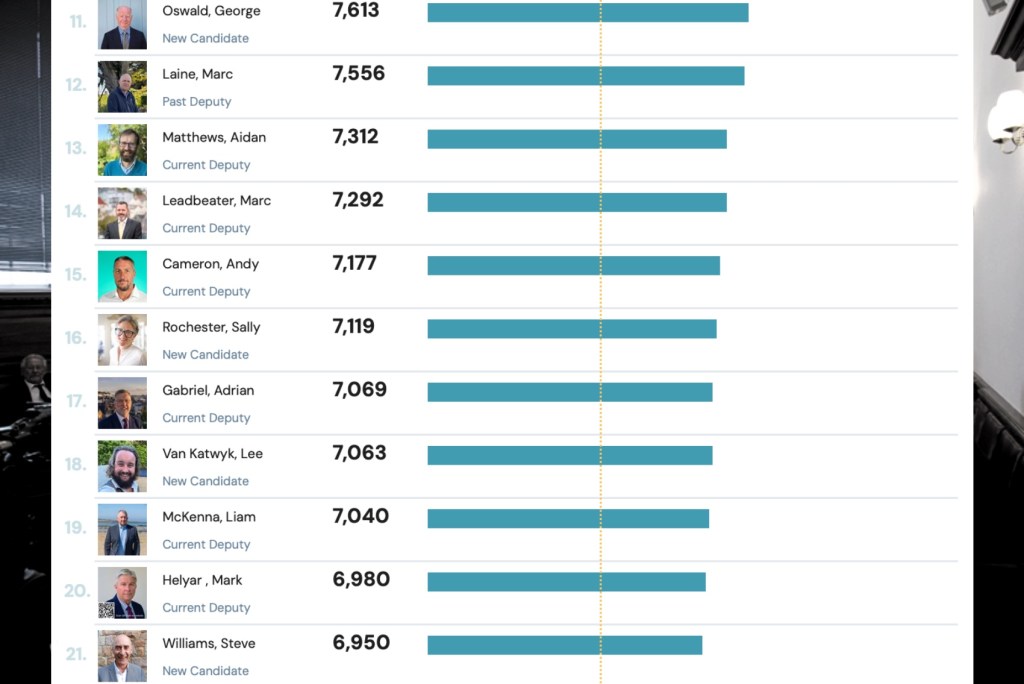
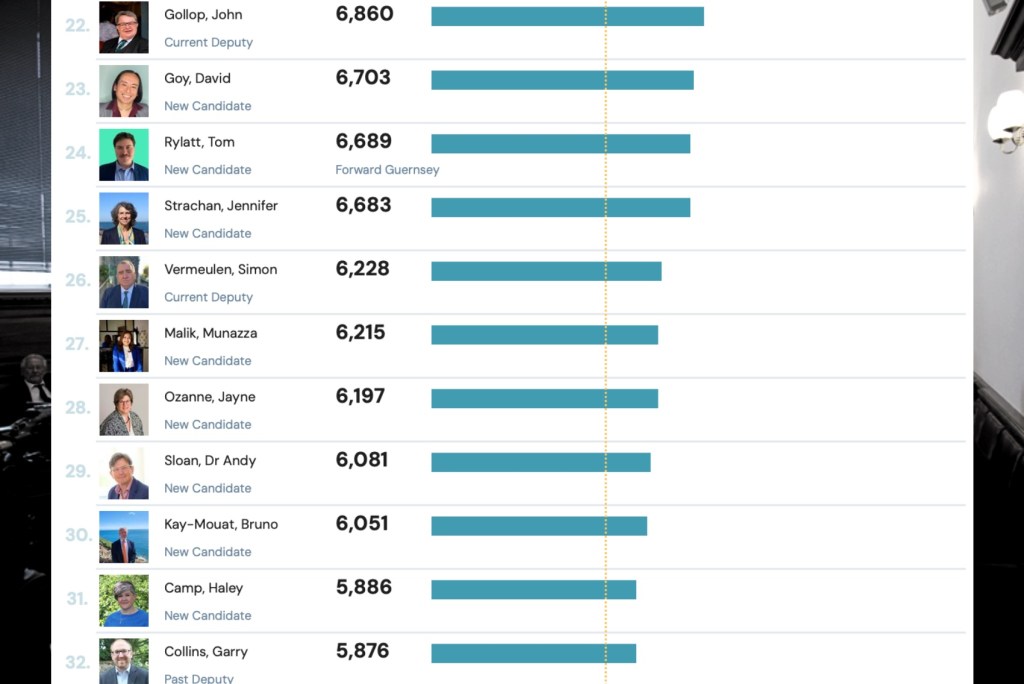
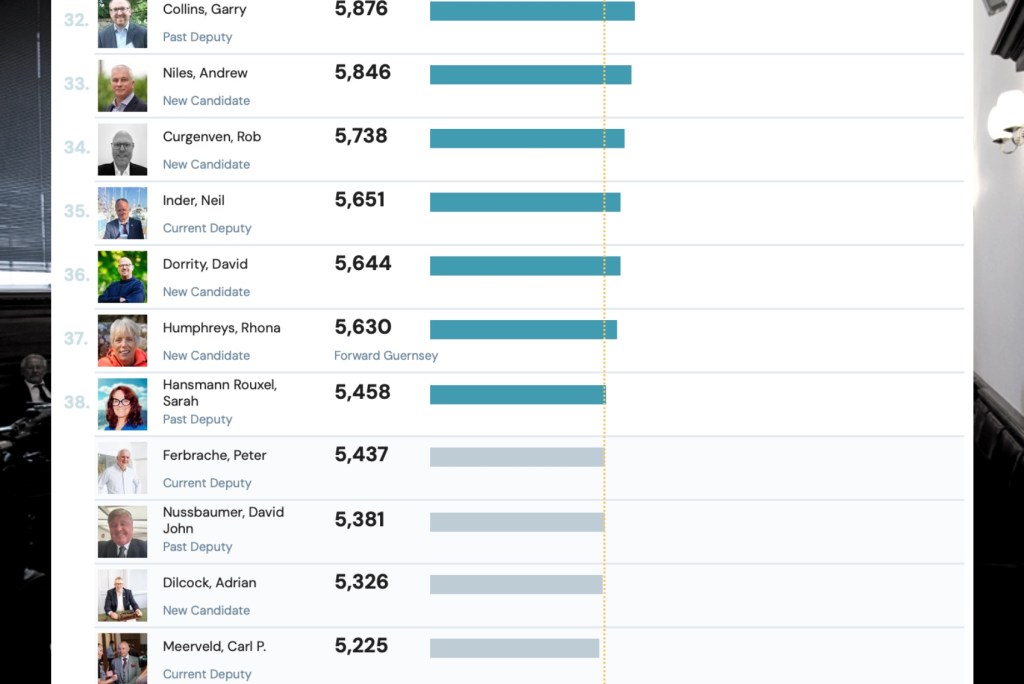
“Because, you know, I think it was around 50% turnover. So we do have about half of the previous assembly that has been returned, and returned strongly, if you look at the top 20 in particular, that is dominated by by incumbent members, but we do have a lot of fresh ideas in the form of new faces as well. So it’s going to be an interesting political term ahead.”
On GST, and communicating with the community?
“I think two things are true at the same time. One of those is that, I think there is a broad acceptance that the States does need more revenue, but also there is a good deal of concern about the package that has been approved already, and that seems to me to be one of the themes that has come out through the election results.
“That is why we are taking the approach that we are taking in terms of bringing the community on that journey, making sure that we are transparently exploring all other options.
“Two I think is about really strong communication, and we’re building some of the trust, which is one of the other things that I really want to bring out in my position, on Policy and Resources, as I think that trust with the community has become badly eroded, and I think we need to rebuild that and earn it back.
“I think good communication, showing our workings, making sure that the community themselves are involved in that process, is going to be really important.”
The next “worst States ever!”?
“I think the most obvious thing we can do is behave in a different way. I think the community is sick and tired of the tribalism and division that characterised the previous assembly, and to an extent the assembly before that, but I think they have voted accordingly, and therefore I think we stand a much better chance.
“I think there are more people in this assembly who really value working in a more collegiate way, and not behaving tribally or in any other way, you know?
“It does feel really different, you know, if we compare right now, the sort of votes that we’ve had to date, the debates that we’ve had to date, which have been contested elections.
“Even the contested elections did not feel as adversarial as their equivalents in 2020.
“Deputy Helier, when he was speaking in his pitch for the role of President of Policy and Resources, said that it felt in 2020 like walking onto some sort of battleground. You know, the tension was sort of tangible.
“It did feel very divided already, and that is indeed how it sort of played out. But this term does feel really different. And of course, there are still going to be differences of opinion. Of course there are going to be robust debates, but I hope that we can act with civility and respect towards each other, because if we can’t show that in the assembly, then we have no chance of earning the community’s trust back, and that is something I’m really determined to do.
“I also think that, and this was one of my proposals for the role, to open PNR up. I don’t want it to act as some sort of overlord within the states. I want it to be much more supportive and collaborative, but actually in terms of the community as well, I think that has to be much more open dialogue. I think we need to show our workings more. We need to involve the community, because at the end of the day, it’s the community who are going to be impacted by our decisions.
“I think it’s really important to involve them in any way we can, and that means changing the way we communicate, really listening to what they say and then acting on it.”
This interview first appeared in CONNECT magazine, which you can read here:
