

fixing Guernsey Airport’s roof will cost an estimated £6.1m – with shoddy workmanship ultimately the cause of all the problems over the 22-years since it was built.
Express was invited on to the scaffolding that has been built up as a cage around the airport terminal to find out exactly what is wrong with the award-winning structure and what needs to be done to make it safe, and wind- and watertight for the future.
When Guernsey Airport was built it went over budget by around £7million, costing more than £23million in total.
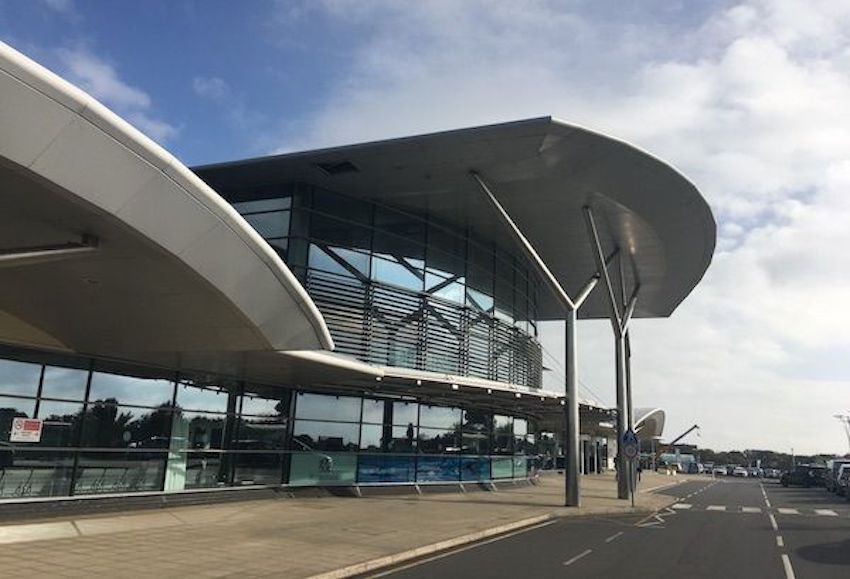
It took around two years to build, with the new terminal – our current airport – opening in April 2004.
It won architectural awards – but within months, roof panels were flying off in windy weather.
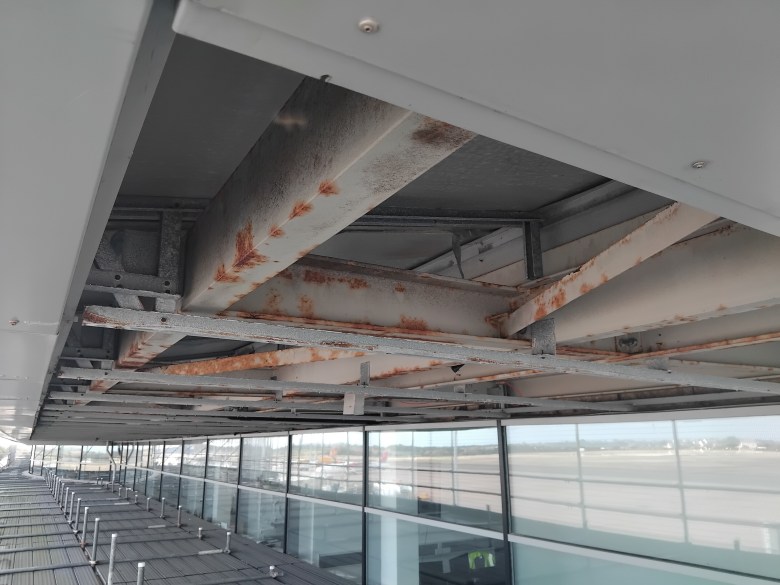
The roof had a minimum lifespan of 40 years but inspections over the 22 years since it was signed off have revealed shoddy workmanship, with too few rivets holding the panels in place on the corners, too few steel structural supports in key places, and other issues.
Award-winning
The new airport terminal building won two awards after building work was completed and signed off in 2004.
The design team of Kensington Taylor, Davis Langdon and Everest, Babtie Group, and Atkins won the RIBA Town and Country Award in 2004.
The design of the new terminal, built by Kensington Taylor (KTA Architects) won the Guernsey Design Award in 2005.
Roof panels were confirmed to be flying off the award-winning structure by 2006.
The damage has worsened over years – with Storm Ciaran in 2023 dislodging numerous roof panels and a post-storm inspection revealing even more damage beneath the terminal building’s overhanging winged roof.
The decision was taken then to install a scaffolding cage around the airport terminal to catch any flying roof panels.
Jenny Giles, Head of Infrastructure and Delivery for Guernsey Ports, said that cage has ensured no one has been injured and there’s been no notable damage to anything, including nothing at all reported on the airfield.
“Some of the panels that have come off hit the roof on the way down, and we’ve had to do repairs there,” she explained.

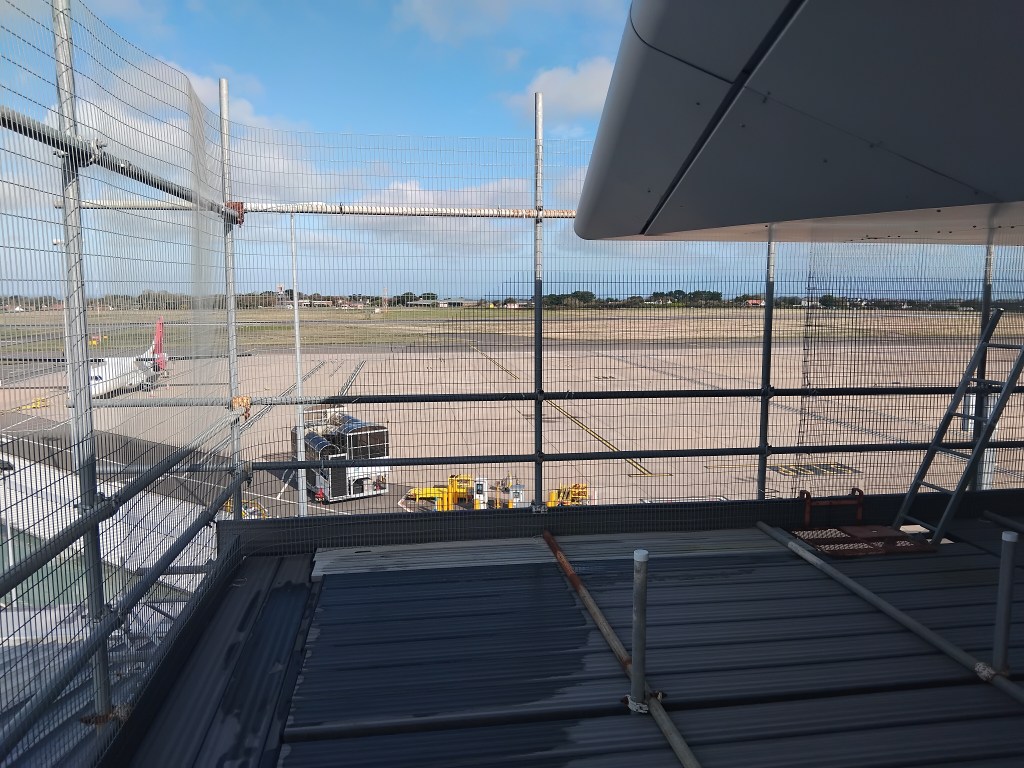
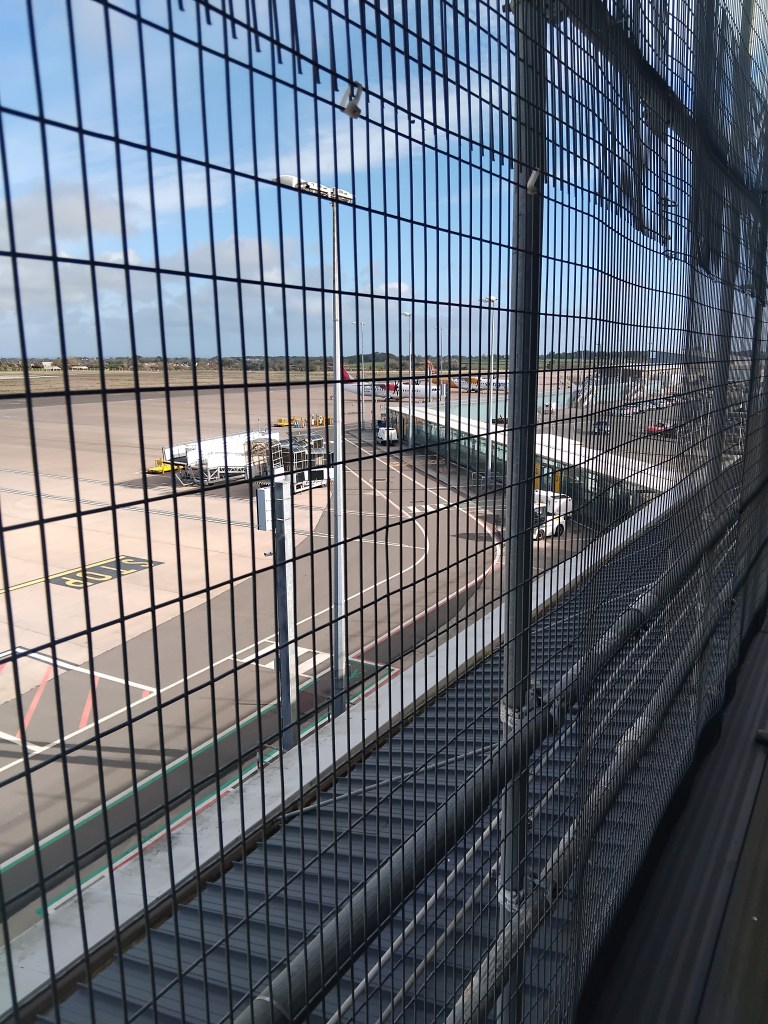
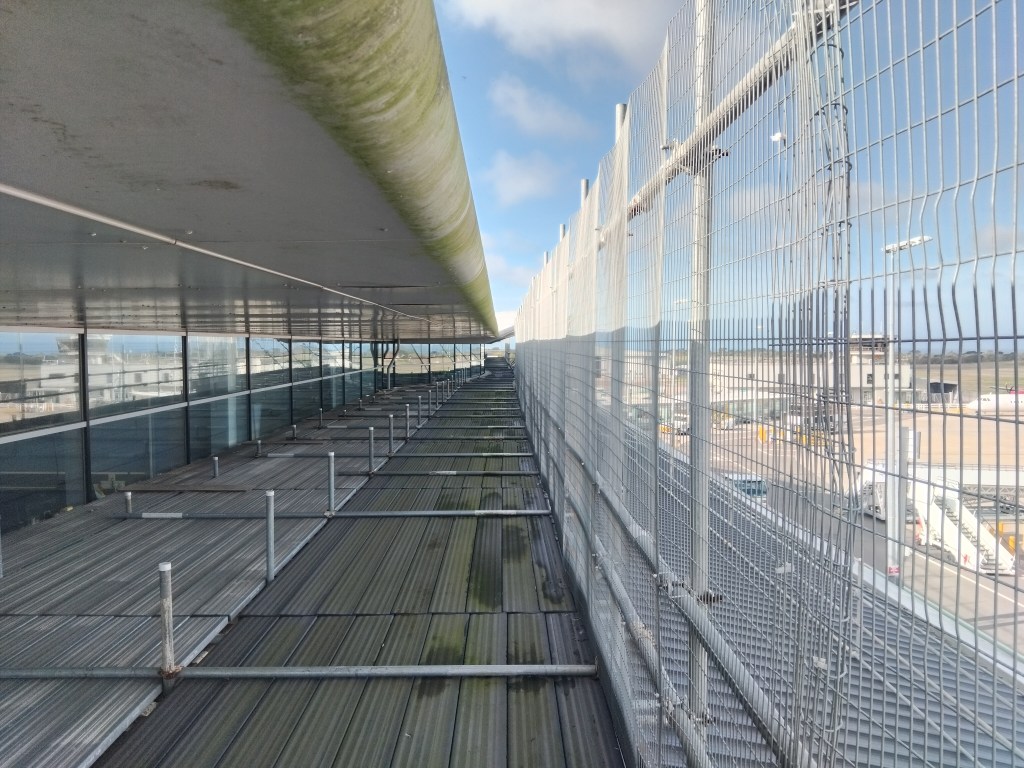
“They’ve caused a bit of damage to the ground surrounding, but no people or significant property, like aeroplanes, have been damaged by this. But we want to make sure that it doesn’t happen, so we put up the scaffolding with the cage that you can see so that the panels just cannot get out.”
What’s wrong with the roof?
Ms Giles said the damage to the roof dates back to its construction – and has worsened over the years as wind and water have got inside the winged roof and lifted panels and caused structural supports to rust.
As the panels were blown off by the wind or removed to prevent further damage or to inspect the structure underneath the panels, some worrying signs of poor construction were discovered.

She confirmed that the issues are all with the overhanging section of the roof, and the panels underneath that structure lift or move out of place during windy weather.
As the airport terminal building is exposed this means the damage is done constantly, with small movements dislodging panels slightly until they are a risk.
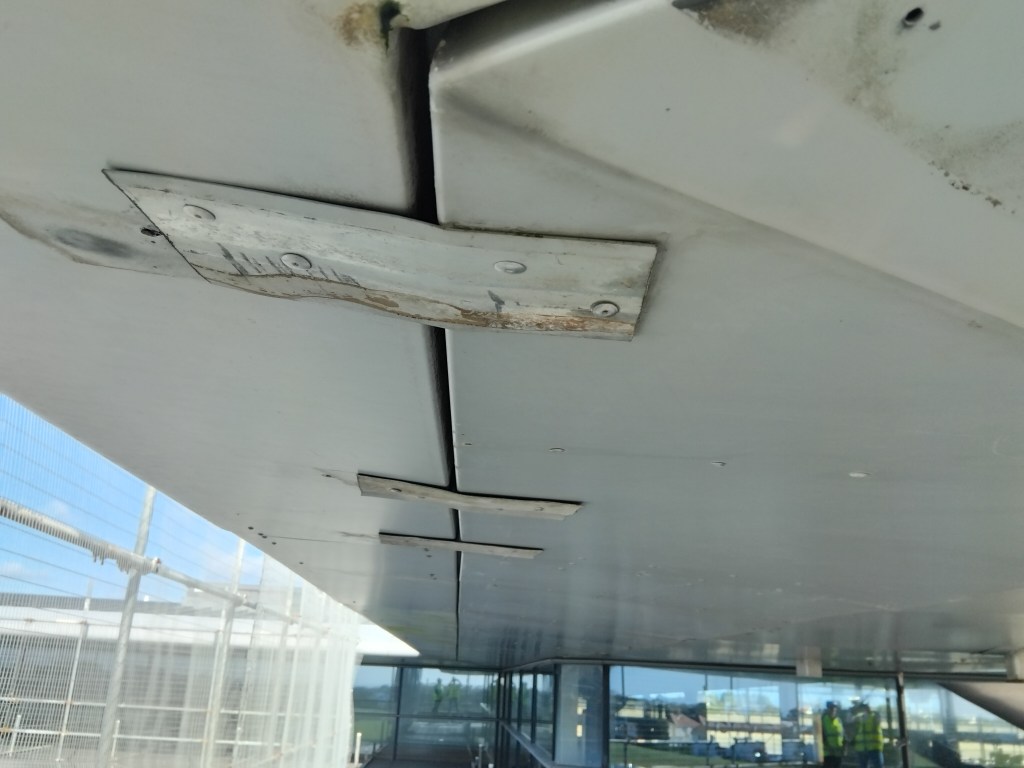
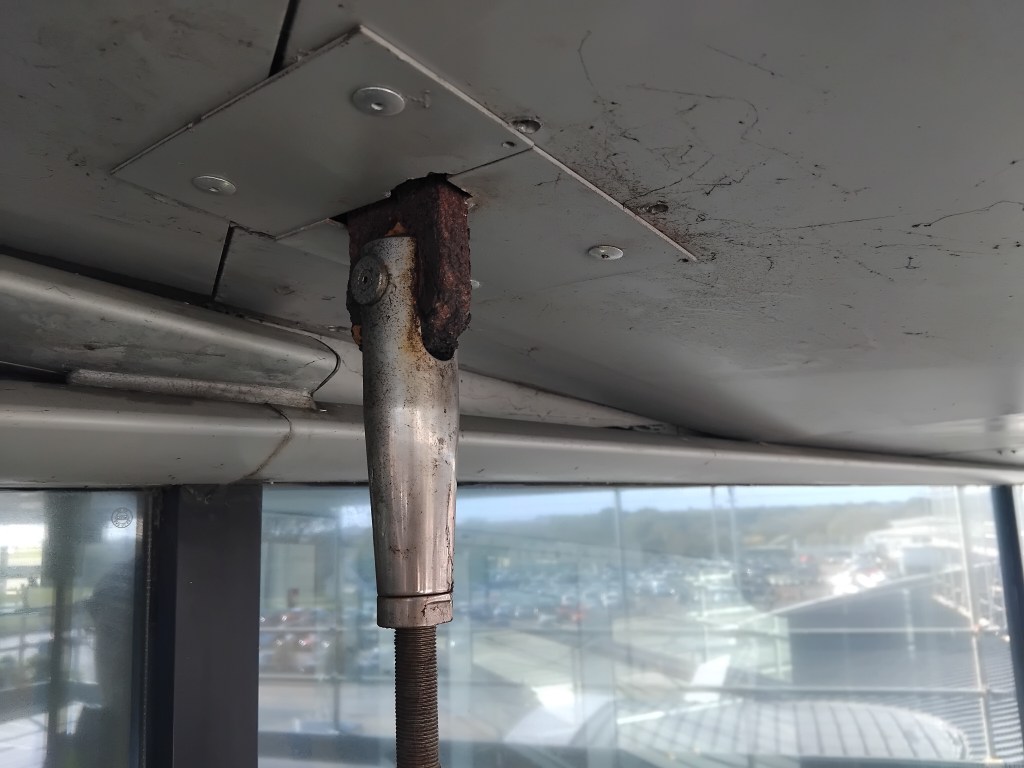
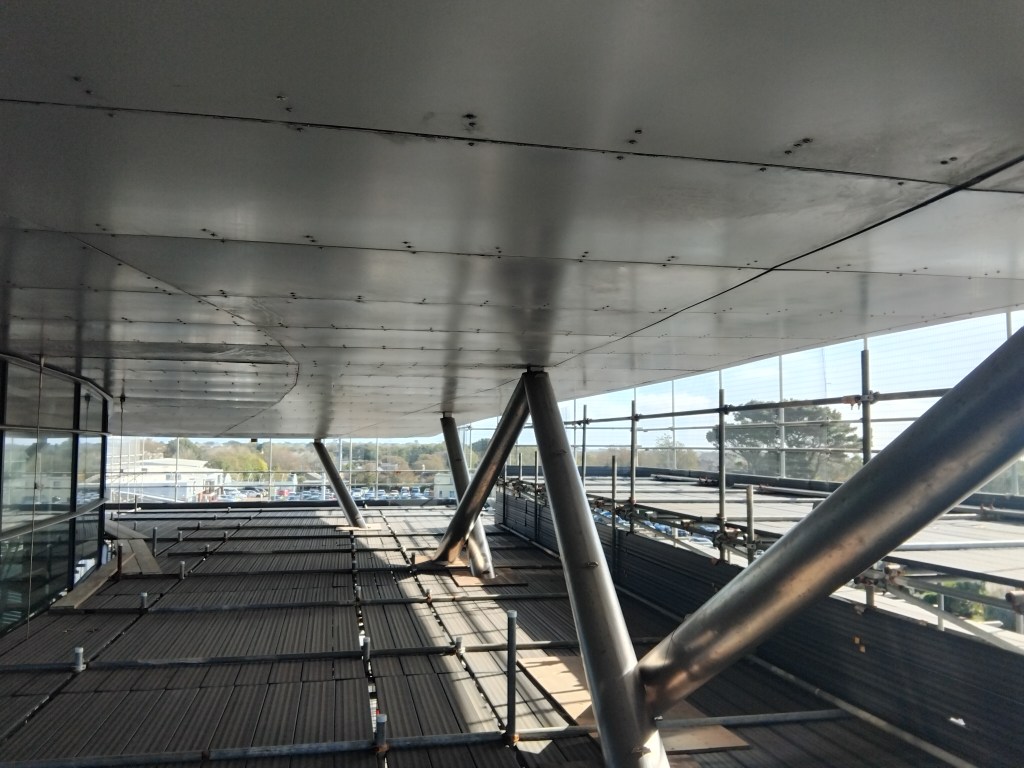
Ms Giles showed Express the steel structural supports that hold the panels in place (below) – and there are not enough of them, and there also aren’t enough rivets in some places (above).
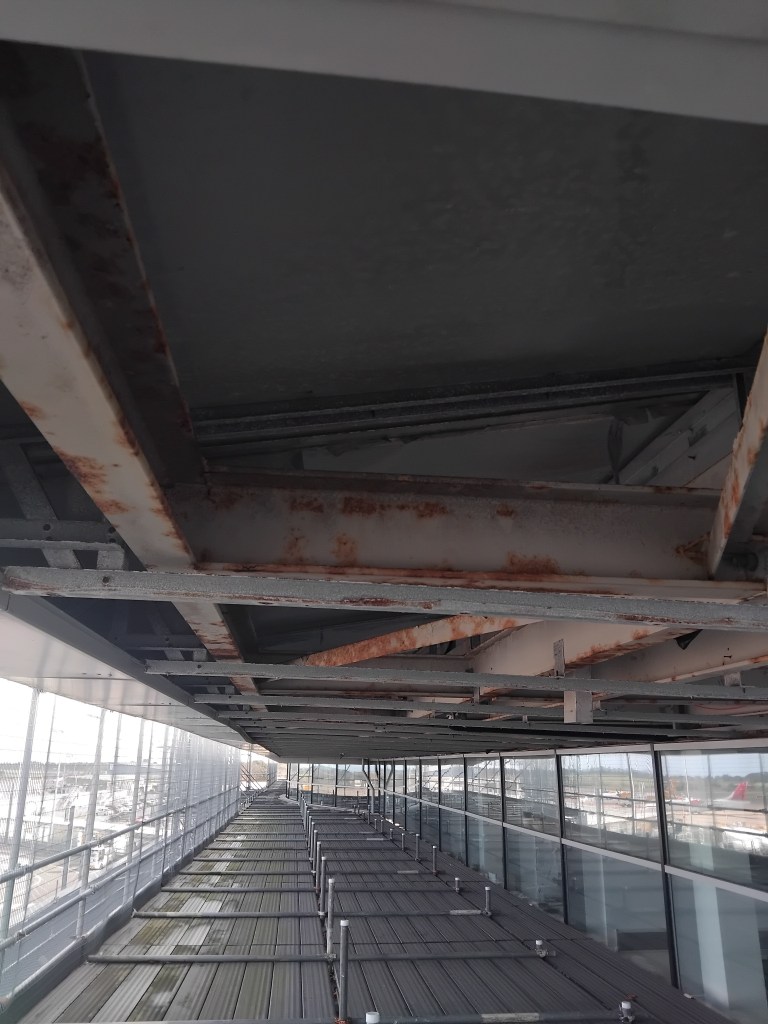
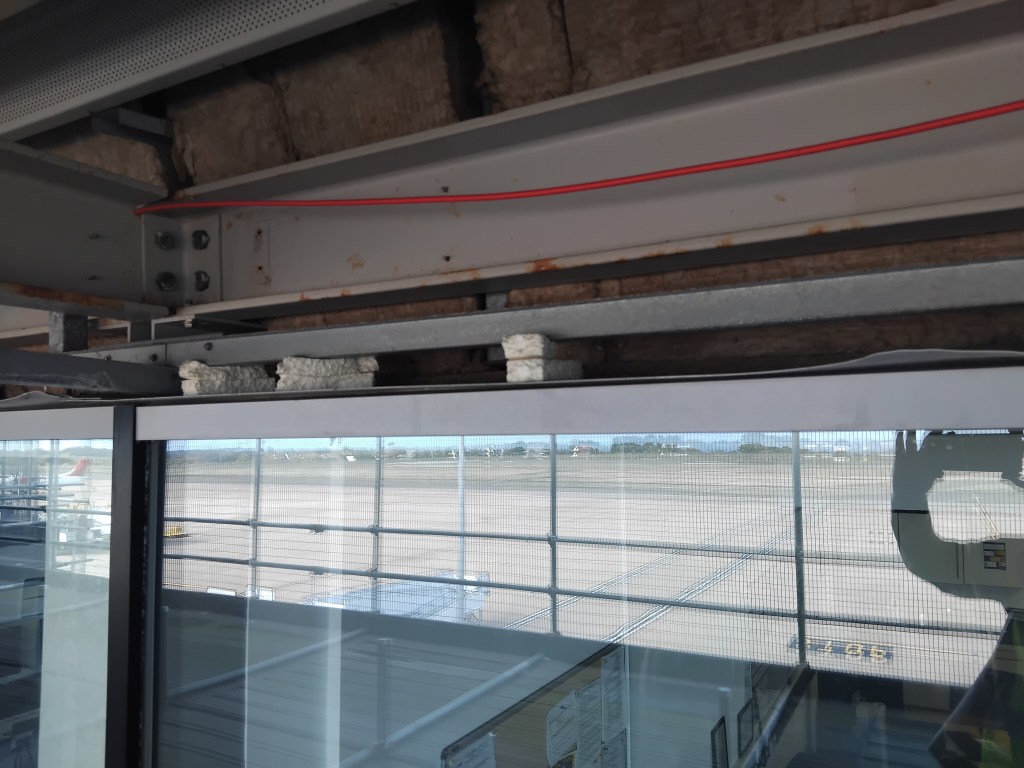
Some of the panels aren’t – and never were – aligned, and there’s even polystyrene propping up some of the structures.
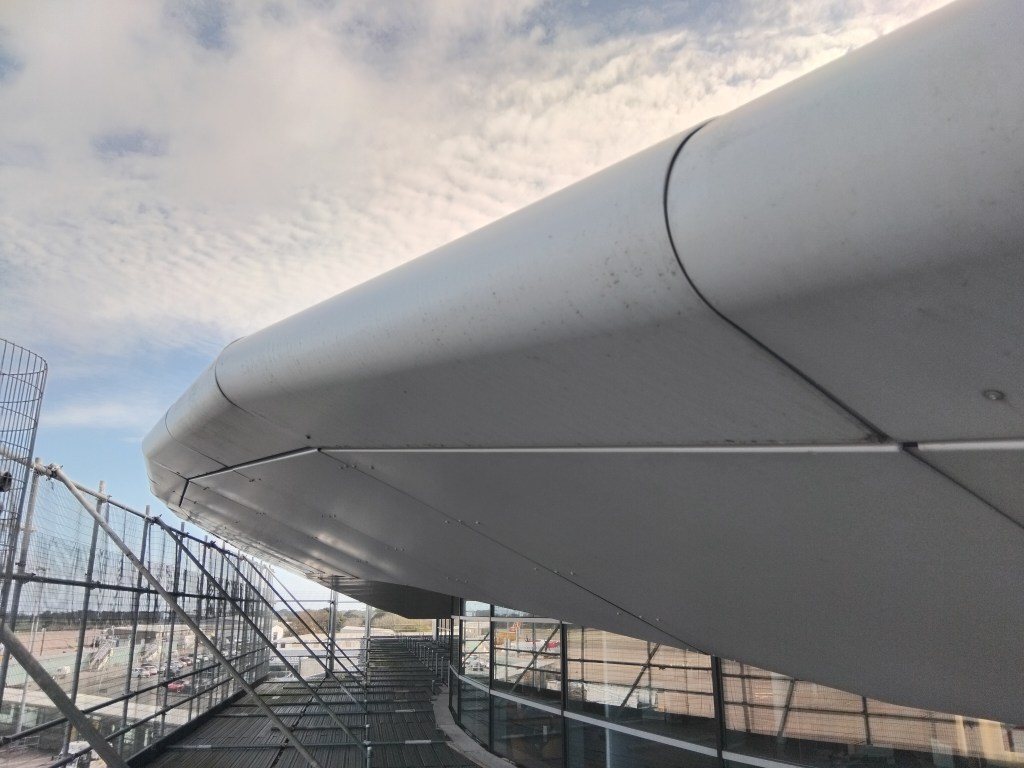
“There’s this very beautiful, wing-shaped overhang all the way around the building that looks very lovely. But when it was built, they did not put enough supports for the panels,” said Ms Giles.
“There’s enough support for the roof and the roof is safe and sturdy, but the panels on the underside aren’t sufficiently supported, and they’re not strong enough. They’re not thick enough, and they need to be taken down the whole way round.”
Ms Giles said the overhanging roof has had maintenance work carried out over the past two decades, but the extent of the damage has increased with time.
Guernsey Ports has strengthened the structural supports in some places, and ‘patched’ the panels together elsewhere, but the whole winged structure now needs to be fixed with a £6.1m estimated bill to do that work.
Who is responsible?
Hoctief (UK) Construction Ltd had the contract for building Guernsey Airport’s new terminal building.
It was designed by Kensington Taylor – which still boasts about the project on its website.
Local firms which were sub-contracted to carry out some of the work included Channel Welders, Paul Rouget Plant Hire, and Concept Developments, along with UK firms Airport Information Systems Ltd, CopperChase Systems Engineering, UK Explorer, and BAE Systems.
A BBC report from 2014 confirms that “one of the sub-contractors went into liquidation and was unable to pay its suppliers and its own contractors, leaving some island firms without full payment for the work carried out”.
The States had initially tried to claim money back from the contractor but after years of legal action, both sides walked away.
Ms Giles confirmed to Express that the States would now be ‘out of time’ to claim against the contractor.
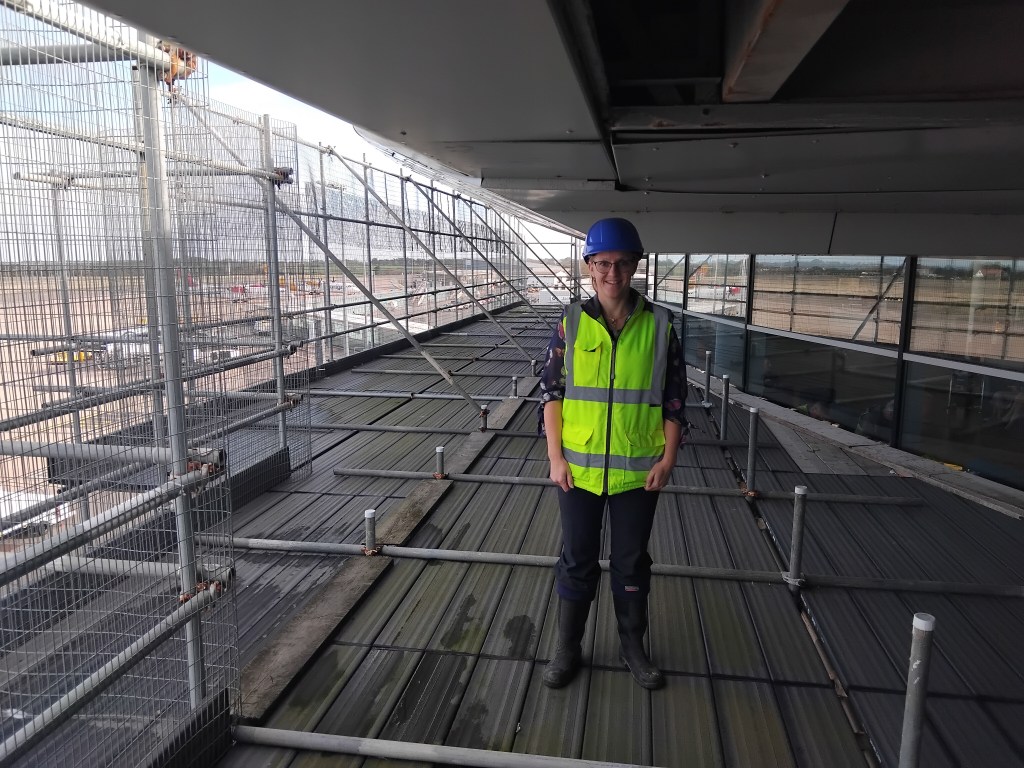
She also confirmed that a lot of lessons had been learnt from the airport terminal project and other projects of the same era.
“It is disappointing how many defects there are in the roof, but it is a huge roof,” Ms Giles acknowledged.
“I believe the whole project had a lot of issues with its organisational structure, etc. So it’s a shame that that is what happened, but we do approach projects very differently now.
“We use different construction contracts, we’re better at supervising, we make sure we have project professionals and construction professionals doing construction projects. So I’d like to think that we won’t be in the same position again.
A review of the airport project, published in 2014, also confirmed that additional financial checks and processes are now mandatory on all States capital projects.
The scaffolding
Ultimately the damage was done a long time ago, and the airport roof needs to be fixed so the scaffolding can come down.
The scaffolding itself will be costing many thousands of pounds – but the exact amount can’t be disclosed for commercial reasons.
It was put up in 2024 and is expected to remain in place until all of the work to fix the roof has been signed off – and there is no end date for that yet.
Ms Giles confirmed the States had not bought the scaffolding, and instead leases it from Formula Scaffolding, which is responsible for inspecting and maintaining the scaffolding itself and for enabling access to the roof for Ports staff and contractors.
The scaffolding cage is inspected weekly.
Fixing the roof
States Trading Supervisory Board President, Deputy Mark Helyar recently said that now is the time to sort out the airport roof once and for all.
“Given the airport is a prime business and travel gateway, we need to address the structural issues with the roof as soon as possible, so that it is safe to remove the scaffolding. With States approval we can begin the tendering exercise, which will help to identify the best value, least cost solution.”
STSB has been given an estimated price of £6.1m to fix the roof – that budget will be confirmed once the States go out to tenders and applications to do the work are received.
The proposed ‘extensive structural repairs’ could take up to 18 months to complete, with the budget planned to include all contractor and project management costs.
Ms Giles said they are also expecting to find more damage underneath panels that haven’t yet been removed – but that work is all planned to be included in the overall project and budget.
“While we’ve got the panels down, we have noticed that there’s some rusting on the structural steel, so we’ll make sure that’s repaired and that’s painted so that it will have the longevity, so that we can re-roof the roof and not worry about the steel underneath.
“Any misaligned joints, any extra rusting, we’re going to repair while the panels are down, and we have put some extra into that budget to try and cover all of that.
“So we don’t know all of the issues but we’ve done some site investigations and we took down odd panels of the ones that haven’t come down to have a look. We’ve made an estimation of the percentage of defects that there would be from what we’ve seen in those areas, and we’ve estimated it that way, but we will have to address those as the panels come down.
“We’ll have a high level of supervision from our side to make sure that all of them are found,” she added.
Project priority
With an estimated 330,000 people moving through Guernsey Airport every year it is critical to island life.
Ms Giles said she is confident that the States will recognise its importance and make it a priority for funding when they debate it later this year.
“In April they debated the major projects portfolio, and this project was put on the list of projects to be taken forward. STSB have prioritised it because they’d like to see the scaffold down on the airport, and we’d all like to see the scaffold down on the airport too. But its primary function is to keep everyone safe and to keep the airport open, so that’s why it’s here.
“There’s still some work to do yet, this (Policy Letter) is asking the States if they’re happy with this cost range for the works, and they will have to go out to tender and program in with a contractor, make sure that we are in the right cost range, and then get the work done. And as you can see, this roof is huge, so it’s a lot of work, and that work is going to take a considerable amount of time.”
CAA concerns
Ms Giles confirmed that no person or notable property, including aeroplanes, have been injured or damaged as a result of flying roof panels over the past 20 years.
However, the Civil Aviation Authority would undoubtedly be concerned if anything were to occur.
The scaffolding cage will prevent anything happening currently but the long term future of the airport will depend on the roof being fixed properly.
For a short while, after Storm Ciaran and before the scaffolding was erected, part of the airport couldn’t be used, because of the risk, explained Ms Giles.
“After Storm Ciaran, when the significance of this issue was realised, the stands where the roof panels had come loose were closed, and all the aircraft were directed to a different part of the apron until we had that scaffolding up to protect it, and then we could use those again.”
Ms Giles also confirmed that when the work is carried out to the airport roof, the airport will remain open throughout.
“We will carry on keeping the airport open, keeping everyone moving through it, and to keep everybody safe.”
