


Guernsey’s Fukku has become the first restaurant in the Channel Islands to catch, land, dry age and serve a tuna fish.
With tuna fishing currently illegal in Guernsey waters, the Fukku team went to Jersey to land their catch.
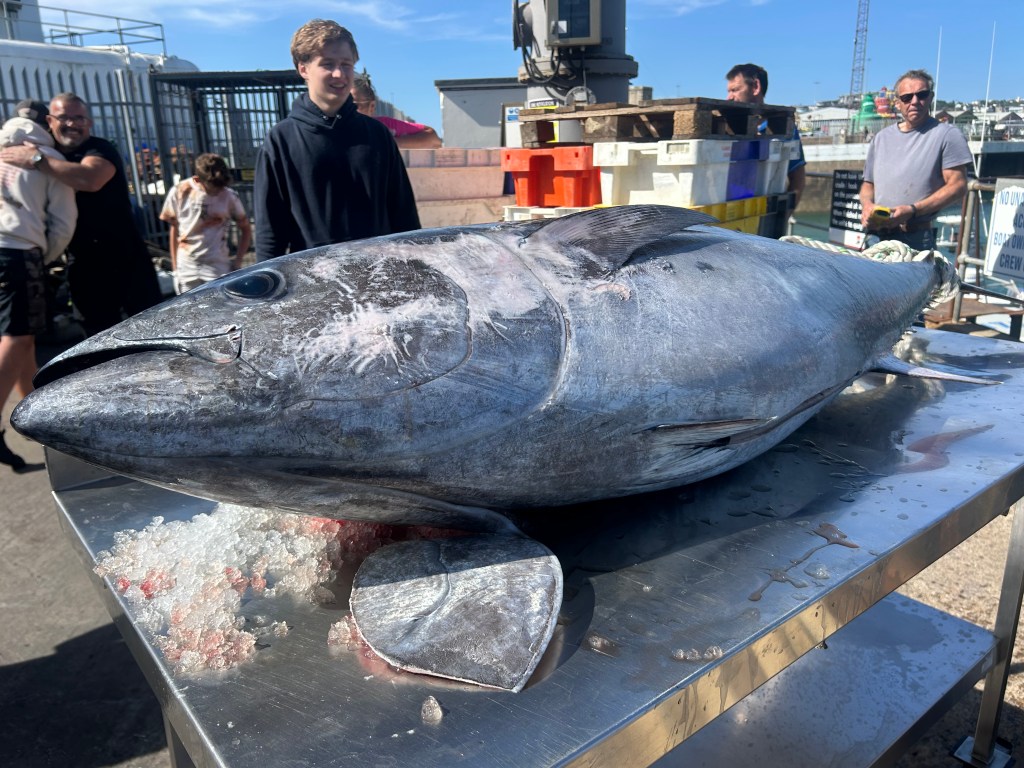
Jersey based licensed fisherman Shetty took them out and they were successful, landing two tuna weighing 35kg and 40kg.
A spokesperson for Fukku said they were “humanely handled using the Ikejime method” which is “a traditional 350-year-old Japanese method of humanely killing fish to preserve and elevate meat quality” (Wikipedia).
The fish was registered in Jersey before being brought back to Guernsey where they were dry-aged for a week at Fukku “to firm the meat and intensify the flavour”.
The restaurant then hosted a live tuna carving before guests last week.
Tuna fishing has been legal in Jersey since last year – while Guernsey has been in talks about doing the same.
The legislation to allow tuna fishing in Guernsey waters could be signed off by the States this week.
Deputy Lee Van Katwyk, Sea Fisheries Lead for the Committee for Economic Development, said extending the International Convention for the Conservation of Atlantic Tunas (ICCAT) coverage to the Bailiwick would provide local fishermen with opportunities available in neighbouring jurisdictions, while ensuring any local fishery operates within internationally recognised conservation and management arrangements.
“Atlantic bluefin tuna numbers have increased significantly in Bailiwick waters in recent years, leading to growing interest from both commercial fishermen and recreational anglers,” he said.
“We are asking the States to support these proposals, which would allow local fisheries to legally capitalise on these opportunities while simultaneously bringing Guernsey in line with other jurisdictions regarding marine convention regulations. The aim is to complete and ratify the legislation so that islanders can take advantage of the changes in the 2027 fishing season.”

When the ICCAT was first extended to Jersey, an initial three month trial saw a handful of businesses given permits to offer ‘catch and release’ fishing trips.
Plans were then finalised to introduce a wider scheme to allow licensed fishing boats to land small quantities of Atlantic bluefin tuna that could be sold to restaurants and retail outlets. That kicked in earlier this year, while Guernsey was still in talks about doing the same.
Last month, Guernsey’s Committee for Economic Development confirmed that the ICCAT is going to be extended to Bailiwick waters too.
ED said the range of measures will include permits for recreational tuna fishing, new licence conditions for commercial fishers, measures to combat illegal, unreported, and unregulated fishing, and protections for certain species of shark.
The proposed legislation would allow local vessels to apply for access to the UK’s Atlantic bluefin tuna quota allocation.
For the 2026-2029 quota period, 230 tonnes of bluefin tuna is available annually across the UK allocation, with permits distributed through an application process administered by the UK’s Department for Environment, Food and Rural Affairs (Defra).
