

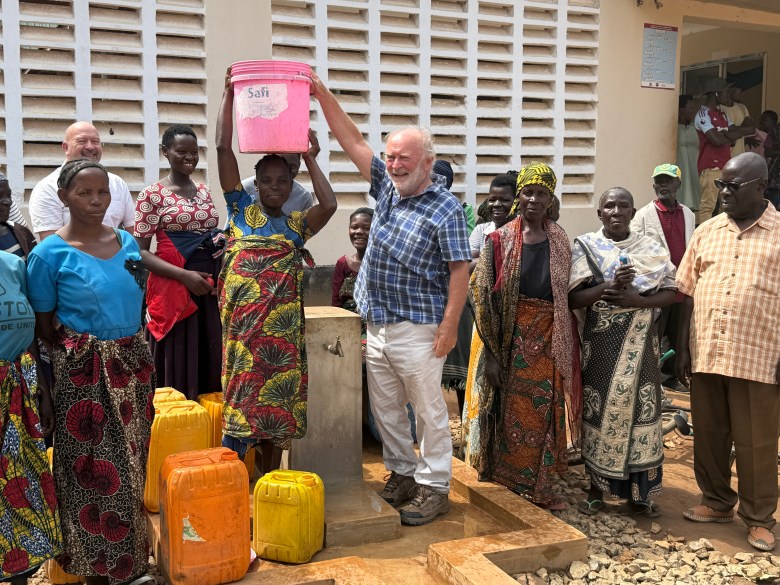
A decade after being set up as a Non-Governmental Organisation in Tanzania, a Guernsey-based charity is increasingly seeing that the villages it works in are financially and physically helping themselves.
The Eleanor Foundation has now put in 135 wells, installed toilet blocks at 42 schools, and built four health clinics in the Chato and Biharamulo Districts in the north west region of the African country.
The charity was set up in 2012, shortly after the death of 22-year-old Eleanor Carey in a road accident in London.
One of the first villages to benefit from a well was Mutundu, explained Allister Carey – Eleanor’s father, and the charity’s Founder and Director.
The charity later helped to complete work on a medical dispensary in the village.
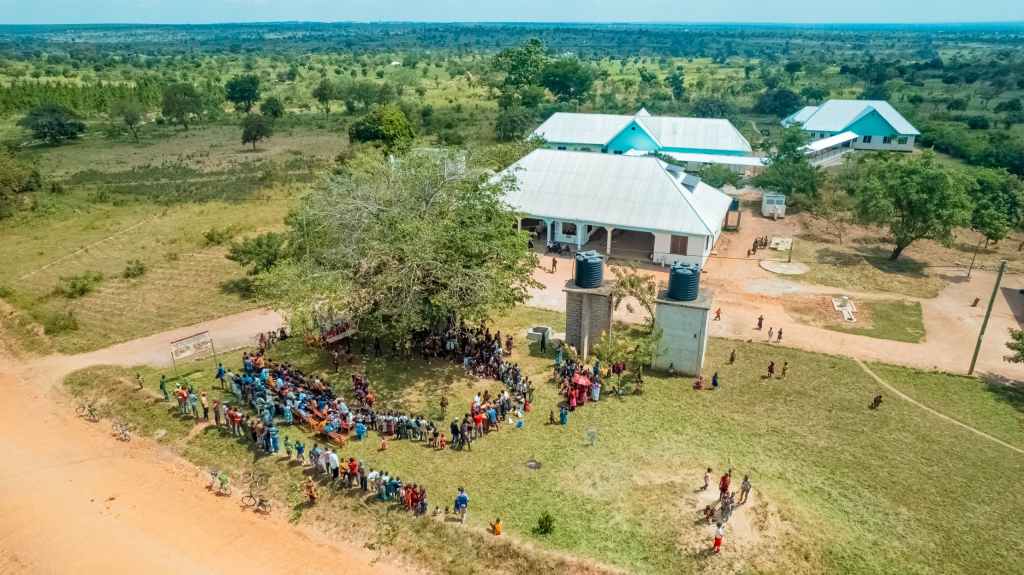
The nearest medical facility was around 15km away which was too far for people without any form of transport apart from walking.
The community had started building a health clinic themselves but had been unable to complete it.
The Eleanor Foundation contributed money and manpower to finish off the facility and it opened in 2016.
In the decade since then it has served around 19,000 people.
The Mutundu Health Clinic is now run by the Chato District Government, which provides the staff and medicines, while the people benefitting also contribute to the building and ongoing maintenance of their new infrastructure.
“This has been a growing aspect of the work that we do,” said Mr Carey.
“When we started in 2016, for example, a shadow well would have cost about £2,500. We’ve got that figure down to between £1,800 and £1,900, against all the expectations that you might think that these prices would have gone up a lot, and it’s because of the input from the communities when they see the benefit from the neighbouring village, who’ve got a shallow world.
“They say ‘oh yes, these actually do improve health, our children will be less sick, they will spend more time at school, and we must make bigger contributions’.
“It’s almost a competitive thing.
“We don’t like to think of it as they’re competing with each other, but they do recognise the value of the work, and I think once they see that, then they’re more likely to look after these things, and they’re more likely to continue to support them.
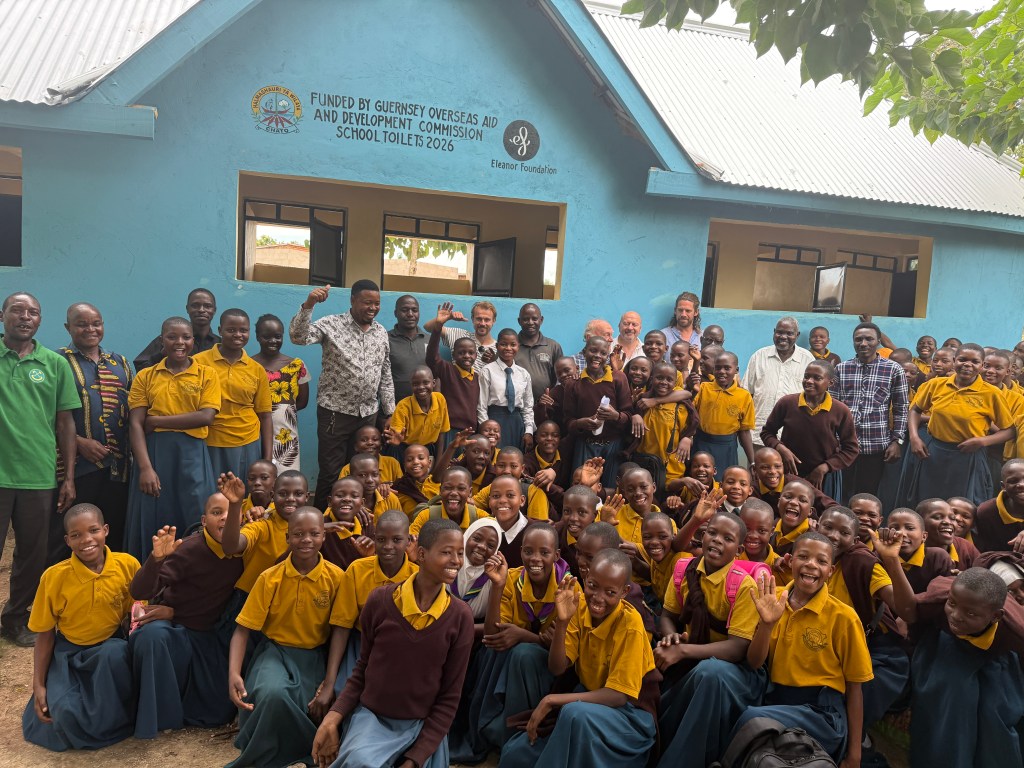
“It’s been the same with the school sanitation project,” he added. “When we started, there was just a small amount of contributions. It’s now about 20 – 25% of the total building cost.
“It comes, not in financial terms, but in terms of work input and the contribution of materials so it means our money goes further, and the same with building health facilities. The community always, always makes a significant contribution towards it.”
This December will mark 15 years since Eleanor Carey died.
Known as Ellie to her family and friends, Miss Carey was studying in London when she was killed in a collision with a HGV as she cycled near Tower Bridge in 2011.
Miss Carey was studying International Development at the London Metropolitan University, and she had a passion for water, sanitation, and hygiene issues.
Mr Carey said the work the Eleanor Foundation now does is focused in areas where his daughter would have made a difference herself.
“Without a doubt,” he said firmly.
“We still stick to that principle of giving people access to basic needs because it’s so important and it just needs to be done,” Mr Carey added.
“The work we do mirrors her ambitions.”

The basic needs met by the Eleanor Foundation are quite simply the provision of clean water and sanitation.
Five years after launching, the Foundation was set up as an NGO in Tanzania.
This demonstrated how closely the charity works with the authorities, while keeping its independence, Mr Carey said.
The Foundation now employs a manager to directly oversee its work in Tanzania, with Mr Carey and other directors making self-funded trips to the country when they can.
READ MORE…
The October/November issue of CONNECT magazine will feature an extended article on the work of the Eleanor Foundation in memory of Eleanor Carey.
