


One of Guernsey’s first-term Deputies has slammed the States’ culture of “blind” conformity and reckless spending, in a scathing resignation letter seen by Express.
Deputy Haley Camp criticised Deputy Sasha Kazantseva-Miller’s leadership of Economic Development (ED) in a wide-ranging tear-down of the committee.
Deputy Camp said “independent thought” was “too often treated as an inconvenience rather than an asset”, labelling the committee’s leadership as “autocratic rather than collaborative”.
“I was not elected to blindly follow a President’s agenda,” she added.
Reckless spending
Deputy Camp said her concerns went wider than Economic Development, however.
She called on Deputies to “reflect on the fact” that two Deputies had resigned from principal committees in as many months, after the resignation of Deputy David Dorrity from Employment and Social Security (ESS) at the end of April.
Deputy Dorrity said at the time his resignation was caused by “frustrations” over a lack of focus on savings.
Deputy Camp laid into the States’ focus on spin over substance as well as what she sees as reckless spending.
“I did not join Economic Development to curate headlines – I joined to help build a stronger economy.”
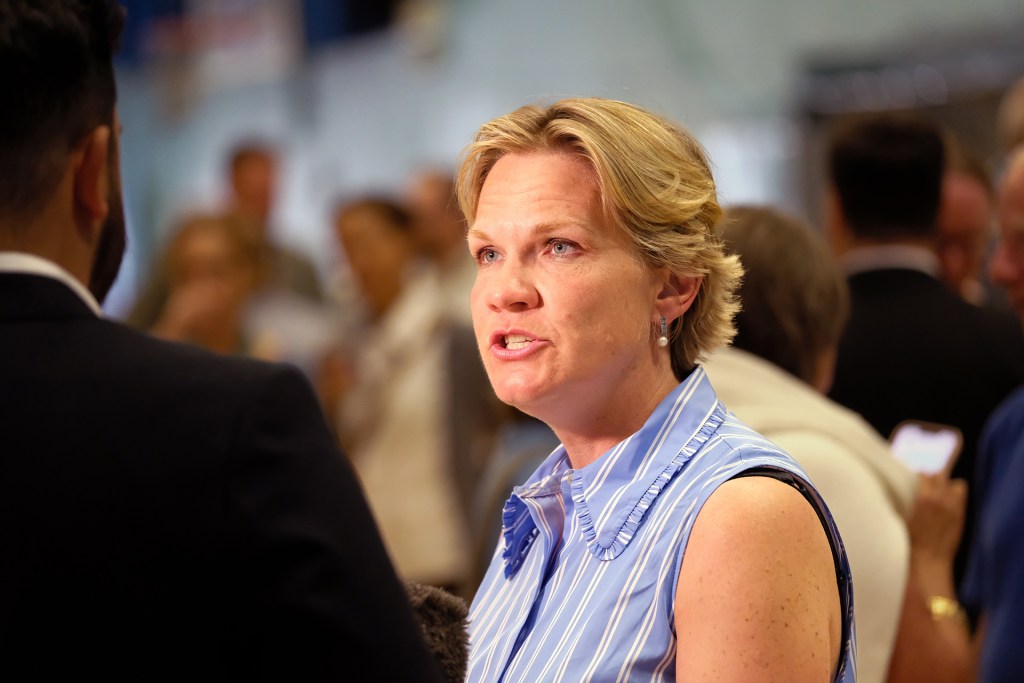
Deputy Camp, a qualified barrister, said she had been “accountable for spending other people’s money” in the finance industry.
“I have therefore found it difficult to reconcile that experience with decisions involving hundreds of thousands of pounds where I did not believe sufficient evidence had been presented to demonstrate value for money.”
She warned that she intended to heavily scrutinise the committee from the outside, promising to propose “significant reductions” to ED’s spending plans.
Full letter
Here is Deputy Camp’s resignation letter in full.
Dear All
I write to notify that I have today written to the Presiding Officer confirming my resignation as a Member of the Committee for Economic Development.
Personal Statement on Resignation
Resignation has never come easily to me. It has always felt like failure. My instinct has always been to stay, to fight for what I believe in and to try to make things better. Walking away is not something I do lightly.
But a very wise person once told me that I could never give my best in an environment that sought to clip my wings. Those words have stayed with me. Unfortunately, they have increasingly come to define my experience of the Committee for Economic Development.
Today, after many months of reflection, I have concluded that I can no longer make the contribution the people of Guernsey elected me to make by remaining on the Committee.
This has not been a sudden decision. A few months ago another Deputy disclosed publicly that I had already expressed doubts about whether I could continue serving on Economic Development. Whilst I regret that private conversation becoming public, it demonstrates one important fact; my concerns are not new. Infact, I have draft resignation letters from November 2025 and February 2026 saved on my system; so this has not been a snap decision. I have wrestled with this for many months because I genuinely hoped things would improve.
They have not.
I had reservations about joining Deputy Kasantseva-Miller’s Committee from the outset, for reasons she understands and for which she apologised. I accepted that apology in good faith because I wanted the Committee to succeed. Looking back, I think I should have politely declined the invitation and found another way to serve the island.
The difficulty has never been robust debate. I enjoy robust debate. I believe good governance depends upon it. The difficulty has been an environment in which acquiescence appears to be valued more highly than challenge, where independent thought is too often treated as an inconvenience rather than an asset and where leadership has remained, in my view, autocratic rather than collaborative.
I was not elected to blindly follow a President’s agenda. I was elected to bring my own judgement, my professional experience and my independence to the table. I believe committee members exist to test ideas, challenge assumptions and improve decisions; not simply to endorse conclusions that have already been reached.
Guernsey’s committee system is founded on consensus government. Consensus is not achieved by expecting conformity. It is achieved by encouraging disagreement, listening to minority voices and arriving at better decisions because difficult questions have been asked. Presidents are first among equals. They are not executives directing subordinates.
Over time I found it increasingly difficult to fulfil that role. As my willingness to question decisions became more apparent, meaningful opportunities to contribute became fewer. Areas of work I am responsible for receive very little officer support, whilst other initiatives continued to progress; I can only surmise that this was because they were considered lower priorities. Increasingly I found myself responsible for work that others had little interest in pursuing whilst strategic matters were concentrated elsewhere with no obvious rationale.
Whether intentional or otherwise, the effect was the same. I have become progressively less able to make the contribution the electorate expects me to make.
I should also be clear that this has not been my experience elsewhere in the States. On Scrutiny and on EDDIAC I have found committees where robust debate is welcomed, differing views are respected and challenge is recognised as an essential part of good governance. I have disagreed with colleagues, and colleagues have disagreed with me, but I have never felt that independence of thought was something to be managed.
That is why I know the difficulties I have experienced are not an inevitable feature of consensus government. They are unique to my experience on Economic Development.
My disappointment is all the greater because I joined Economic Development with enormous optimism.
I believe passionately in Guernsey’s economy. I believe this island possesses extraordinary untapped potential. Throughout my career I have worked with businesses determined to invest, innovate and grow. I stood for election believing I could help remove barriers to that growth.
Instead, I am too often finding a Committee more concerned with appearing to deliver economic growth than with undertaking the difficult work required to achieve it. Too often I see announcements, launches and carefully choreographed photo opportunities where I had hoped to see rigorous analysis, measurable outcomes and a coherent long-term strategy.
I did not join Economic Development to curate headlines. I joined to help build a stronger economy.
Economic growth demands difficult decisions. It requires challenging assumptions, confronting uncomfortable truths, measuring outcomes honestly and being prepared to change course when the evidence demands it. It cannot be delivered by presentation alone.
None of this should be mistaken for an unwillingness to undertake difficult work. Quite the opposite. I have never been afraid of difficult work. I have only ever been concerned by environments where difficult questions are no longer welcome.
When the opportunity arose, I put myself forward for the Policy & Resources Committee because I believed Guernsey faced profound financial and structural challenges that required difficult decisions, not easy ones. Had I been elected, I would have accepted responsibility for helping to address those challenges, however politically uncomfortable they might have been.
Throughout my first year in the States, I have consistently argued that Guernsey must confront the difficult decisions others would rather postpone. Whether that has been fundamental public service reform, challenging the growth of government spending, introducing zero-based budgeting, advocating for structural reform or questioning long-held assumptions, I have never believed leadership is about choosing the easy path. Indeed, I have already sought opportunities to contribute where the challenges are greatest because that is where I believe I can add the most value.
Throughout my professional career I have been accountable for spending other people’s money. I have therefore found it difficult to reconcile that experience with decisions involving hundreds of thousands of pounds where I did not believe sufficient evidence had been presented to demonstrate value for money.
Investment is sometimes essential. But investment and expenditure are not the same thing. Taxpayers deserve more than confidence that something will work. They deserve evidence.
That is why I intend to continue scrutinising Economic Development from outside the Committee. Indeed, when the 2027 Budget comes before the Assembly I expect to propose significant reductions to the Committee’s spending plans because I do not believe sufficient value has been demonstrated.
However, this resignation is about something much larger than one Committee.
Every Deputy should now pause to reflect on the fact that two elected Members have resigned from committees after concluding that minority challenge had become increasingly marginalised. Regardless of personalities, that should concern us all.
Committee confidentiality is an essential constitutional principle and I support it to the extent it is an intentional tool for frank discussion. But confidentiality should never become a shield behind which unhealthy governance cultures are protected from examination.
Good governance is never accidental. Every organisation I have ever worked in understood that leadership, culture and board effectiveness required continual review. Challenge was encouraged because it improved decisions. Governance was designed deliberately, not left to chance. Yet the States of Guernsey largely assumes that committees will simply function well because we hope they will.
We have few meaningful mechanisms to identify when governance within a committee begins to fail. We have even fewer mechanisms to address those concerns before valuable people conclude that resignation is the only honourable course left open to them. If that continues, we should not be surprised if more independent voices conclude they can contribute more outside committees than within them.
That should concern every Member of this Assembly because consensus government only works if independent thought is genuinely welcomed.
The electorate did not send me into government to be agreeable. They sent me there to exercise independent judgement. If exercising that judgement ultimately becomes incompatible with remaining on a committee, then it is not simply the resignation of one Deputy that should concern us. It is whether our system is functioning as it was intended.
I have not lost faith in Guernsey. I remain convinced that this island can achieve far more than it currently expects of itself. But we will only do so when we place substance before presentation, evidence before assertion, collaboration before hierarchy and governance before personalities.
That remains the kind of government I stood for. It remains the kind of government I will continue to fight for.
I will seek appointment to an alternative principal committee should a vacancy arise, but, in the meantime, shall continue to focus on my positions on the Scrutiny Management Committee (and as Chair of the Legislation Review Panel) and on EDDIAC.
I remain committed to serving the community with integrity and diligence and delivering on my manifesto promises of focusing on the biggest drivers in delivering improved and sustainable outcomes for Guernsey as a whole.
More to follow…
