


Medevacs, recruitment challenges, the grass runway, and more were all explored when Aurigny’s management faced the public in Alderney this week.
Chief Executive Officer of Aurigny; Nico Bezuidenhout and Philip Saunders; its Chief Commercial Officer, were joined by Jonathan Hinkles; Chief Executive Officer at Skybus, and Simon Steele; Chief Commercial and Head of Procurement for the States of Guernsey at a series of meetings, including a public grilling.
The visit followed continued frustration from Alderney residents about their air links, a recent protest which saw a tenth of the island turn up, and an agreement from Aurigny that improvements are needed on Alderney’s routes.
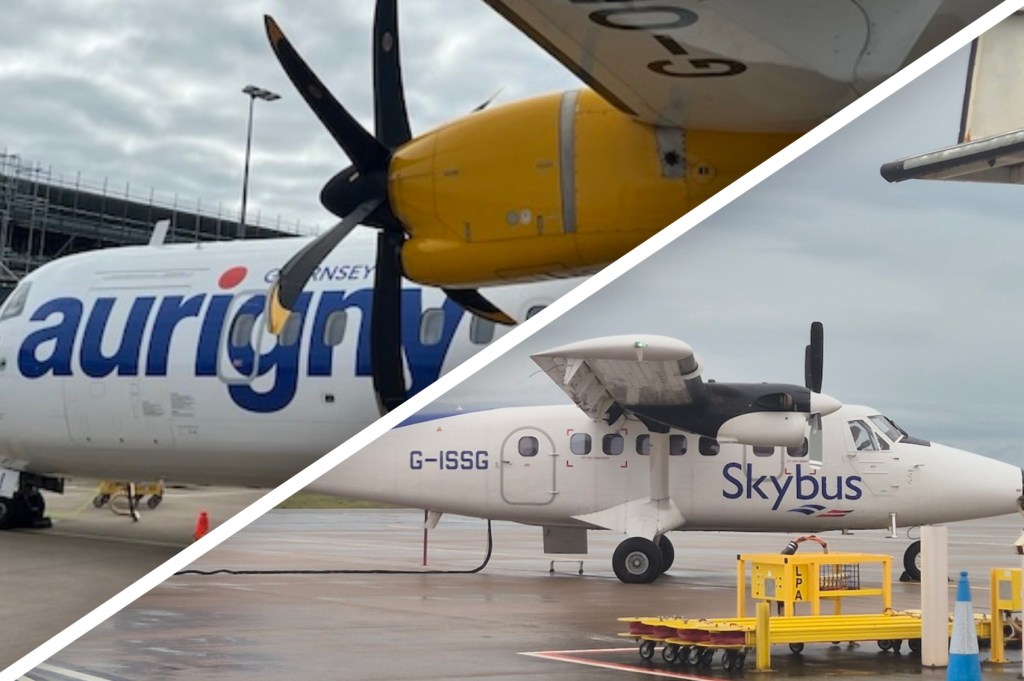
Aircraft particulars and the overall strength of the relationship between Aurigny and Alderney were also on the priority list for members of the public, looking to take their complaints to the top.
Recruitment and training
One of the many publicised problems the States of Guernsey-owned airline has faced post-pandemic is difficulties in attracting and keeping talent.
Addressing Alderney’s packed Island Hall, Mr Bezuidenhout said the airline is still finding it “tremendously difficult” to recruit, with the blame being levied at what he described as a global “pilot shortage”.
He said Aurigny “needs to compete against everybody around the world, and we’re finding it difficult for our ATRs, for twin otters, for even the Embraer to recruit and retain pilots in a location like Guernsey, or for that matter Alderney”.
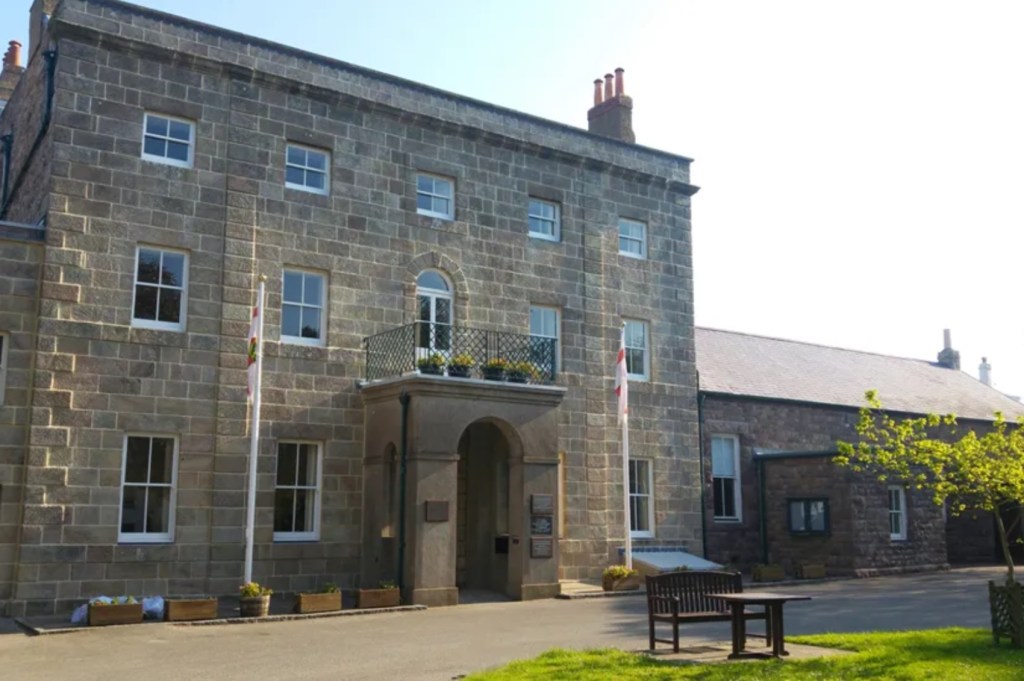
Aurigny’s CEO said the employment issues extend further than pilots alone, with “engineering type of jobs” also presenting a “particular challenge”.
Which runway
A lot of time was spent discussing what the best option for landing and taking off in Alderney is, with the grass and crumbling tarmac runways discussed.
When asked why the grass runway isn’t used following the introduction of Twin Otters to serve Alderney, Mr Saunders explained that Aurigny is able to “operate the Twin Otter on and off grass runways” but the reason it’s not used comes down to the rules the airline has to adhere to.
It’s “because of the airport operators in position saying it cannot be used for commercial air transport operations,” he said, adding that it “follows on from a survey of the grass runway, and particularly, the lumps and bumps where the grass runway intersects the main asphalt runway.”
It’s possible to fix this issue, and one which would benefit both sides of the debate, Mr Saunders said – which would allow better access into the island, and alternative options when the wind decides to change its course.
These possible improvements would be desirable he said, but on the list of priorities gaining permission to use the grass runways is lower down the list than other crucial infrastructure improvements.
“Sorting that out would, from our perspective as the operator, be great because it means that in very strong wind conditions we’ve got an inter wind runway to be able to use, and again it’s something we would very much like.
“However, what I would say, there’s a priority list here, and sorting out the main runway, and actually getting that resurfaced up to standard, and the lighting of that runway upgraded, I think is a priority, which ranks above getting the grass runway back into service.
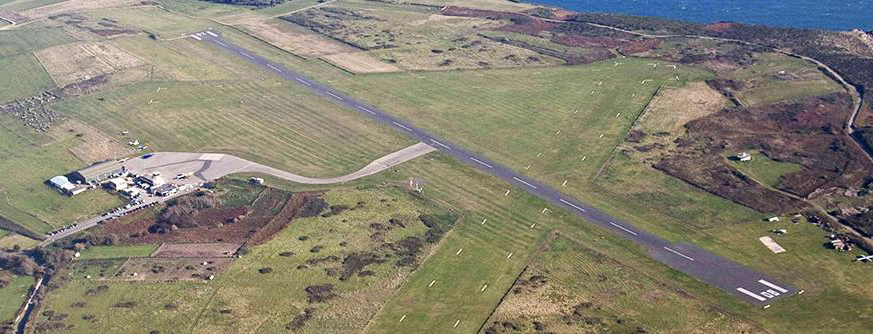
“I’d dearly love both, but I think if I’ve got to choose the order in which those things happen, I would say priority number one is actually the resurfacing work on the main runway.”
The relationship between airline and passengers
Although multiple other issues reared their heads, such as the staffing and operating of medevacs which have been “the largest single cause of disruption to the scheduled flights”, a bigger issue facing Aurigny is the dubious strength of the airline’s relationship with the people of Alderney.
Perfectly reasonable explanations and statistical evidence, such as the £1million paid for accommodation costs following delayed flights over the past 12 months, were met with groans and mumbles from the audience.
It was never more obvious and prevalent than when an audience member called Giles who queried a disconnect between the figures fielded by airline representatives, and the members of the public who use their services.
“I think one of the things that antagonises everyone is that the stats really bear no relation to the experience of a daily user. Every time you go to the airport this year, you really cannot be sure you’re going to get off island to meet your business appointment, your family, your medical appointment, your holiday connections”.
He said this is the case “even if you leave a two day buffer,” and commented that “is seriously stressful for everyone in the community in terms of anxiety every time you’re traveling”.
Although Mr Bezuidenhout defended the statistics used, he said he fully understands the perspective presented to him, saying that when you’re fdelayed “you are 100% of the universe,” however he opposed accusations that Aurigny had lost the local, family feeling of years gone by.
“In terms of Aurigny’s commitment and the passion, I’m obviously not from the Channel Islands, so when I speak about Aurigny in this context, I speak about the people that you find at Aurigny, rather than Philip or myself or anybody else,” he said.
“The people in Aurigny remain your neighbours, your family, the people who grew up with you. Their commitment remains exactly the same as it’s always been.”

Mr Bezuidenhout added that service failures and cancellations will happen, as that is the nature of the industry.
However, he also said the airline will “really still try and go the extra mile to get passengers home, to accommodate passengers, and to transport passengers”.
What next
Mr Bezuidenhout said this week’s discussions in Alderney were “both constructive and centred firmly on delivering the reliable and resilient air services that Alderney deserves”.
He added that the airline’s staff “recognise the importance of these lifeline connections to the island community and remain fully committed to improving operational performance and enhancing customer confidence”.
The Chair of Alderney’s Policy and Finance Committee also said that the meetings could play an important role in what comes next.
Jeannie Cameron believes the delegation’s trip to Alderney, and the subsequent meetings and discussions that took place “were both useful and constructive”.
She added that “they provided an important opportunity for greater communication, transparency and understanding between all parties on these important connectivity issues affecting Alderney”.
When asked what needs to be done reconcile the differences between the two sides, Mrs Cameron said that it’s “no longer simply a debate about statistics or performance metrics — it is about trust, confidence and the relationship between Alderney and its air services.
“Many people in the community feel that connection has been lost over time. Rebuilding that balance will require tangible improvements, greater resilience, better communication and consistently delivering results that people can genuinely see and feel in their daily lives.
“That is ultimately how trust and confidence will be restored.”
