

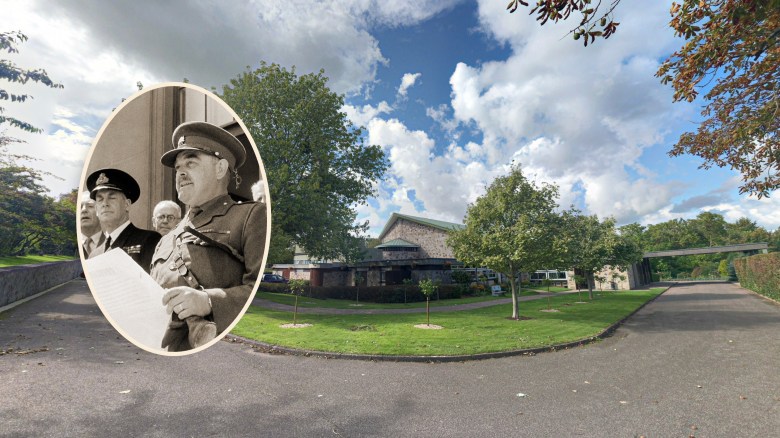
A decades-old mystery has been solved, after researchers tracked down the final resting place of the man who led the liberation of the Channel Islands.
Brigadier Alfred Ernest Snow commanded Force 135 when it liberated the islands in May 1945, helping accept the German surrender and later overseeing the islands’ transition back to civilian rule.
However for many years uncertainty surrounded the final resting place of the man who led Operation Nestegg – Britain’s liberation plan.
Now, the British Channel Islands WWII Remembrance Campaign has tracked down his final resting place to a crematorium in Somerset, after years of painstaking research.


Kev South, from the campaign, said Brigadier Snow was “one of the most significant figures in the liberation of the Channel Islands”.
Mr South explained: “For many years, there has been uncertainty regarding his final resting place, so we are delighted [with the discovery].
“This important discovery helps ensure Brigadier Snow’s service, leadership and contribution to the liberation of the Channel Islands receive the recognition they deserve.”
No memorial
Records obtained by the researchers showed Brigadier Snow’s ashes were laid to rest in Taunton Deane Crematorium, following his death in 1983 aged 85.
Further research has helped pinpoint the specific area where his ashes were scattered, although no individual memorial exists because it’s part of a communal burial area.
The campaign had previously enquired if he was buried in St Mary Magdalene Church, in Winsford, Somerset, where the brigadier retired to after leaving military service.
The campaign would now look at “appropriate ways to commemorate Brigadier Snow’s contribution” and “ensure that future generations remain aware of his service”.
