

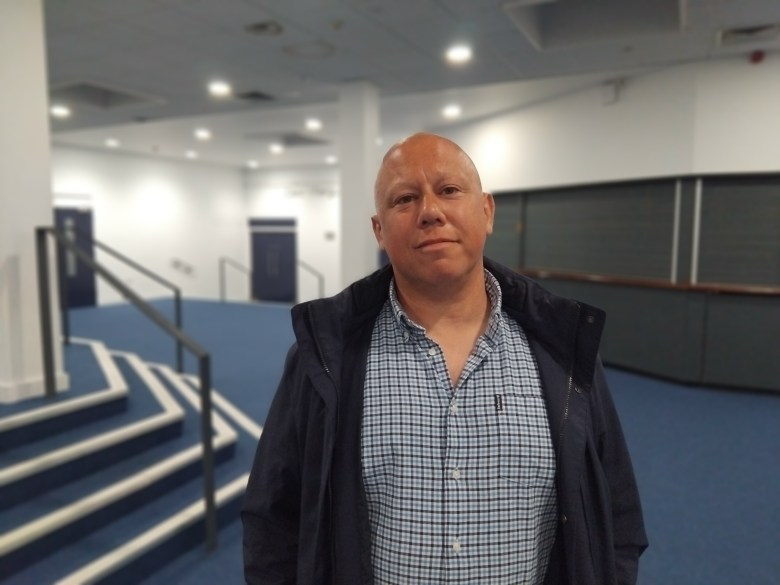
Deputy Ross Le Brun said he was tackling exactly the issues he promised voters he would, after the States took the unusual step of publishing the time spent answering some of his traffic-related questions.
The Deputy, who was only elected in April’s by-election, said he had been voted in to “challenge, change and improve things” and could not do that without asking questions.
He said his Rule 14 questions were “genuine requests for information from constituents, asked in good faith” to establish the facts and build the evidence needed to make changes.
“And yes, asking questions is work,” he said, “It’s called doing the job.”
Rule 14 row
The comments came after the States’ Rule 14 response from Environment and Infrastructure (E&I) revealed civil servants spent 27 hours answering Deputy Le Brun’s two latest sets of questions.
This appears to be the first time this information has been included since Rule 14 was introduced more than 10 years ago.
We currently don’t know whether the decision to publish the time taken was made by E&I or by civil servants, but have asked the States as part of a wider Freedom of Information (FOI) request.
Rule 14 allows States members to ask committees questions, with answers required within 15 days.
Deputy Le Brun has submitted eight Rule 14 questions since being elected in April, more than any other States member, with all but one focusing on traffic.
Seven of those had been submitted since 23 July.
Shows why it matters
Responding on social media, Deputy Le Brun said the answers showed why the questions had been worth asking.
On pavement surfing, he said the responses established that there had been no specific risk assessment before guidance was adopted, no monitoring since 2019 of its impact on pedestrian safety and no research into what comparable jurisdictions did.

He also pointed to the absence of a specific speed limit, a defined distance a vehicle could travel on a pavement or a specific vehicle size that would justify doing so.
On parking, he highlighted the continued use of dimensions based on cars built in the 1970s and the lack of designated parent-and-child spaces at the main Town Pier car parks.
“That information matters,” he said.
“If we want to change things, we need evidence first.”
Meeting Le Brun’s manifesto
The focus on roads was also a clear part of what Deputy Le Brun promised voters during April’s by-election.
His manifesto called for “safer, more practical travel” and said too many children could not walk or cycle to school because parents did not feel the roads were safe.
He promised practical improvements to road layouts, safer school routes and “sensible investment” to ease pressure on roads.
He also proposed modernising laws to enable micromobility options and investigating a public service model for buses.
Another proposal was an Island Travel Commission bringing together government, everyday road users, parents, commuters, logistics businesses and accessibility groups.
Deputy Le Brun said he was therefore working on exactly the issues he had campaigned on.
“I was open about the things I wanted to campaign on,” he said.
“I’m doing exactly that.”
He said the questions would continue.
“These won’t be the last questions I ask,” he said.
“I’ve only been here a short time, but I’m getting on with what I was elected to do.”
‘We can do more than one thing’
Deputy Le Brun rejected the idea that traffic and parking were distractions from bigger issues such as the cost of living, housing and public services.
“I don’t think we have to choose between making roads and parking safe and accessible and tackling the cost of living, housing, electricity or water charges,” he said.
“We can do more than one thing.”
He also argued that concerns about parking could not simply be dismissed because some people did not personally experience problems.
“Saying you personally have no problem getting out of your pickup doesn’t mean everyone does,” he said.
“People with mobility aids, wheelchairs, children, or equipment may need considerably more space around their vehicle.”
On pavement driving, he added: “Pavements are for pedestrians.”
