


Stopping pavement surfing is “not realistic” according to Environment and Infrastructure (E&I).
The committee was responding to a series of Rule 14 questions from Guernsey’s road safety campaigning Deputy Ross Le Brun.
Deputy Le Brun’s questions – sent to E&I as well as Home Affairs – focused on road safety, driving on pavements, accessible parking spaces, driving while under the influence of prescription medications, and how motor law breaches are enforced.
He was told the risks were being managed in a “practical, proportionate, and deliverable way” with priority being given to protecting vulnerable road users in locations where they are “most exposed”.

E&I said it recognised that “interaction between vehicles and pedestrians on Guernsey’s roads can present road safety concerns”.
However, this was managed “in a practical, proportionate, and deliverable way, recognising that the historic constraints and the piecemeal ribbon development that has contributed to Guernsey’s current road network cannot all be resolved at once”.
“That means prioritising the locations where vulnerable road users are most exposed and where intervention is likely to deliver the greatest safety benefit.”
No single solution
E&I also disputed a claim put by Deputy Le Brun that “road safety risks are not assessed or managed”, saying they are considered through reviews, site assessments and collision data, as well as through engineering plans, concerns raised by road users, and other stakeholder engagement.
The committee said it also recognised that vehicle size, traffic volumes, and travel patterns contribute to the pressures on Guernsey’s roads network, with pavement surfing a “concern and potential risk for pedestrians”.
“There is no single solution that can be applied universally across the island’s road network,” to address this, acknowledged E&I, warning that “measures intended to address one issue can, if not properly considered, create adverse consequences elsewhere”.
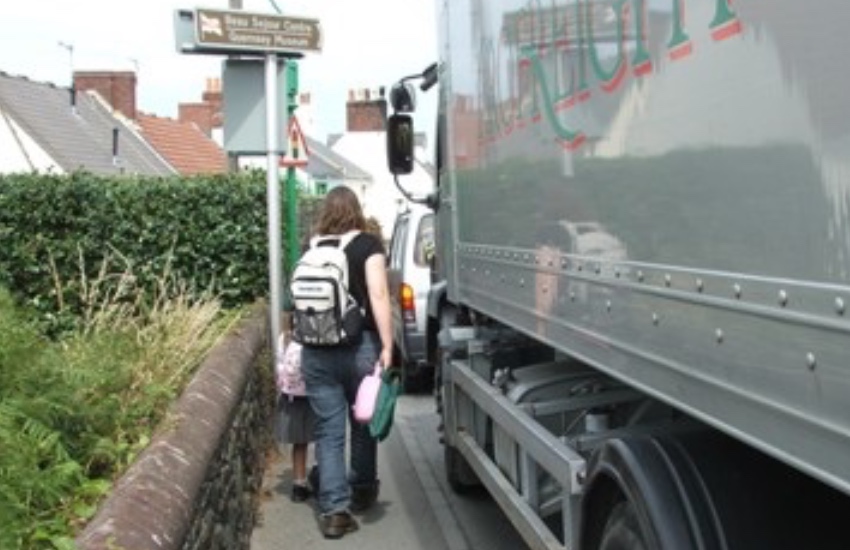
E&I said it had no plans to develop a new traffic plan, including infrastructure improvements, to remove the need for vehicles to mount footpaths.
It said it already prioritised resources in the locations “where the risk is greatest, where vulnerable road users are most exposed, and where intervention is likely to deliver the clearest safety benefit”.
This may include engineering measures or traffic management changes, admitted E&I, but a combination of measures including education and enforcement is most likely.

“The committee will continue to take road safety seriously and to progress improvements where they are practical, proportionate and deliverable,” it said.
“Its focus will remain on protecting vulnerable road users, giving consideration to areas of known concern first, and managing Guernsey’s road network in a way that balances safety, access, deliverability, and the needs of the island as a whole.”

Pathetic