


The committee have released a policy letter which will go to the States after a report it had commissioned reviewing air links was completed.

Guernsey’s ‘trilemma’ when it comes to airlinks.
The PWC report outlines the current situation with Guernsey’s air links – a topic that has been highly controversial for some time now – and also sets out the arguments for extending the runway.
P&R have clearly decided those arguments are not strong enough, however, as soon after the publication of the air links report, it submitted a policy letter which asks the States to vote to “agree that no further work is carried out to assess the business case for extending the airport runway”.
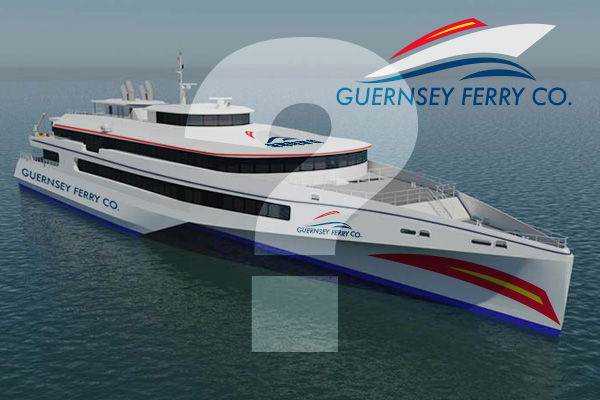
Instead of extending the runway, P&R want to move to bolster Guernsey’s sea links. One of their four ideas is to set up its own ferry company. It would act as a back up if a sudden sale of Condor happened.
As an alternative, P&R want to “approve funding of up to £400,000 charged to the Capital Reserve to commission and undertake work on contingency options relating to the island’s sea links”.
These contingency options include the States buying Condor, which is currently up for sale, either jointly with Jersey or on its own, researching the appetite of other ferry companies to work with Guernsey, or setting up a government owned ferry company.
While the approval of this policy letter would not set any of those ideas in stone, it would allow major investment into researching how each of them may work.

PWC’s sea links report will not be released.
PWC also carried out a review into sea links for the States, but P&R have refused to release it to the public because it contains commercially sensitive information for third parties – most likely Condor. It has been used to inform their decisions however.

Inside of the air links report though, there is a great deal of analysis about which operators might fly to Guernsey, how any services may work, and what islanders – in both business and tourism – want.
It spoke of the importance of Guernsey getting a link to an international hub, like Heathrow. But since the report was completed, Economic Development have announced that the island will have a route to fly to the London airport.

It sets out the arguments for extending the runway in a number of different ways:
- 1,570m extension – “We are told that this is the longest runway possible within the existing airport boundary. It would avoid a requirement to purchase land or undertake major earthworks and is potentially the lowest cost, quickest and most politically sensitive runway extension option.” easyJet have confirmed it could technically – just – operate an Airbus A320 on this length.
- 1,700-1,800m extension – Jersey’s length, British Airways uses this length there. PWC also said many Euro jets can use this length. “1,700m would also enable direct flights to a greater range fo destinations by easyJet, including southern Spain and Italy that would not be possible with a 1,570m runway.”
- 2,000m extension – “This is the runway length required to attract the full range of low-cost carriers for aircraft such as the Boeing B737-800, as operated by Ryanair. Ryanair has informed SoG officers verbally in meetings that it would likely require this length of runway.”
Having weighed up the pros and cons of each of these options, and also the option of improving the technology at the airport, P&R concluded: “The Committee takes its role as the guardians of taxpayers’ money very seriously. It cannot support undertaking further work on an option that it does not believe will have the support of the States or the community. However, if the States Assembly believes differently the Committee will commission that work.”
To read the full Policy Letter of air links report, click here.
