

Education has only evolved slowly in the last 200 years.
That could all be about to change as technology, particularly AI, disrupts the model.
Allied to that is a shift in what businesses are looking for and an environment in Guernsey that is ripe to be at the forefront of a pivot which may just be fundamental in ensuring a positive, prosperous future – if the island is brave enough to act.
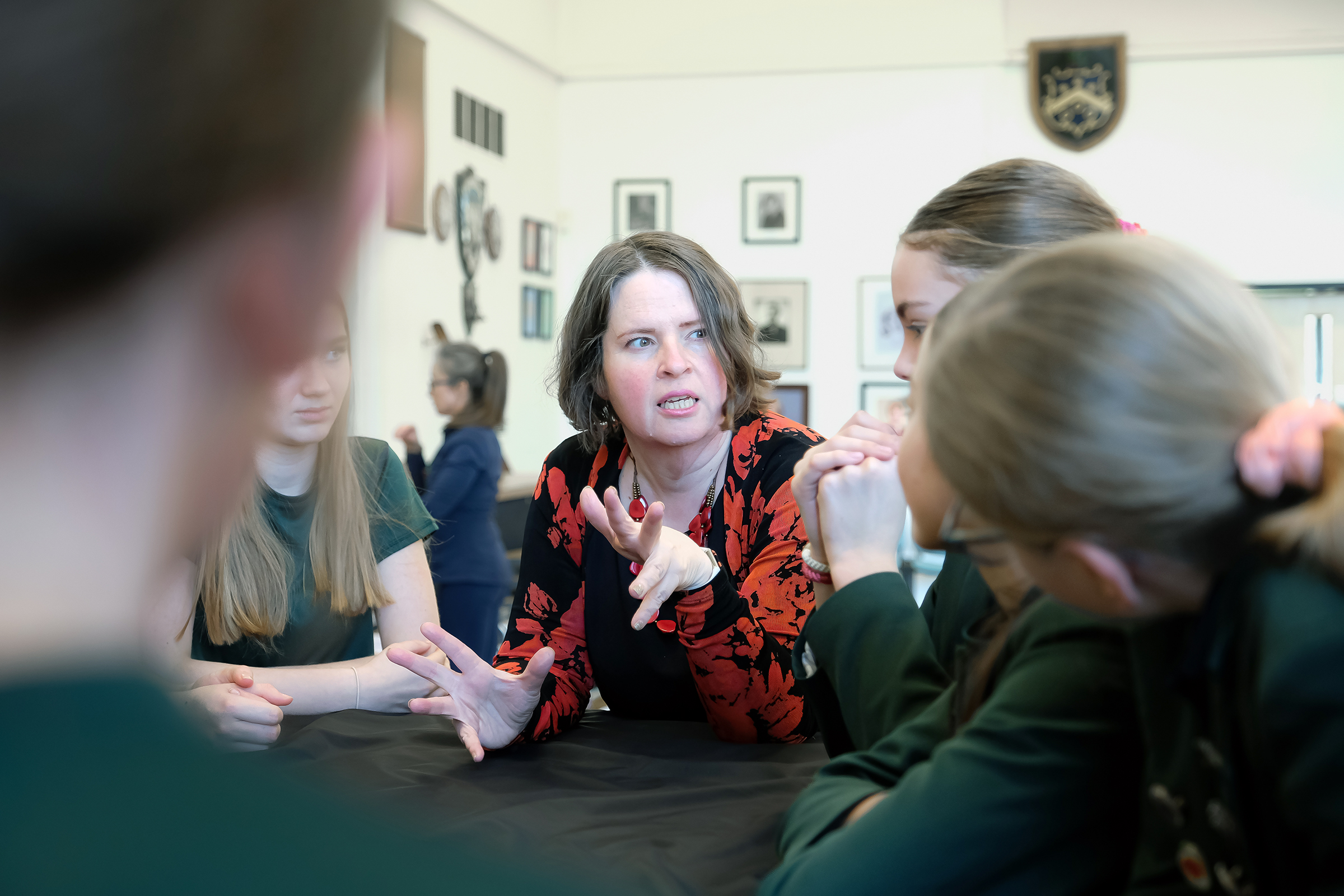
Ladies’ College Principal Daniele Harford-Fox speaks passionately about the need to change, while recognising how difficult it is to shift thinking that is embedded not just in teachers, but in parents and society at large.
“I think we’ve often talked about education as being an evolution rather than revolution. That’s been the phrase for the last 10 years,” she said.
“I think we’re moving into revolution. There are some really fundamental challenges facing us in education. At its heart, the education system has been the same for the last 200 years, it’s a knowledge based system.
“It was created before there were libraries, let alone the internet, where teachers are the holders of knowledge, and they pass that on to children and then we examined and ranked our children on their ability to learn that knowledge.

“When you think about the first industrial revolution, that skill of reading, writing, arithmetic is what humans uniquely offered. I think as we’re moving now further into the 21st century, we’re seeing that technology, and particularly AI, is going to fundamentally disrupt that model.
“At the moment, schools are thinking, ‘how do we stop children using AI to circumnavigate like the systems we have in place, how do we use them to stop them writing a better essay?’ That’s the wrong question. The question isn’t, ‘how do we stop them using AI to write a better essay?’ The question is, ‘if AI can write a better essay, which it can than most of my A level students, why are we spending 12 years of our children’s lives and millions of pounds teaching them to write essays?’”
All this is within educational culture that has not had to change. Educators were all brought up in a system they enjoyed, they are invested in things remaining the same.
Business bodies like the Confederation of British Industry have been calling in the last decade for a fundamental rethink, questioning things like what the purpose of GCSEs are, how the skills being taught in schools are not the skills that are needed in the workforce.
“As long as schools continue to measure memorisation, pupils working alone in timed conditions, in handwriting, regurgitating what they’re taught, that is what children and parents will believe is the important thing to learn, and it’s what the system will keep focusing on.”
There are unique opportunities in Guernsey which the UK does not have because of the island’s size and culture of collaboration, she said.
“Industry can talk directly to teachers and head teachers, in a way that just doesn’t happen in the UK,” she said.
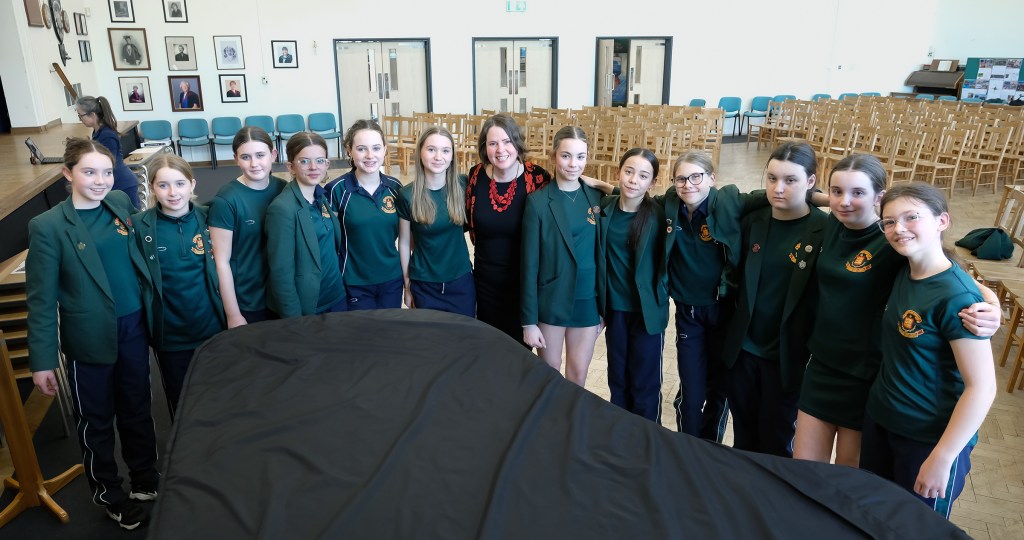
“When I’m at heads conferences in the UK, I realise how powerful the opportunities I have on Guernsey are, because I can sit down in a room with the head of PwC, or the head of Specsavers, or CEOs or venture capitalists who will say to me in Guernsey right now, this is what we need.
“And they are working with us. How do we start to pivot what we do? Not break what we do, but pivot what we do so that we start to build these skills while at the same time recognising that we’re not at the moment where we let go of GCSEs and A-Levels, because they’re still the gatekeepers.
“But how do we take advantage of the unique operating opportunities in Guernsey to actually get ahead of the curve? That’s been one of the most exciting opportunities leading Ladies College.”
There is a powerful value in independent schools in that they can move fast with a head teacher in total control of the curriculum.
“I think we at Ladies are really capitalising on that. We have an amazing team of governors, many of whom have led an industry and who recognise that we are small and agile. We are committed to being bold and taking risks, because we think we’re in a moment where that’s what’s needed.”
This can be seen in Pathways, which is being offered alongside A-levels.
Pupils choose one of four areas: business leaders; science pioneers; innovators and creatives/change makers.
They work with people in industry on real life projects and challenges, the pupils taking the lead, collaborating, trying and at times failing.
“In addition to that, we have two other elements. One is that we have the core course where we’re teaching core skills, like AI, global competency, and also things like leadership, decision making, etc.
“And then they have a mentor who they meet weekly, who sets them targets, remembering that what gets assessed is what gets done, around those kinds of skills.
“So the girls are setting targets like, ‘I want to improve my leadership because I tend to cave to the strongest voice in the room’, or ‘I want to improve my decision making because I had a tendency to overthink, and then I don’t make a decision fast enough’.
“The reason we constructed that is that when I spoke to business leaders in Guernsey, and I said, ‘Okay, you have all of the skills. How did you learn them?’ two things came out. One, they did stuff and it went wrong. They led a team, led a project, started a business, and it didn’t work. And when it didn’t work, rather than stopping, they had someone there at that time who said, ‘well, this is what went well, how could you improve that, let’s try again?’ So what we’ve constructed is a system where the girls have authentic projects, they try stuff, and they have someone walking next to them who says, ‘okay, that didn’t work. What did you learn? How do we do it again?’.”
Ms Harford-Fox believes it is much easier to learn these deeper skills like assertiveness, leadership, communication and emotional regulation, at 16 or 17 then when you are 35 and managing a team.
“We’re seeing that the girls are much more open to those conversations. They’re diving into it. They are reflecting. They’re improving. You can see it. But the second thing is, I suspect this is where schools are going to end up having value, because industry knows the skills at once, but generally speaking, it just hires people that already have those skills.”
There is a sense at the moment of a disconnect between what education provides and what is needed in life.
“You go through school and you can be brilliantly good academically, and then you come out of school and you realise actually the fact that I’m brilliant at memorising information, and I can write an essay really fast in two hours, isn’t that helpful.
“There are some things in there that are really helpful, right? Like my ability to evaluate information, my ability to get analytical, my ability to stay on topic, to manage myself. There are some great skills that are built, but often those skills are built by chance.
“The skills at the heart of system, you jettison at the age of 21, if you leave university, or the age of 18, then you try and learn other skills, like how you work with a team of people that don’t like you, how you communicate when people don’t want to hear, how you manage change, how you’re emotionally resilient. These are the skills that actually matter in life, and you have to just learn them randomly.”
But what if schools taught this in a more dedicated way? How do they do that?
“I would suggest it would be foolish to jettison a system that has been deeply and profoundly constructed over 200 years. And that’s why I talk about pivoting rather than destroying. We have to pay attention to what it is that we add value in. Where are the powerful moments that change people’s lives, that give them the skills they need, how can we give more space to that and slowly start to give less space and stuff that’s less relevant?”
In November, Ms Harford-Fox was named Disrupter of the Year at the Veyaon Awards, organised by the Digital Greenhouse.
It hit home on a deeply personal level.
She once applied for a job at a leading school where she got down to the final two but was unsuccessful.
“The feedback I got was that I was arrogant and disruptive, and that was quite bracing,” she said.
“I first of all questioned whether I would have had that feedback if I was a man, I do think there was a gendered nature to that feedback, but also it tells us a lot about what people don’t want in schools.
“I’ve spent my life being told to be less disruptive. There is bad disruption, and schools try and get rid of bad disruption, it can mean breaking things with no sense of building things. There is no value to that. There are people that just enjoy breaking things. We can see some of that politically globally right now.
“But disruption can be challenging things, and it can be just asking questions from first principles about who we are, what do we want to achieve, and are we achieving that in the best way possible? And for me, I want all my students to be thinking from first principles. I want all of them to not do something just because of compliance, not be something just because they’re told to, but to be really thinking about who they are, who they want to be, and what they believe about something. And then I want them to be constructive.”
So what of the future? Can these institutions change in the way that is needed?
“You have to be bold in your vision, to ask the questions and paint the picture on the horizon of where we want to go,” she said.
“And then we have to recognise we’re driving a tanker with hundreds of years of history and hundreds of people on board. Step by step, we take it towards that horizon point.
“In five years, I don’t think the education system as a whole in the UK, for example, is likely to change. It could be that Guernsey moves faster because we’re smaller. I think education at Ladies will be changing because I think we’re small enough to be a bit bolder.
“If you ask where it’ll be in 20 years, it will become increasingly difficult to hold on to the idea that memorising information in a world of AI, that writing essays in a world of AI, that learning knowledge in silos and subjects, rather than integrating thinking in a global world, is a valuable investment in our time and energy and our children.
“But I think there’s a huge bit of psychological change work, not just for teaching in schools, but for everybody who’s attended a school and everybody who has a child to really understand that we can, step by step, turn this tanker and actually use those 12 years of education to make every child realise that they have more in them than they thought, and that skills that are often dismissed are incredibly powerful, and we can start to carve out more space for them to step onto the sports field and lose and lose well, or win and win well, more space for them to step into the debating chamber, and more space for the powerful conversations between a teacher and a child that can make them realise what they’re capable of.”
Guernsey has a capacity to understand this challenge faster than the UK is understanding it.
We are entering a decade or two when Ms Harford-Fox predicts a revolution in education.
“Here’s a question for Guernsey. Are we brave enough to grasp hold of the powerful opportunities we have on the island? Are we brave enough to grasp the strength of our community, of the strength of this interwoven industry, education, stakeholders?
“Are we brave enough to grasp hold of the opportunity of being small and therefore agile, and be bold and brave and say, ‘okay, in 10 years, this is where we want to be. Some of that is going to be painful, but we’re going to do it because we believe in the future for ourselves and for our children’.
“Or do we instead believe that there’s less risk in doing nothing? Because I would say there’s risk in doing things and there’s risk in doing nothing, and right now, the risk in doing nothing is much more profound. So I just see such an extraordinary community of individuals in Guernsey, and I want us in every way, to leverage the power of what we have as a community, to do something extraordinary and to surf the wave that’s coming.”