


Guernsey’s cost of living crisis is hitting vulnerable islanders hardest, as soaring fuel bills and essential survival costs have pushed inflation up to 4.3%.
Official figures released this week show pensioners and lower-income families are bearing the brunt of the squeeze.
While inflation proved milder for high earners, those on lower incomes faced steep price surges on non-negotiable basic needs.
The overall Retail Price Index (RPI) rose to 4.3% in the year to June 2026 – up from 3.9% in June last year.
Core inflation (RPIX), which excludes mortgage interest payments, also hit 4.3%.
Energy costs skyrocket
The main driver behind the acceleration was energy.
The cost of fuel and light rose by 19.0% over the year, adding 1 percentage point to inflation on its own.
Other key costs pushing up inflation over the past 12 months include:
- Tobacco: up 11.7% following duty increases
- Catering: up 6.3%
- Housing: up 4.9% on higher insurance premiums and mortgage rates
Inflation inequality
Data from the Household Cost Indices (HCIs) – designed to show how price hikes impact specific groups of islanders – reveals a stark divide across the Bailiwick:
- Retired households: inflation hit 5.2%
- Low-income households: inflation hit 5.1%
- High-income households: inflation sat at 4.0%
- Mortgage holders: inflation sat at 4.0%
The disparity comes down to basic survival costs.
For retired households, everyday “staple” goods and services – like food, heating, electricity, and rent – soared by 6.9%.
Non-essential spending, like eating out and travel, rose by just 2.9%.
Low-income households saw an identical trend, with essential staples rising 6.3% compared to 2.8% for discretionary items.
Because poorer islanders and pensioners spend a much higher proportion of their weekly budget on basic necessities, the rapid rise in staple prices leaves them with far less room to manoeuvre.
The cumulative impact of 10 years of inflation means prices have shot up by 45p in the pound since 2016 – slashing the purchasing power of today’s pound to just 69p (by contrast to a decade ago).
What it means for the GST debate
Policy & Resources (P&R) has argued GST is a fairer way to tax people, because it shifts the tax burden away from low earners.
By taxing consumption rather than income, P&R claims high spenders, tourists, and off-island shoppers will foot more of the bill – while proposed income tax cuts and benefit boosts protect poorer islanders.
But the latest data paints a troubling picture.
P&R predicts GST would increase inflation by 1.9% – a claim GST sceptics argue is itself over-optimistic.
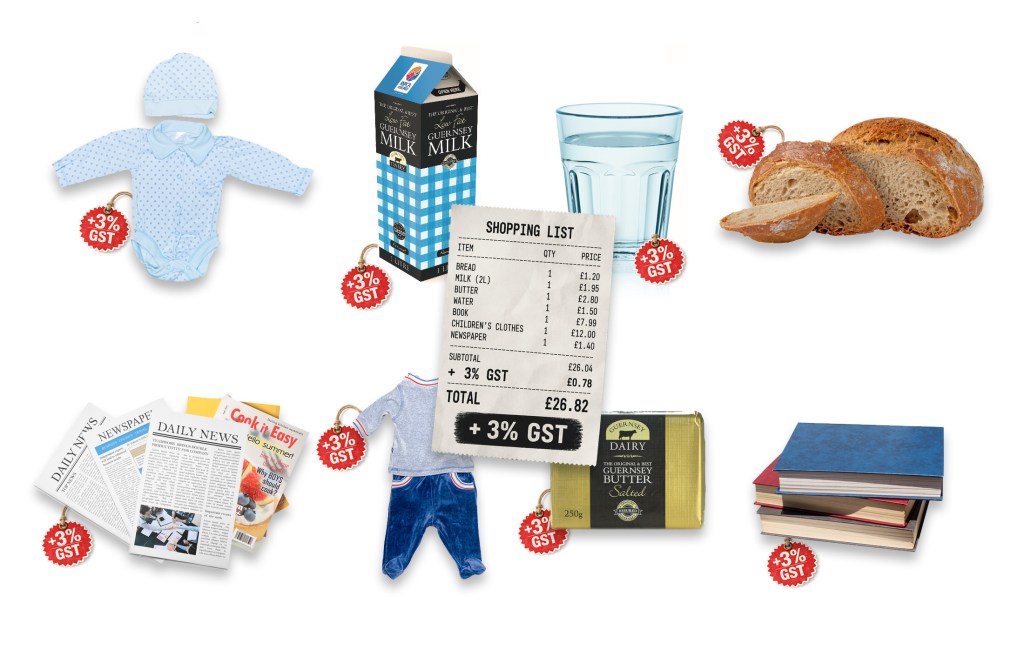
With essential staple inflation already running at 6.3% for low earners and 6.9% for pensioners, critics will argue a broad-based tax on basic food, fuel, and supplies threatens to act as a direct hit on simple survival.
Unlike VAT in the UK, GST would be applied to food, water and other essentials.
Because vulnerable islanders spend almost all their money on unavoidable essentials, they will be worried that paying 3% more on everyday staples could quickly wipe out any savings promised through tax relief.
While GST won’t apply to rents or mortgages, many people’s rents are increased by RPI or RPIX each year – so higher inflation will mean higher rents.
Given renters are already struggling more than other people, it’s a worrying time to be poor or old in Guernsey.
Crucially, it is unclear whether P&R’s financial modelling actually factored in this level of staple inflation.
If civil servants relied on lower baseline inflation figures, and pre-Covid spending patterns, adding GST on top of 6%+ staple price hikes could leave the island’s most vulnerable significantly worse off than promised.
The fact inflation has hit poor people and pensioners harder than better off people is hardly surprising.
The challenge for P&R is to convince people – and their fellow deputies – that the mitigations built into the tax proposals will genuinely shield pensioners and lower earners from the brunt of the inflationary impact GST will have.
