

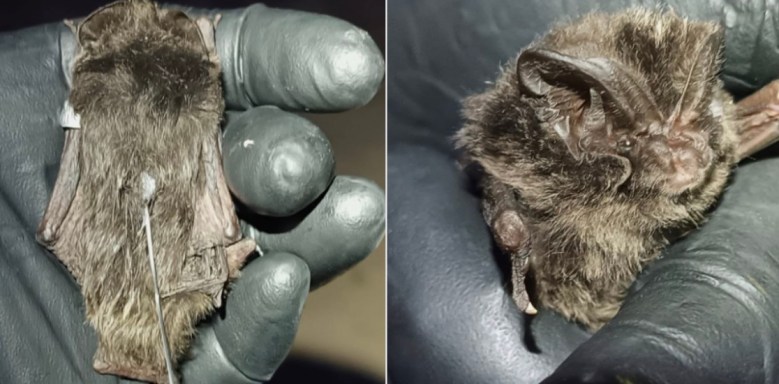
A rare barbastelle bat has been captured in Jersey for the first time, taking the Island’s total number of recorded bat species to 18.
The female bat was caught in the early hours of Tuesday 21 July by researcher Anni Binet and a team of conservationists.
While the species had previously been recorded acoustically on the Island, this was the first confirmed capture.
Anni, who is spending the summer in Jersey researching habitat selection for Natterer’s bats as part of her MPhil project, said: “For me personally, I love barbastelles, so to catch one here was absolutely amazing.”
She added: “As soon as it was in the trap, we knew it was a barbastelle. One of my colleagues checked the trap and yelled down to me that she had a barbastelle, and everybody went running towards that trap with excitement because it’s the first one on the Island.”
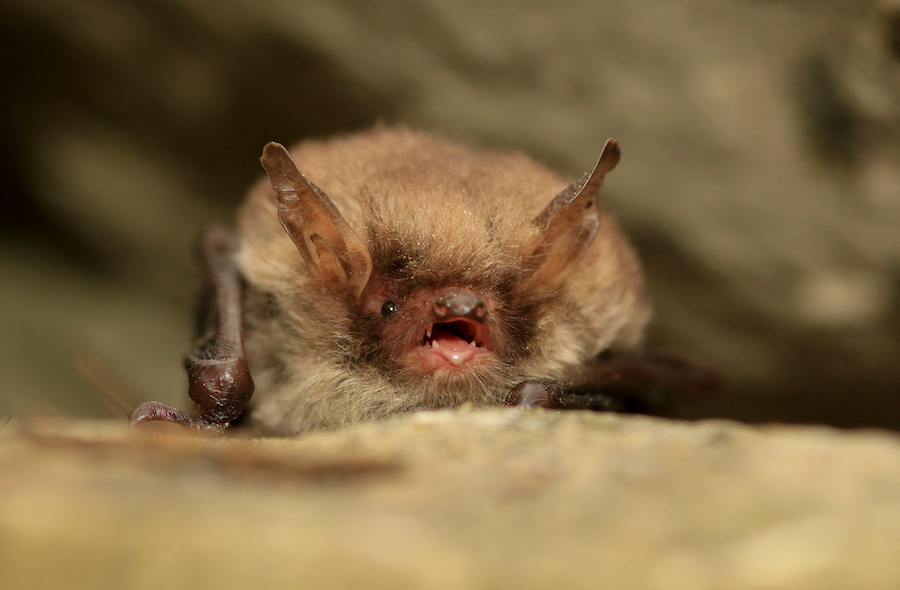
Barbastelles are a rare species of bat with a distinctive pug-like face and wide ears. They are ancient woodland specialists, typically roosting in splits and cracks in mature trees beneath loose bark.
Although the species is found across southern Britain and Wales, it has never previously been captured in Jersey.
“It’s quite significant for Jersey’s wildlife as we don’t really have the kind of main habitats that it prefers in Jersey, so we’re a little bit confused by it in general,” said Anni.
As part of her research licence, Anni fitted the bat with a BluBat tracking tag.
“This tag essentially works on the Apple Find My network. So it’s a very, very tiny AirTag, effectively,” she explained.
“It records the locations automatically whenever it comes into range of an iPhone that’s got its Bluetooth and its location services switched on.
“Ideally, we need everyone who’s got an iPhone to switch their Bluetooth and location services on, as it will get more data for the barbastelle.”

Anni said the discovery highlighted the importance of protecting trees, which many bat species rely on for roosting.
“I think the most important thing is that all of these species like to roost in trees, so people might take more consideration into trees needing surveys before they’re cut down, ensuring that there are no bats in them,” she said.
Piers Sangan, director and principal ecologist at Sangan Island Conservation Ltd, described the capture as “a very significant discovery”.
“It is a very significant discovery because it shows that even though we’ve been involved in bat research on the Island for a number of years, predominantly through the voluntary capacity, we’re still finding new bats on our Island, and it just shows the diversity of habitat available that these species can occupy.”
He said the find reinforced the need to protect habitats and ensure appropriate wildlife surveys are carried out before tree work takes place.

However, Piers cautioned against viewing the discovery as a sign that bat populations are thriving overall.
While more species are being identified, volunteer surveys are recording “less and less activity”, with climate change posing one of the biggest threats.
“This year’s heatwave is going to cause a lot of upset to the normal breeding cycle of the bats for different species,” he said.
“In 2022, when we had the heat wave, one of the bat species lost an estimated 30% of its population because it hit all the juveniles in the roost and just wiped them out.”
Despite those challenges, Piers said Islanders should be “exceptionally proud of the diversity of wildlife” found in Jersey.
“The fact that we have now identified that we’re supporting as many species of bats as we are testifies actually how much life can be supported on the Island when we give it the space and provide the habitats for it to be here,” he added.
