

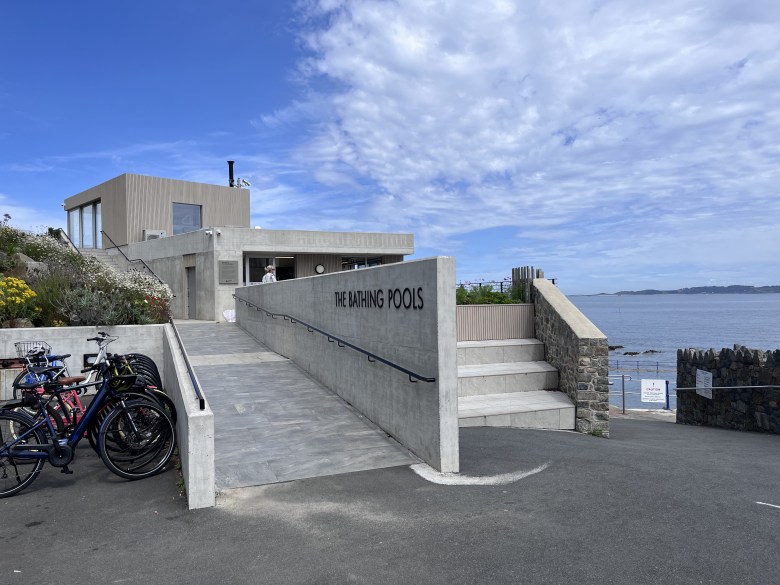
Environmental Health has defended waiting nine days to close the Ladies’ Pool after a “poor” water quality result, saying the action taken was “rapid, reasonable and proportionate”.
The pool was closed on Wednesday, after “foul” waste from the cafe’s toilets was found to be seeping into the pools – with the Bathing Pools since confirming the pollution came from an overflowing cesspit.
The Bathing Pools, however, says it was not told there was a problem until Environmental Health arrived yesterday to carry out a dye test – more than a week after the original “poor” test.
Tobin Cook, Director of Environmental Health and Pollution Regulation, said: “I’m content that the action taken was rapid, reasonable and proportionate and we are pleased to have identified a contributing factor and taken remedial measures so quickly.”
He explained that a repeat test was carried out after the initial “poor” result to establish whether it was an anomaly.
The first sample was taken on 24 August and returned a provisional “poor” result the following day, while a second test recorded a “good” result.
Mr Cook said it was “not extraordinary” that “isolated and/or intermittent results” don’t meet the “highest bathing water quality standards”.
“This is the reason why bathing water quality is based on a four-year average result,” he added.
‘Disproportionate’ to close
Mr Cook said there were several reasons why it would have been “disproportionate” to close the pool after the original sample.
These included the failure being an isolated occurrence, there being no obvious cause and the pools being tidally affected, meaning the water would have changed significantly by the time the result was received.
He said the second “good” result meant there was no immediate reason to close, but Environmental Health remained concerned about the “very high level of bacteria” found in the original sample.
‘No obvious explanation’
Because there was “no obvious explanation”, Environmental Health then carried out a dye test to establish whether a “foul drainage problem” could explain the original result.
Mr Cook said the test confirmed the foul water was coming from the cafe’s toilets, after which the pool was closed.
The Bathing Pools said it had not been contacted before the visit to advise it that there was an issue.
In a statement on social media, it said the cafe’s contractors has since emptied the shared cesspit, which is now scheduled to be emptied twice a week as an immediate measure.
Environmental Health will continue to monitor the water quality and publish the results.
Environmental Health’s full statement
It is normal practice to carry out a repeat test following a ‘poor’ water quality result to ensure it wasn’t an anomaly. As such, once we received a ‘poor’ water quality result we carried out a second test the day after the test result was received and that test recorded a ‘good’ quality result.
It is not extraordinary for isolated and/or intermittent results that do not meet the highest bathing water quality standards, and this is the reason why bathing water quality is based on a four-year average result.
There were several reasons why it would’ve been disproportionate to have closed the pools after the original sample:
- The water quality failure was an isolated occurrence.
- There was no obvious cause identified at this point.
- Results are always reported with a delay due to the time required to analyse the sample and the pools are tidally affected meaning that the water in the pool would’ve changed significantly since the sample was taken.
After the ‘good’ follow-up result, we were still concerned about the original sample given the very high level of bacteria in the sample without any obvious explanation, so we carried out a different test (dye) to see if there was a foul drainage problem. When that was confirmed, the pool was closed.
I’m content that the action taken was rapid, reasonable and proportionate and we are pleased to have identified a contributing factor and taken remedial measures so quickly.
Tobin Cook
Director of Environmental Health and Pollution Regulation
