

Those overseeing the island’s work to tackle addiction, substance use and misuse, and keeping track of peoples’ relationship with potentially harmful drugs and substances has shifted its focus away from alcohol.
In the recently released Combined Substance Use Strategy Annual Report, it’s been claimed staff will be focussing less on certain legislative changes, as their attention is needed elsewhere.
Specifically, they’ve reduced the priority on legislation tackling the banning of “multi-buys of alcohol”, banning alcohol sponsorship at local sporting events, and lowering the safe driving limit for alcohol in line with World Health Organisation recommendations.
The report says these pursuits are being paused for a “variety of reasons”, citing a “limited” amount of “cross-committee support”, and a “strategic shift in focus” which included the “recently introduced vaping reforms”.
Crushing the curve
The new focus on vaping has ramped up with a ban on the sale and supply of vapes to under-18s, and a total ban on the sale and importation of disposable vapes.
Work has also seen a ban on the advertising and display of vapes, as well as the introduction of a formal licensing scheme for retailers introduced.
This new focus was decided after Guernsey’s alcohol mortality rate started to return to pre-covid levels, according to the most recently available data, suggesting work on alcohol misuse has worked.
There had been a spike in the island’s alcohol mortality rate which has since shrunk, over the last eight years.
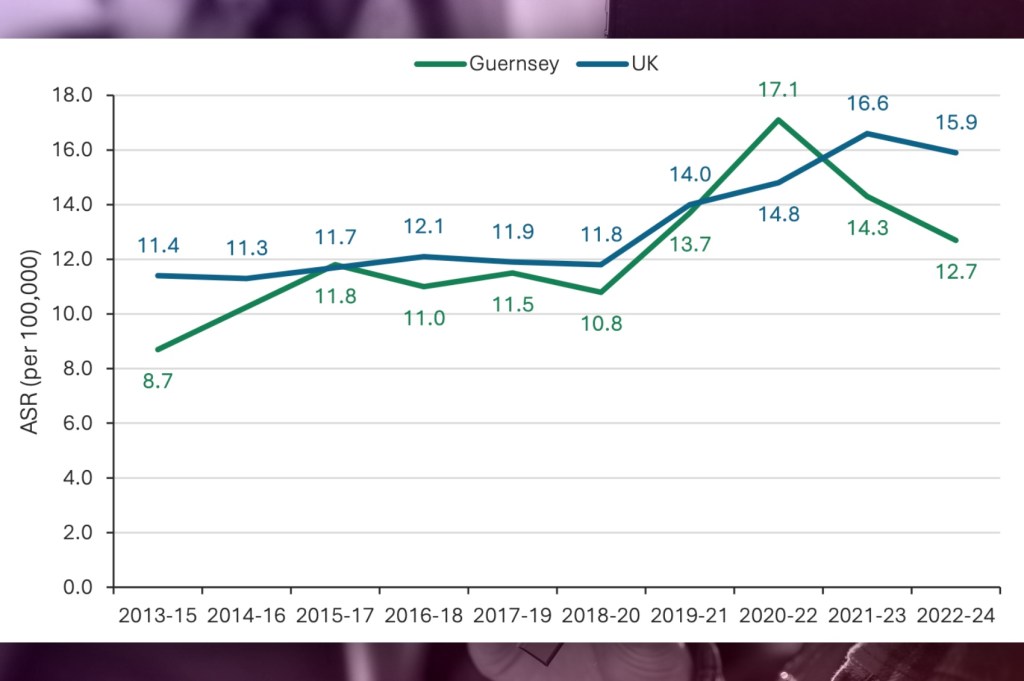
Between 2019 and 2021 Guernsey saw an increase in the number of deaths attributed to alcohol, which had previously bounced around 11 per 100,000, increasing up to 13.7.
This peaked in 2022, overtaking the mortality rate across the UK, with deaths related to alcohol hitting 17.1 in Guernsey.
It has since dropped towards the 11. range.
Public Health have made it clear though that alcohol is “still the most harmful substance affecting Guernsey and Alderney and therefore remains a top priority”.
Smoking during pregnancy
One of the more concerning ongoing trends reported within the Combined Substance Use Strategy Annual Report centres on mothers who are “smokers” at the time of delivery, and specifically the number that are relapsing into a nicotine addiction during their pregnancy.
Although the numbers are decreasing as a whole, some women are still struggling to kick the habit while pregnant.
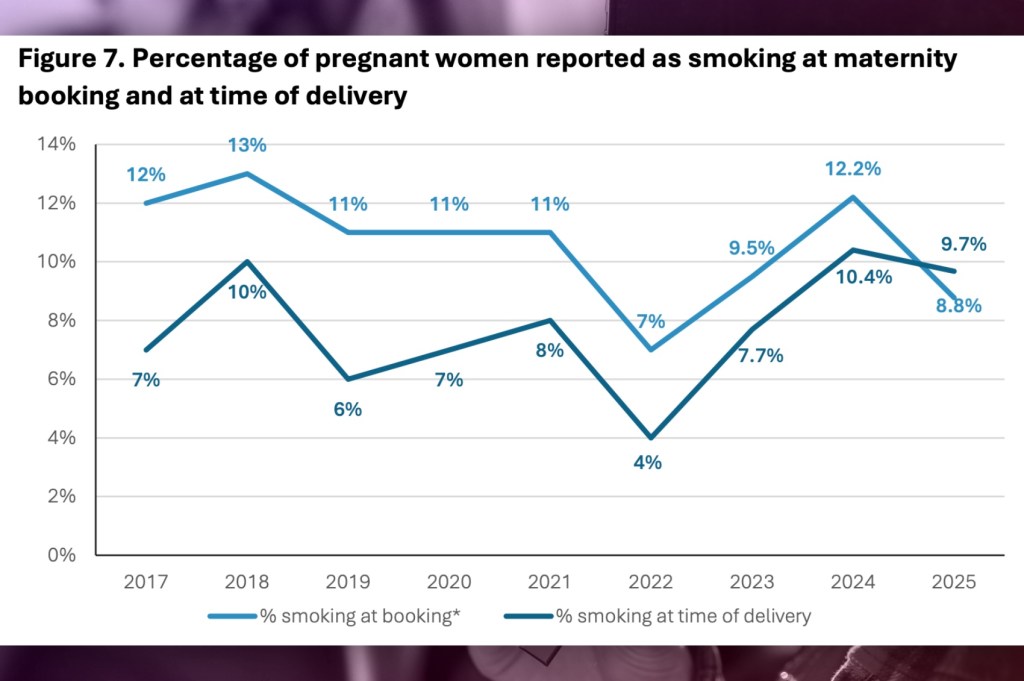
8.8% of pregnant women were recorded as smoking at the point of booking with Maternity Services in 2025, an overall reduction from 12.2% in 2024.
Year-on-year, smoking status at time of delivery also fell, from 10.4% in 2024 to 9.7% in 2025.
The annual report says this “indicates that some individuals who had initially stopped smoking may have relapsed,” and adds that it highlights the “importance of sustained stop smoking support during pregnancy”.
Potential age bans
The overwhelming majority of people are said to be in support of aging out younger generations from being able to buy nicotine products.
A larger majority say they would prefer the island ups the age at which tobacco can be purchased.
This data was collected by Guernsey’s Health Improvement Commission as part of an island-wide consultation last year.
That found “notable support” for potentially raising the legal age to buy tobacco, with 73% of respondents strongly supporting or supporting increasing the legal age of sale from 18 to 21.
64% of respondents supported or strongly supported increasing the legal age each year.
This would eventually make it illegal for younger and future generations to ever buy tobacco products.

Close collaboration
The Combined Substance Use Strategy Annual Report, and its overarching aim for how healthy the Bailiwick can be, relies on close collaborative efforts from a number of different organisations and outfits.
Both Public Health Services and the Health Improvement Commission said they’ve worked alongside a range of people dedicated to making our islands a healthier place.
Dr Nicola Brink, the Director of Public Health, said: “Alcohol, tobacco, vapes and drugs continue to cause significant and preventable harm in our community. This year’s report demonstrates the value of taking a coordinated, evidence-based approach to prevention, policy and support, particularly in protecting children and young people from harm.
“Our close partnership with the Health Improvement Commission helps ensure that action across legislation, education and services delivers meaningful change to improve health and wellbeing, reduce harm and build a safer, healthier future for all islanders.”

Action for Children, Independence, and the Community Drug and Alcohol Team all contributed to the report.
Andrea Nightingale, the Substance Use Lead for the Health Improvement Commission, said their input is invaluable.
“Alongside our ongoing prevention activities within the community, our commissioned partners play a vital role in supporting islanders, from prevention and early intervention to treatment and recovery.
“Their commitment to delivering high-quality, person-centred services ensures people can access the right help when they need it most.”
