


When Nazi forces swept across northern France in the summer of 1940, the States of Guernsey appeared convinced the Channel would protect the island.
But the headmaster of Elizabeth College, the Revd William Henry Milnes MC, believed the threat was much closer than people thought.
A six-foot-four former First World War combat pilot, he was one of the main people who pushed for the evacuation of hundreds of schoolchildren, helping get them off the island before the German Occupation.
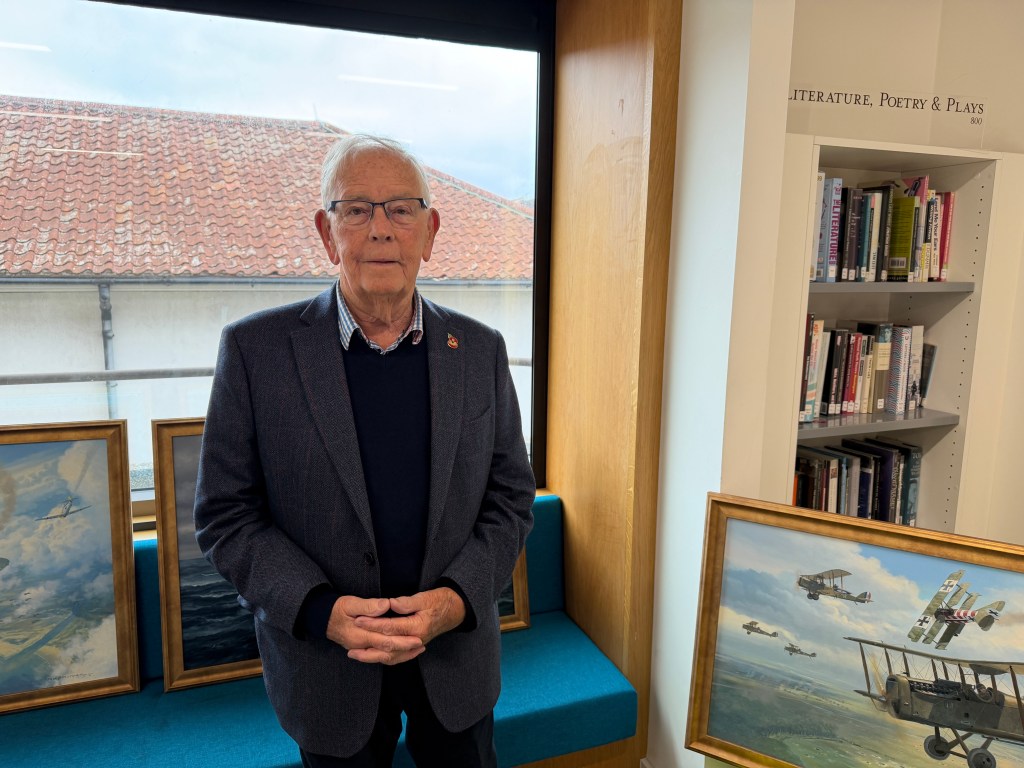
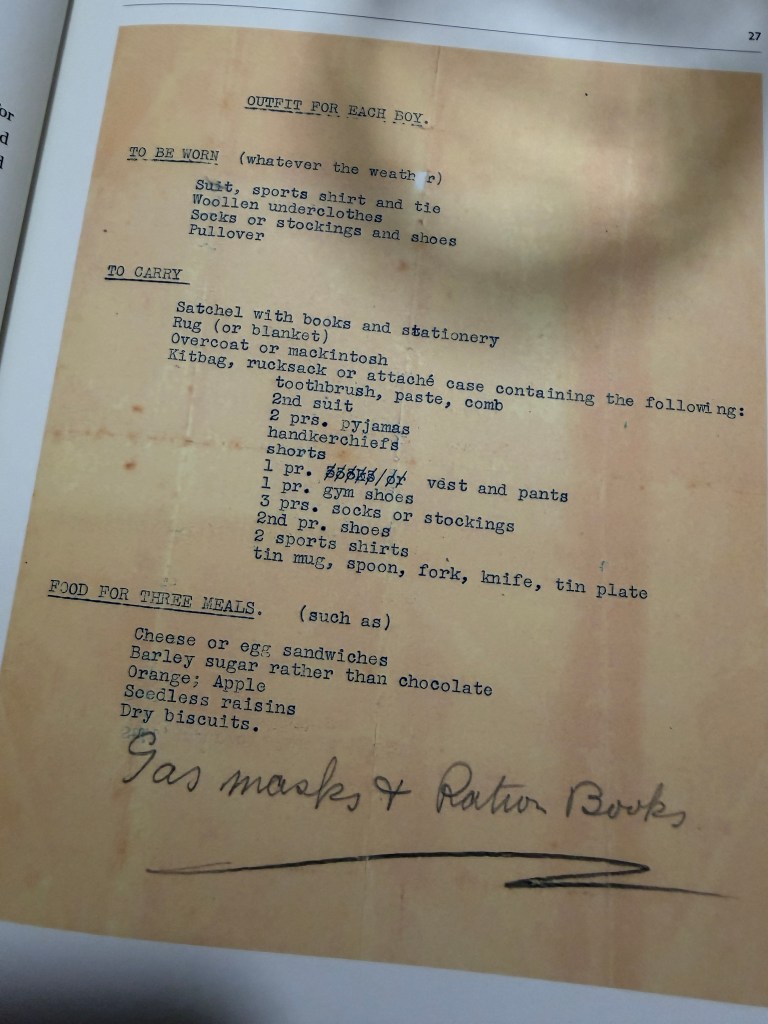
Now, previously unseen wartime documents and hundreds of private letters uncovered by former BBC broadcaster, and Old Elizabethan (4747), Bruce Parker reveal more about Milnes’ role.
Please note: This article contains some spoilers about the book.
Among Mr Parker’s findings was the surprising discovery that he considered resigning while the entire school was in the north of England.
“The States didn’t seem to be taking the looming threat of the Nazis especially seriously,” Mr Parker told Express.
“I think they thought it was like the First World War… they said, ‘Well, it’s not going to come here.’
“Milnes thought, ‘Well, yes it is.’ He thought people weren’t doing much, and he went to see the Lieutenant Governor.
“He sort of led what turned out to be the evacuation of the schoolchildren.”
Milnes had served with the Royal Flying Corps during the First World War, winning the Military Cross after shooting down German aircraft.
He understood the threat posed by modern warfare and was determined to do something about it.
He helped drive the evacuation of pupils from Elizabeth College, the Ladies’ College and the Intermediate schools, with hundreds of children travelling aboard a cargo vessel normally used to transport cattle and hay.

The Elizabeth College boys were taken below deck, while the girls were allowed to remain above.
In the book, we learn that the decision for all the schools to go together was later questioned as it could have “wiped out an entire generation” if the ship had been sunk.
Mr Parker also uncovered a never-before-seen photograph showing the boys aboard the vessel as they arrived in Weymouth, still wearing their school caps.
Keeping the boys together
Getting the children off the island was only part of the challenge.
Milnes was determined to keep Elizabeth College together as a school, rather than see its pupils scattered among families across Britain.
That was unusual. Children evacuated from Britain’s cities were generally sent to live with families in other parts of the country.
The Ladies’ College eventually moved to North Wales, while pupils from the Intermediate schools were dispersed among families.
Milnes, the hero of the First World War, was making his presence felt as he virtually took charge of all the plans to evacuate not just his own school, Elizabeth College, but the rest of the island’s children of school age.
From ‘Exile: The Evacuation of Elizabeth College’ by Bruce Parker
Milnes believed Elizabeth College could cease to exist if its boys were separated.
Instead, he re-established the school in Derbyshire, where pupils and staff spent five years in exile, including winters in draughty glider hangars.
Despite the conditions, the boys continued their education, with some going on to win scholarships to Oxford.
But they had little idea what was happening back in Guernsey.
They did not know whether their parents were safe, whether they had been sent to prison camps or even whether they were still alive.
Have you got news of my mum?
Harry Sebire (13), Elizabeth College pupil
Among the documents Mr Parker found was a letter written by 13-year-old Harry Sebire to his uncle.
It began with a simple question: ‘Have you got news of my mum?’
Mr Parker said even when he was proofreading the book, he still got “a tear in his eye”.
“I’ve read it before, and it’s just so emotional, isn’t it?”
The secret breaking point
For former pupils who knew Milnes as headmaster, he was an imposing and sometimes frightening figure.
“Those of us who were here with him as headmaster were just scared of him, actually,” Mr Parker recalled.
He was six-foot-four, huge… a foreboding figure in many ways.
Bruce Parker on Revd William Henry Milnes
But researching the wartime documents gave Mr Parker a different appreciation of the man.
“Having said that we were scared of him, doing this, I realised what an absolute hero he was.

“A very, very kind bloke, and I don’t think people realised quite what a man he was.”
One of the biggest surprises came when he discovered that Milnes had considered resigning during the evacuation.
“Nobody knew, but actually, Milnes, right in the middle of it, thought: ‘I’ve had enough of this. I’m going to resign.’
“When I found that out, I thought, I don’t believe it. But it’s true.”
Despite the pressure, Milnes stayed on to lead the school through the remainder of the war.
The boys eventually returned to Guernsey in 1945, arriving on the mailboat to be greeted by parents lining the New Jetty.
As they approached St Peter Port, they sang the school song.
But five years away meant that many had changed considerably.
A boy who had left aged 12 could now be 17, having spent much of his teenage years away from his family, Mr Parker said.
Some would barely recognise their relatives, or be recognised by them.
While some of the children from other schools spoke Guernésiais, all the EC boys spoke fluent English, but that didn’t mean the time away didn’t have an impact on their speech, Mr Parker explained.
“Some of the evacuees who when up north came back to their families with a northern accent!”
Returning to a ruined school
Returning to Guernsey did not mean the boys could simply pick up where they had left off.
The Germans had removed or burnt much of the school’s furniture, leaving around 30 chairs for approximately 200 returning pupils.
German prisoners of war were brought in to help clean up the buildings, but getting the College running again was still a considerable task.
Numbers eventually grew so much that the school had to buy Beechwood in Queen’s Road to accommodate its pupils.
Mr Parker himself joined Elizabeth College as a seven-year-old in 1948, just three years after the boys’ return.
He remembers that Beechwood was not yet ready, meaning some younger pupils had lessons at Sunray Park and had to walk to the Rockmount for lunch, a mile away.
For Mr Parker, who later returned to the College as an English master, researching Milnes’ story was an opportunity to tell a largely forgotten part of Guernsey’s wartime history.
“I’ve got a bookshelf at home full of stories of the Occupation, as most people my age have,” he said.
“But this is unique because this is a story about the Occupation, not in Guernsey, but away from Guernsey and trying to cope.”
He was also keen to recognise that Milnes was not the only person responsible for keeping the school going.
“Milnes wasn’t the only hero. The staff were heroes, and so were the boys.”
‘Exile: The Evacuation of Elizabeth College’ by Bruce Parker is available now, priced £19.99.
