

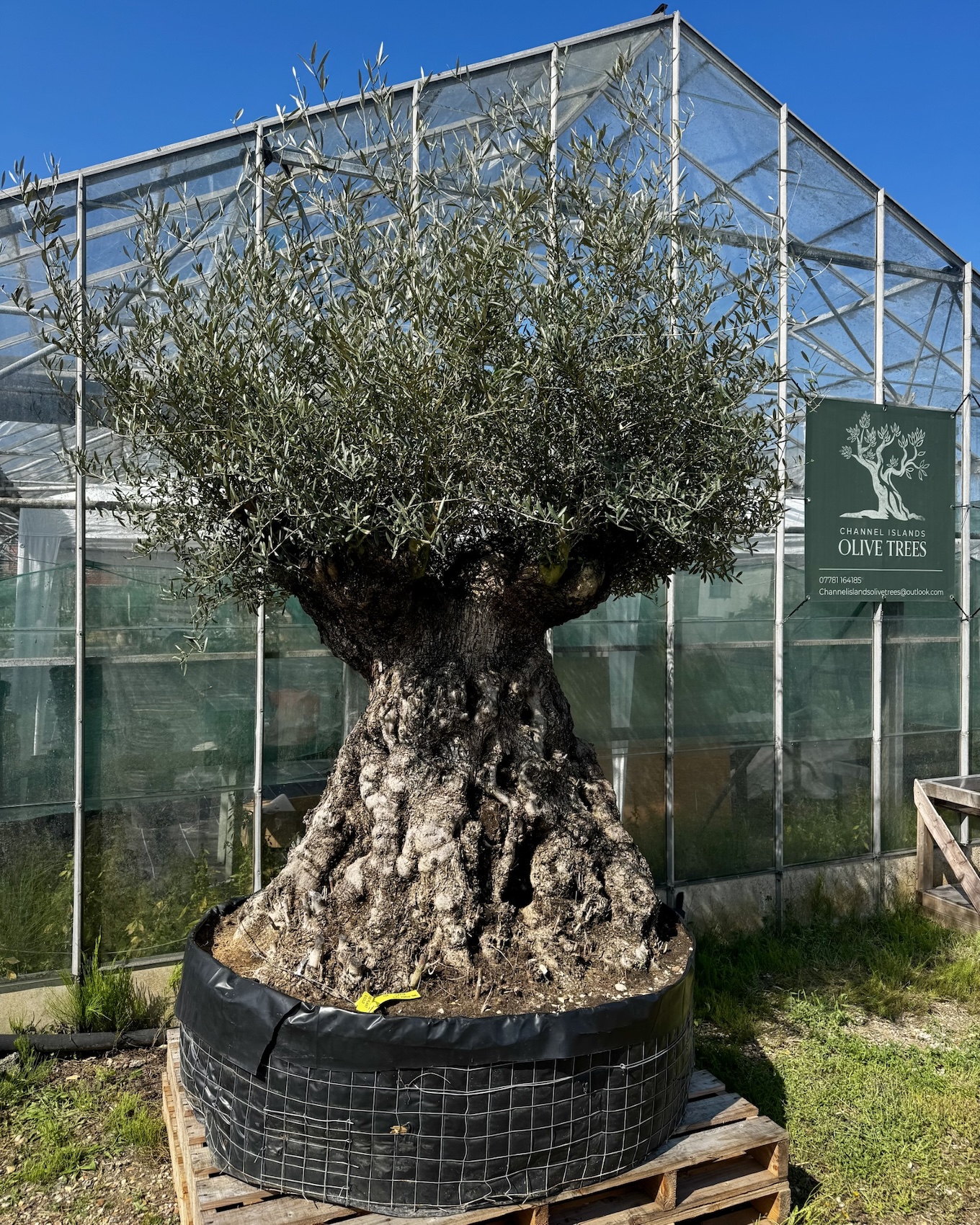
This is not a story for those seeking hard-hitting news, but for those who like to think over history, love a bit of nature, or just a bit of fact-based fun… An olive tree that’s over quarter-of-a-millennium-old has made its way to Guernsey.
It was around for the Period of the Enlightenment, the French Revolution and the subsequent Napoleonic Wars.
Throughout the 19th century, it was growing just like the expansion of global empires, the onset of the Industrial Revolution, and widespread colonial activity.
It was still being harvested for olives whilst major scientific and technological advancements took place, from steam power to the introduction of electric lighting, and sending a human to space.
From a Guernsey perspective, it was already ancient by the time of the German Occupation during World War II.
Starting life between 250 – 300 years ago, it’s been removed from it’s original home and sold on, as modern production tends to favour selected species of olive tree which can be harvested with machines, whereas ancient trees such as this one are best suited to hand picking.
It’s this modernisation that’s allowed Channel Islands Olive Trees to bring their imports to Guernsey.

According to company founder Tim Fallaize, it’s not easy to import a tree of this age and size: “The Logistics for transporting large trees can be complex, but we are well versed in this and have a trusted network of couriers who care for the trees during transport.
“We also arrange HIAB or crane services where needed for the larger trees to be moved into their new homes. We have previously supplied and delivered an even larger tree than this weighing 2 tonnes”
According to Mr Fallaize, the amount of work to care for Ancient Olive Trees can vary seasonally, but overall as a species, they’re surprisingly well suited to our climate: “Our trees are hardier than many people would realise, tolerating temperature down to around -15, and wind and salt air.”
Mr Fallaize continued: “They can suffer if not protected during particularly strong weather events with sustained driving and cold winds, if planted in a very exposed position but even then they can be protected by wrapping with fleece, or if a manageable size and held in a pot, by moving to a sheltered spot in the garden.”
