

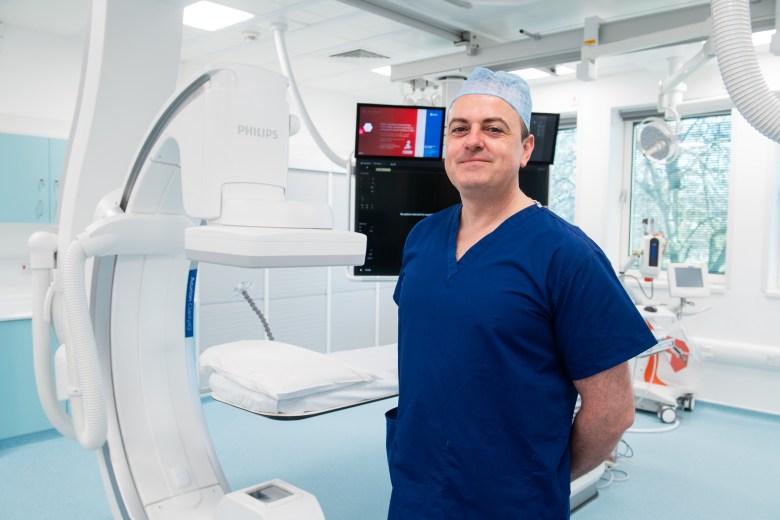
A total of £3 million has been drawn from two charitable trusts to fund a new hospital unit enabling doctors to treat cancers, blood clots and other serious conditions through tiny “pinhole” incisions.
The new interventional radiology suite has opened following a 16-month project to refurbish hospital space and install advanced medical equipment.
Funding for the project came entirely from charitable funds – the John Clive Le Seelleur Trust and the E J Bailhache Fund.
The facility allows clinicians to carry out minimally invasive procedures using imaging technologies such as X-rays, CT scans, MRI and ultrasound to guide tiny wires and catheters inside the body.
Because the procedures avoid major surgery, patients typically experience less pain and faster recovery times.
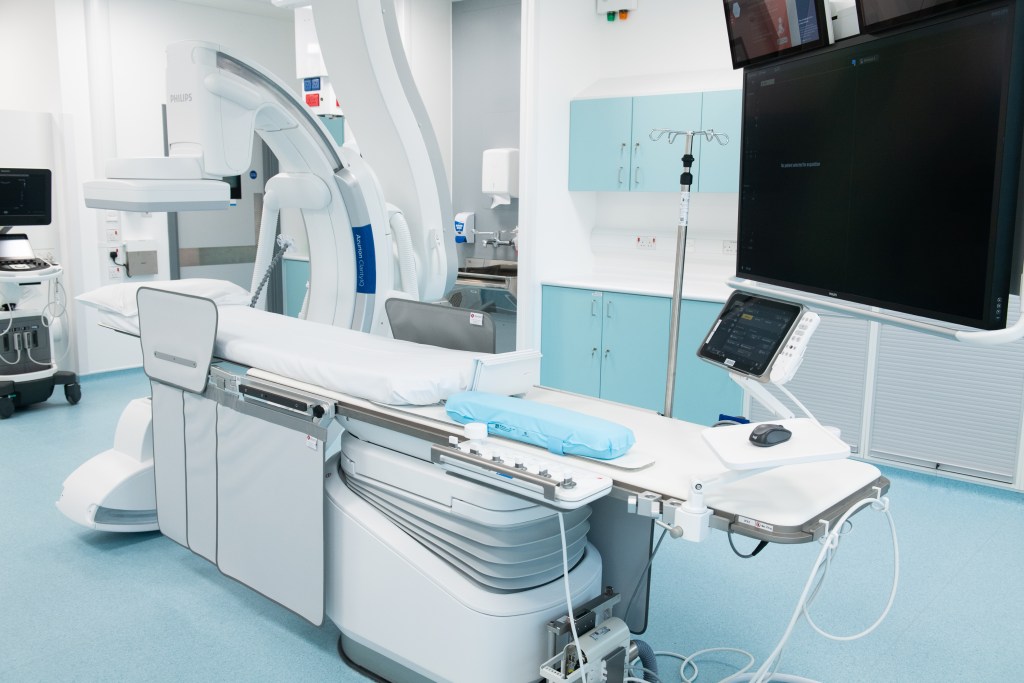
The project involved fully refurbishing one of the hospital’s theatres to create the new suite, while additional mobile equipment has been purchased to provide back-up for existing theatre machines.
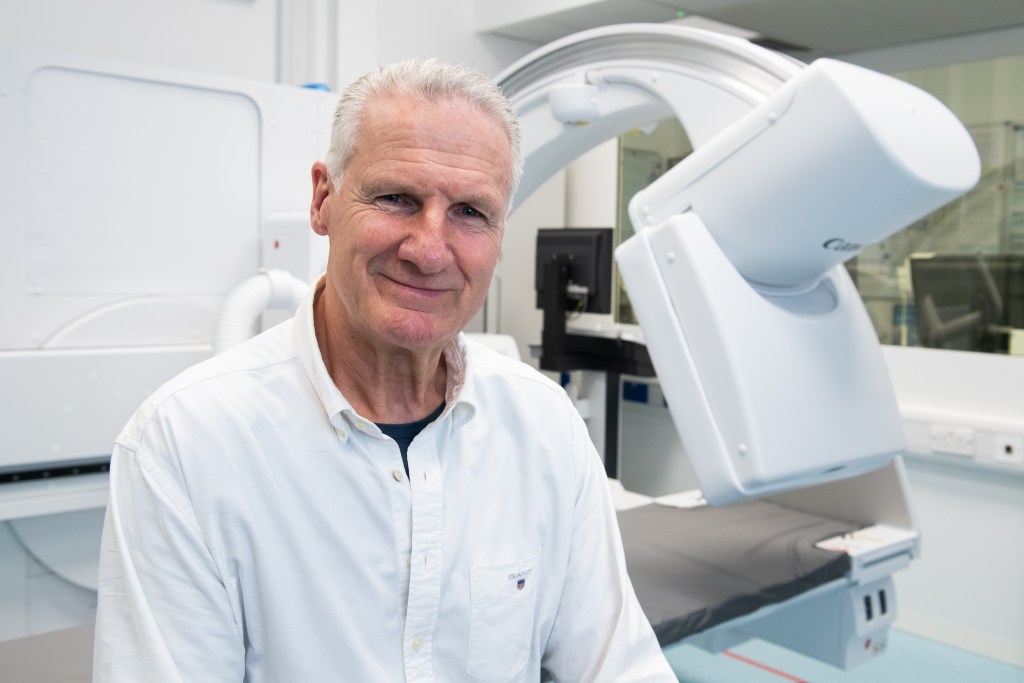
Alongside the new suite, the hospital’s existing radiology room has also been upgraded with a new fluoroscopy and interventional radiology unit. Fluoroscopy technology provides real-time moving images so clinicians can see organs, blood vessels, catheters and needles while carrying out procedures.
Consultant radiologist Dr Nolan Walker said the new facility would significantly expand what could be delivered locally.
“This new interventional radiology suite allows us to treat more patients using minimally invasive techniques, closer to home, with faster recovery times and fewer hospital admissions,” he said.
“This new room is an exciting development which further enables Jersey to continue to offer the most up-to-date and cutting-edge treatments for islanders. A big thank you to the charitable funds which have helped us to achieve this.”
Treatments available through the suite include procedures for vascular conditions such as blood clots and bleeding vessels, keyhole treatment for fibroids and enlarged prostates, and the drainage of infections and abscesses.
Doctors will also be able to insert long-term intravenous lines for patients undergoing ongoing treatments such as chemotherapy.
Health Minister Tom Binet described the facility as a “major step forward” for patient care.
“I’m grateful to the generous donors who helped make this possible, and I would like to thank the teams who have worked so hard to bring this state-of-the-art facility to life for our community,” he added.
