

Climate change is helping to reshape Jersey’s butterfly population, with new arrivals appearing, previously lost species returning and some familiar insects becoming more common.
A report covering 20 years of monitoring says the mix of species found in the Island is likely to continue changing as butterflies respond to rising temperatures and habitat loss.
The Large Chequered Skipper, which had not been seen locally since the 1990s, was rediscovered in 2020 and has been recorded every summer since – albeit in very low numbers.
The Jersey Butterfly Monitoring Scheme’s 20-year report also confirmed several recent sightings of the Glanville Fritillary, which became extinct in the Island after habitat loss and fragmentation reduced it to a single location during the 1980s.
Meanwhile, the Dingy Skipper has been confirmed in Jersey, and new species recorded in recent years include the Brown Hairstreak, Geranium Bronze and Silver-studded Blue.
The latter, a rare butterfly in the UK which is otherwise found only in Sark within the Channel Islands, was confirmed by UK experts following a single Jersey sighting in 2022.
Records of the Long-tailed Blue – a species more commonly associated with warmer climates – have also increased.
It has been recorded consistently at Victoria Tower since 2019 and could soon be present in sufficient numbers for experts to calculate a population trend.
The report said some currently rare species could continue spreading and eventually become common in Jersey.
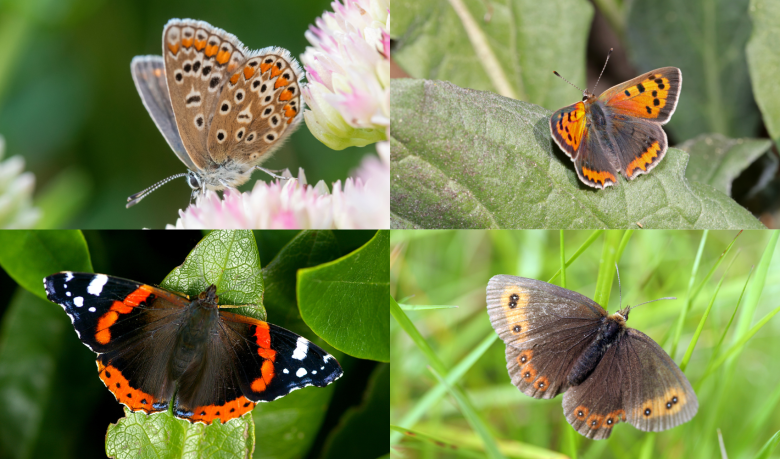
Red Admirals have already increased by 99% between 2004 and 2023. The report said the species appeared to be benefiting from climate change, with milder weather potentially allowing more adults to survive the winter.
Brown Argus numbers rose by 228%, with the species recording its best year during the monitoring period in 2023. Its expansion elsewhere in the British Isles has been linked to warmer conditions and its adaptation to use more widely available plants.
However, the report cautioned that climate change would not benefit every butterfly. Species with highly specific habitat requirements may be less able to adapt, particularly where suitable areas are small and fragmented.
It concluded: “It is likely that the species assemblage in Jersey will change and this will in all likelihood be aided by climate change and habitat loss.”
More than 150 volunteers gathered over 296,000 records of 34 butterfly species between 2004 and 2023 for the Jersey Butterfly Monitoring Scheme.
